
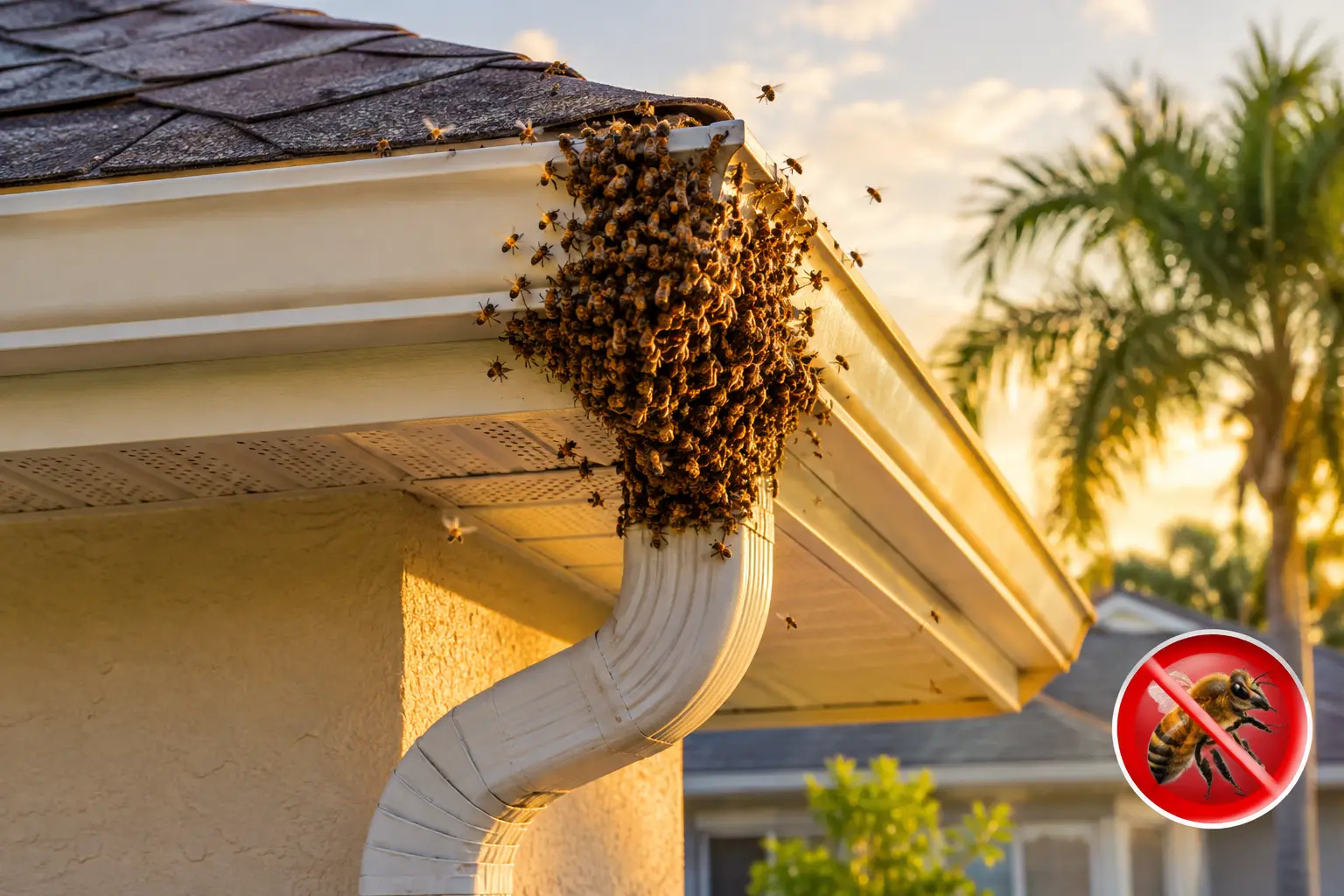

A cluster of bees on a palm branch can look alarming, but it is not always a permanent problem. Homeowners often ask, will bees leave without removal? The answer depends on whether you are seeing a temporary swarm or an established colony. A swarm may move on by itself. A colony that has built comb inside a wall, soffit, roof, shed, or utility structure usually will not.
That difference matters. Waiting for a colony to “go away” can allow honey, wax, brood, and thousands of bees to become more deeply established in the structure. In Southwest Florida’s heat and storms, that can turn a manageable removal into a larger repair concern.
Will Bees Leave Without Removal if They Are a Swarm?
A swarm is a group of honey bees and their queen searching for a new home. They may gather in a visible ball on a tree limb, fence, mailbox, shrub, or exterior wall while scout bees inspect nearby cavities. Swarms are usually temporary. Many leave within a few hours or several days after finding a suitable nesting site.
Although a swarm can appear crowded and dramatic, it is often less defensive than a colony protecting honey and young bees. Still, it should not be touched, sprayed, soaked, or disturbed. Bees can react defensively if they are bumped, trapped, or threatened, and a swarm can settle into a wall cavity surprisingly quickly.
If the cluster is safely away from people, pets, doors, play areas, and work zones, brief observation may be reasonable. Keep children and animals away, avoid mowing or trimming nearby vegetation, and do not shine lights or direct water at the bees. If the swarm is near a busy entrance or someone in the household has a serious sting allergy, call a live bee removal professional rather than waiting to see what happens.
An Established Colony Is Different
Once bees begin traveling in and out of the same small opening, they may have moved beyond the swarm stage. Steady flight activity at a crack in siding, a roofline, soffit, block wall, chimney, or electrical enclosure is a common sign of an established colony. You may also notice a low hum in a wall, dark staining near an entry point, or bees becoming more active on warm afternoons.
Colonies do not generally abandon a productive nest simply because they are inconvenient to people. If the cavity is dry, protected, and large enough for comb, it can support a colony for months or years. Honey bees are built to defend and maintain a home, not to relocate because a homeowner hopes they will.
A colony can sometimes leave through a natural process called absconding. This may happen when bees experience severe disturbance, repeated pest pressure, overheating, lack of food, or other major stress. It is unpredictable, however, and it is not a safe property-management plan. More importantly, even if the bees leave, their comb and honey remain behind.
Why Empty Does Not Mean Solved
The material left in a wall or roof is often the part that causes the most expensive damage. Warm Florida temperatures can soften wax and liquefy stored honey. Honey may seep into insulation, drywall, paint, and ceiling materials. The scent can draw ants, roaches, wax moths, beetles, rodents, and new bee colonies.
A vacant cavity can also become attractive to another swarm. Honey bees are drawn to places that smell like a previous nest. Closing an entrance without removing the comb may trap remaining bees inside, force them into living spaces, or leave the cavity ready for the next colony.
This is why a proper structural removal addresses more than the visible bees. The goal is to remove the colony, recover the comb and honey, clean the nesting area as appropriate, and seal likely access points after all bee activity has ended. That approach protects both the structure and the bees that can be relocated to a managed apiary.
How to Tell Whether You Can Wait
The safest decision comes from observing from a distance, not from getting close to inspect. A temporary swarm is usually a single, exposed cluster with no consistent traffic into a hole. An established colony has repeat flight paths: bees leave and return through one opening throughout the day.
Timing also offers clues. A cluster that appeared that morning may be a swarm. Bees entering a roofline every day for a week are much more likely to be established. A growing number of bees, wax fragments below an opening, or activity that continues after sunset are additional signs that the bees are living inside rather than resting outside.
There are situations where waiting is not appropriate, even for a newly arrived swarm. Immediate professional help is sensible when bees are near a school, playground, pool, doorway, outdoor dining area, pet enclosure, or public walkway. It is also wise to act quickly if bees are repeatedly bumping into people, pursuing someone, or behaving unusually defensively.
In Florida, honey bee behavior cannot be identified reliably from appearance alone. Some colonies can be highly defensive, particularly when their nest is disturbed. Do not attempt a do-it-yourself removal, plug the opening, or use a ladder near an active colony. A fall, a defensive response, or bees entering the home can create a much more urgent situation.
Why Spraying Bees Often Makes the Problem Worse
A pesticide application may kill visible bees without removing the colony’s comb, honey, or scent. It can also leave dying or agitated bees inside a wall with limited ways out. In some cases, surviving bees move farther into the structure or emerge through vents, light fixtures, outlets, or gaps around windows.
There is also an ecological cost. Honey bees are valuable pollinators, and a healthy colony can often be saved through live removal and relocation. Humane removal does not mean ignoring a safety issue. It means addressing the problem fully while preserving a colony when conditions allow.
The trade-off is that live removal can require careful access to the nest. For a colony inside a wall or soffit, a professional may need to open a limited section of material to reach and remove the comb. That is more involved than spraying an exterior opening, but it prevents the lingering contamination and repeat infestations that shortcut methods often leave behind.
What to Do While You Arrange Removal
Keep your distance and give the bees a clear flight path. Do not cover, caulk, foam, or tape over the entrance. Avoid loud vibrations near the nest, including pressure washing, leaf blowing, drilling, hedge trimming, and mowing directly below the colony.
If bees are using an entrance near a door, choose another route when possible and keep visitors informed. Bring pets indoors or away from the area. If bees get inside the house, close interior doors to limit where they travel, open an exterior-facing window in the room if it can be done safely, and avoid swatting at them.
Take a photo or short video from a safe distance if you can. It can help a removal specialist assess whether the situation appears to be a swarm or an established colony before arriving. Do not sacrifice safety to get a better image.
For homeowners and property managers, prompt assessment is usually the practical middle ground. You do not need to panic over every cluster of bees, but you should not assume a structural colony will disappear on its own. Beeswild serves Southwest Florida with live bee removal and relocation, helping move viable colonies to safer farm settings while addressing the source of the property issue.
A bee problem becomes easier to solve when it is identified early. Give a temporary swarm room to move if it is safely located, but treat ongoing traffic into a building as a signal to act before the colony and its comb become part of the structure.

No responses yet