
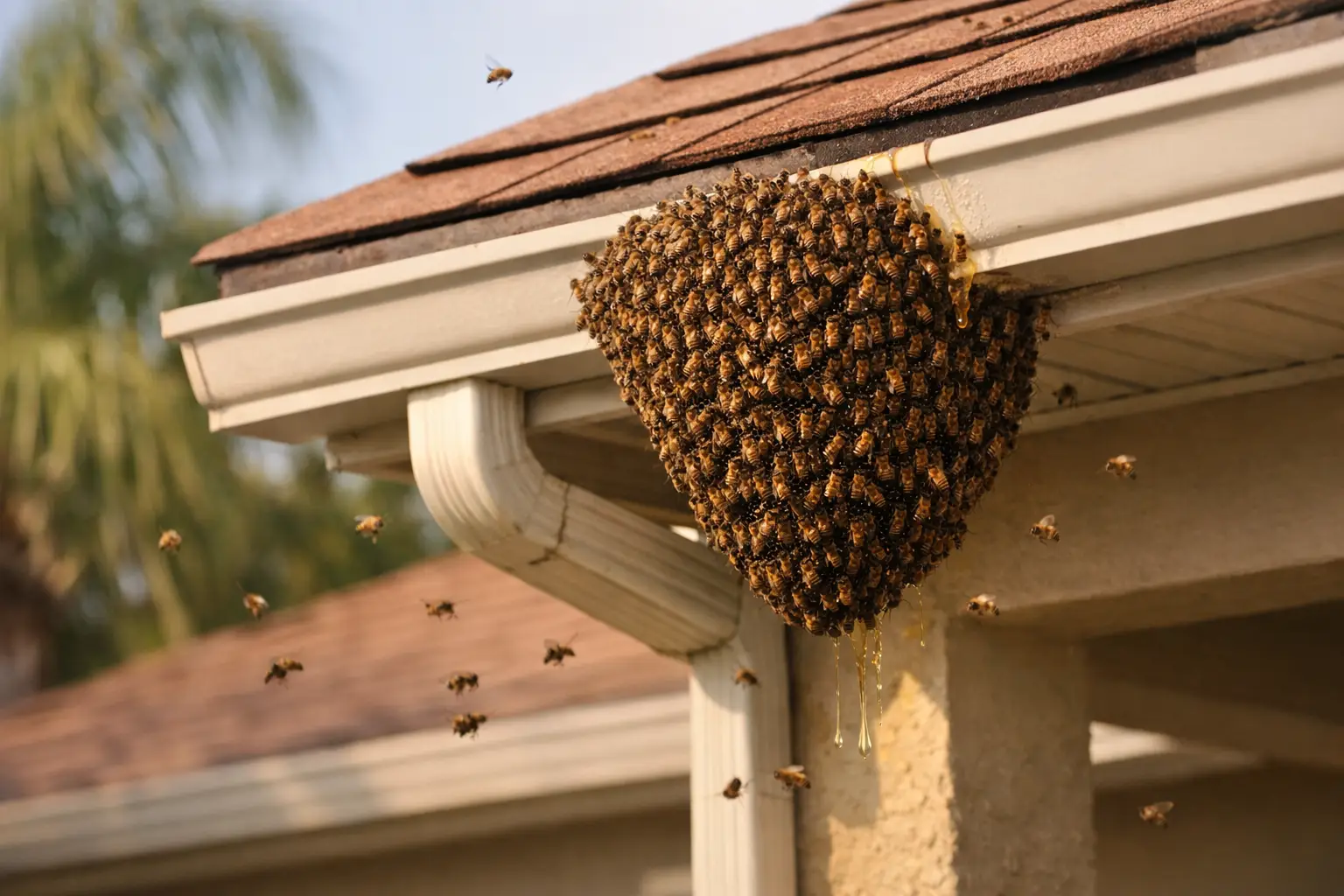

You usually do not notice rotting honey in wall cavities until the house starts telling on itself. A brown stain appears on drywall. Paint bubbles for no obvious reason. The room smells sweet, then sour. Sometimes ants show up first. Sometimes wax moths, roaches, or even dripping honey near a baseboard are the real clue. By the time you can see it from inside the home, the colony has often been there longer than most people realize.
This is one of the biggest reasons a bee colony inside a structure should never be treated like a simple nuisance. The bees are only part of the problem. What they leave behind – honey, brood comb, pollen, wax, moisture, and scent – can continue damaging the building long after the bees are gone if the hive is not removed correctly.
Why rotting honey in wall cavities happens
Honey itself does not always “rot” in the way homeowners mean it, but inside a wall, conditions change. Honeycomb holds nectar, capped honey, pollen, brood, and bee moisture. Once a colony is killed, abandoned, or partially disturbed, that material can break down. Heat speeds it up. So does humidity, and Southwest Florida has plenty of both.
When comb softens or collapses, honey can leak into insulation, wood framing, drywall, stucco voids, and flooring transitions. Pollen and brood are even more likely to decay and ferment. That is often what people are actually smelling when they describe a rotten or sour odor. Insects and rodents can be drawn to it, and the remaining scent can attract new swarms later.
A common mistake is assuming the issue ended when bee activity stopped. In reality, dead bees inside the wall with comb still in place often create a second stage of damage. Poisoning a colony or sealing an entry point without removing the hive is how small bee problems turn into repair problems.
What rotting honey in wall damage looks like
Every structure shows the damage a little differently, but the signs are usually practical and physical before they become dramatic. You may notice sticky seepage, yellow or brown wall stains, warped trim, bubbling paint, or soft drywall. In some homes, especially where the colony is higher up, honey can travel downward and appear far from the actual nest site.
Odor matters too. Fresh hive scent is warm and sweet. A neglected hive inside a wall often smells heavier, fermented, or musty. If brood has decomposed, the smell can become unmistakably foul. Property managers sometimes notice this first in utility rooms, soffits, or shared walls before residents ever report bee activity.
You may also hear a change before you see it. A low hum in a wall that suddenly disappears is not always good news. It can mean the colony died, absconded, or was poisoned, leaving all the comb behind.
Why leaks and stains get worse in hot weather
Florida heat puts real pressure on concealed comb. Wax softens as temperatures climb, especially in enclosed wall voids, rooflines, and cinder block cavities exposed to direct sun. That means honey can start moving. Once it finds a path through a seam, electrical opening, or drywall joint, staining tends to spread.
This is one reason waiting rarely improves the situation. The structural damage may begin as cosmetic, but prolonged saturation can affect insulation, wood, and interior finishes.
Why spraying bees is usually the wrong fix
When homeowners are scared, the first instinct is often to kill the bees fast. That reaction is understandable, especially with children, pets, or anyone sensitive to stings nearby. But from a structural standpoint, chemical treatment inside a wall often creates the exact conditions that lead to rotting honey in wall cavities.
Once the bees die, there is no colony regulating temperature, defending the nest, repairing comb, or consuming stored honey. The hive remains. Wax melts, brood decays, and honey leaks. Then scavenger pests arrive. Ants are common, but roaches, beetles, moths, and even mice may follow if access is available.
There is also a bee behavior issue. If treatment is incomplete, surviving bees can become defensive or relocate deeper into the structure. In some cases, they find a second exit into a living space. That is not the direction anyone wants this to go.
The right way to address a bee hive in a wall
A proper structural removal focuses on the entire colony, not just visible bee traffic. That means locating the nest accurately, opening the affected area in a controlled way, removing the bees alive when possible, and taking out all comb, honey, brood, and contaminated material that cannot be left behind.
After removal, the cavity should be cleaned and managed so residual scent does not invite another swarm. Depending on the structure, that can also include repairs or recommendations for sealing entry points once the hive is fully out. The exact method depends on where the bees are nesting – stucco walls, soffits, roofs, sheds, chimneys, and block structures all behave differently.
Live removal protects both the house and the colony
For many homeowners, the phrase live bee removal sounds like an environmental preference. It is that, but it is also practical. Relocating the colony and removing the hive materials reduces the chance of hidden decay, recurring infestations, and follow-up repairs caused by leftover comb.
That is why companies that understand both bees and buildings matter. This is not just pest control. It is livestock handling, structural access, and contamination removal all at once.
What homeowners should do first
If you suspect a hive in the wall, keep people and pets away from the flight path and do not plug the entrance. Do not spray foam, caulk, insecticide, or water into the opening. Those actions often drive bees into other parts of the structure or trap the problem inside.
Watch from a safe distance and note where bees are entering. A consistent stream in and out of one gap, especially on a warm afternoon, usually means an established colony rather than a temporary swarm. If you already see staining, dripping, or pest activity indoors, mention that when you call for help. It helps determine urgency.
For commercial properties and HOAs, timing matters even more. High-traffic entrances, pool areas, mail kiosks, and utility enclosures create liability exposure. Fast professional evaluation is safer than waiting for complaints or a sting incident.
When the damage is already inside
If honey has already leaked into the interior, the repair side may involve more than bee removal. Saturated drywall often has to be opened and replaced. Insulation may need to be discarded. Wood framing usually can stay if it is cleaned and dried properly, but that depends on how long the leak went unnoticed.
This is where honesty matters. Not every wall with bees has major structural damage, and not every stain means the entire section must be rebuilt. But if comb was left in place after an old infestation, deeper cleanup may be needed than the visible stain suggests. It depends on colony size, age, temperature exposure, and whether the hive included brood.
In Southwest Florida, heat and humidity can shorten the window between hidden hive and visible interior damage. That makes early intervention worth more than people think.
How to prevent the next colony
Bees choose wall voids because they are protected, dark, and stable. Once a cavity has housed a colony, it can become attractive again if scent remains or access points stay open. Prevention starts with complete removal of comb and proper closure of entry gaps after the work is finished.
Common entry points include roof intersections, soffit gaps, plumbing penetrations, loose fascia, cracked block openings, and uncapped utility voids. The goal is not to make a home airtight. It is to remove bee-sized opportunities in the places colonies prefer.
At Beeswild, this is why structural bee removal is approached as both a rescue and a building protection service. Saving the colony matters. So does making sure the wall is not left holding a slow, sticky problem that shows up weeks later.
If your wall smells sweet, stains are spreading, or bee traffic suddenly stopped after weeks of activity, do not assume the danger passed. A quiet hive inside a structure can be more damaging than a noisy one. The best next step is simple – treat the wall like it contains a hidden food source and a hidden leak, because in many cases, it does.

6 Responses
[…] most common reason for a return is an incomplete removal. If honeycomb and stored honey remain inside a wall, they leave a strong scent signal. Wax, propolis, brood residue, and old […]
[…] that colony in place can create serious consequences. Honey may leak when comb melts in Florida heat. Wax and honey can attract ants, roaches, beetles, rodents, and […]
[…] is especially troublesome in Florida heat. Stored honey can soften and leak through ceilings, walls, or insulation. It may leave stains and attract ants, roaches, beetles, wax moths, and […]
[…] through a light fixture, vent, interior wall gap, or bedroom ceiling. If the colony dies inside, stored honey can melt or ferment in Florida heat, stain drywall, attract ants and roaches, and create odors. Wax […]
[…] comb does not stay clean. Honey can ferment, pollen can spoil, and brood material can decay. In a humid wall or attic, those odors may become […]
[…] if the colony dies, the issue is not necessarily over. Stored honey can melt in Florida heat and leak through drywall or ceilings. Abandoned comb can attract wax moths, ants, […]