
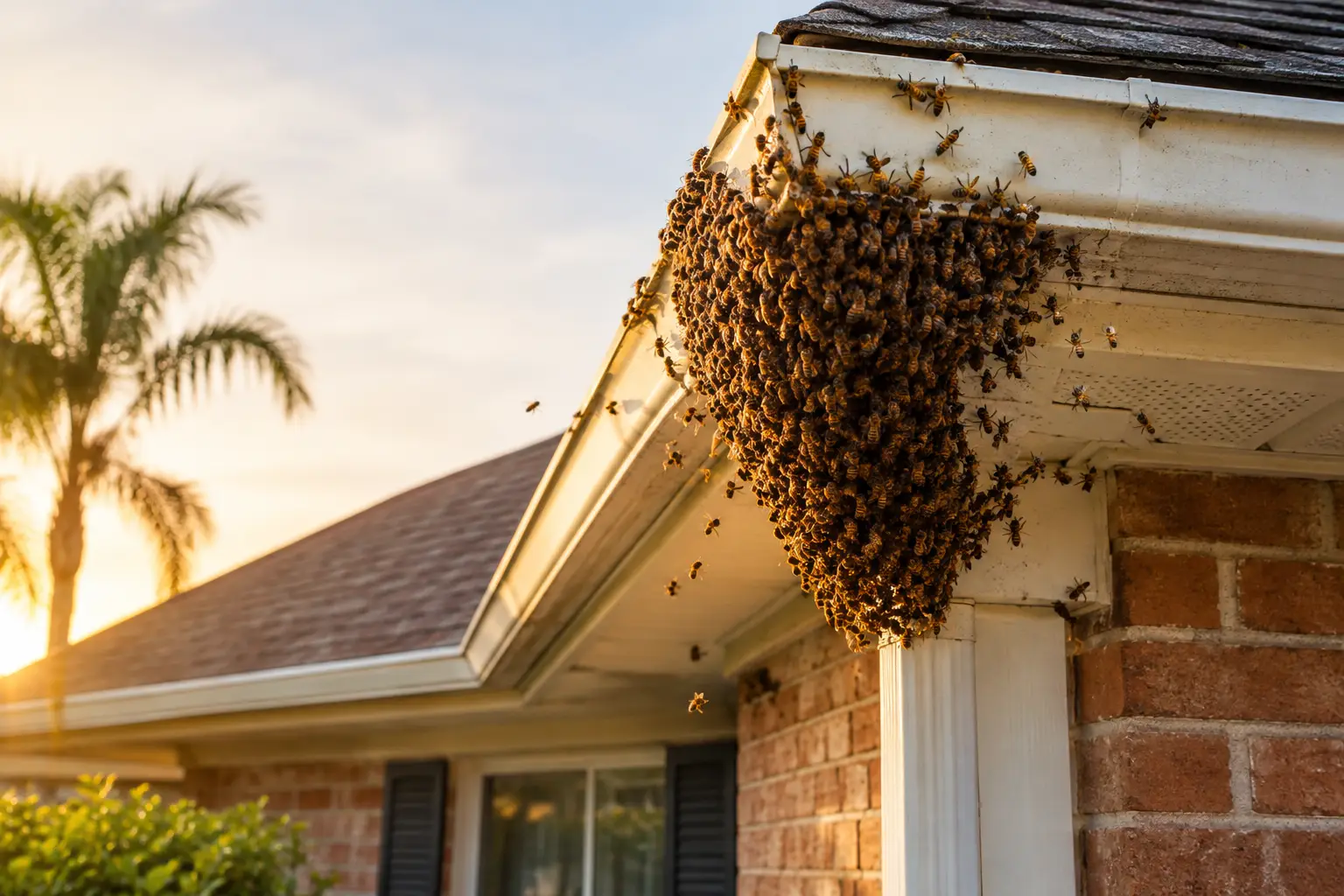

A steady line of bees disappearing into a mortar joint is more than a nuisance at the patio. It usually means a colony has found a protected void behind the brick. To remove bees from brickwork correctly, the goal is not simply to stop bee activity at the surface. The colony, its comb, stored honey, and the entry point all need attention – otherwise the problem can return in a more expensive form.
For Southwest Florida homeowners and property managers, timing matters. Warm weather allows colonies to stay active for much of the year, and a small-looking entrance can lead to a substantial hive behind a brick veneer, chimney, column, or exterior wall. A humane structural removal protects people and buildings while giving healthy honey bees a chance to continue their work in a managed apiary.
Why Bees Choose Brickwork
Brickwork offers bees something they actively seek: a dry, shaded cavity with a narrow, defensible entrance. On a brick-veneer home, bees may enter through a missing mortar section, a gap around a pipe, a weep hole, or a separation where trim meets masonry. They can then occupy the air space between the veneer and the wall framing.
Solid brick structures can create nesting opportunities too, particularly around chimneys, planters, columns, and hollow decorative features. The visible opening is often only a fraction of an inch wide, so the colony may look smaller than it is. Bees do not need a large hole to establish a hive.
A newly arrived swarm is different from an established colony. A swarm commonly clusters in the open for a short period while scout bees search for a home. An established colony has regular flight traffic, pollen-carrying workers, comb, brood, and food stores inside the structure. That distinction affects the urgency and the removal method.
Confirm That They Are Honey Bees First
Not every insect entering a wall is a honey bee. Honey bees are generally fuzzy, amber-brown to dark brown, and fly in a purposeful traffic pattern to one opening. They often carry noticeable pollen on their hind legs. Yellowjackets and other wasps have smoother bodies, sharper yellow-and-black markings, and can become highly defensive around a concealed nest.
Do not stand close to inspect a suspected nest. Watch from a safe distance, especially if there are children, pets, or people with sting allergies on the property. In Florida, a defensive response can be unpredictable because colonies may have Africanized genetics. If bees are pursuing people, gathering in large numbers near a public entry, or nesting near a school, pool, walkway, or business entrance, keep the area clear and call a qualified bee removal professional promptly.
Why Spraying the Entrance Is Not a Removal
Killing bees at the entry point may seem like the fastest answer, but it leaves the structure with the hardest part of the problem still inside. Dead bees, wax comb, brood, pollen, and honey remain in the cavity. In Florida heat, honey can soften and leak into insulation, drywall, ceilings, or exterior finishes.
The odor and food source can also attract ants, cockroaches, wax moths, rodents, and other scavengers. A surviving queen or portion of the colony may relocate deeper into the wall, making access harder. Later, another swarm can detect the residual comb scent and move into the same void if the opening is not sealed.
There is a practical trade-off: a live removal takes more planning than a surface pesticide treatment because it addresses the entire colony. But it is usually the approach that protects the building from lingering contamination and repeat occupancy. It also preserves bees that can be relocated to managed farm locations rather than treated as disposable pests.
The Right Way to Remove Bees From Brickwork
A structural bee removal begins with locating the colony, not guessing at it. A trained technician observes flight paths, checks likely entry points, and determines whether the bees are behind veneer, within a chimney feature, under a cap, or in another accessible cavity. The goal is to choose the smallest practical access point that allows the colony and comb to be fully removed.
Access the colony carefully
For a brick-veneer wall, access may be made from the interior side, through an adjacent soffit or trim area, or by temporarily removing a limited exterior section when that is the least damaging route. The best option depends on the construction, the colony’s location, and what can be restored properly afterward.
Simply plugging the entrance before removal is a mistake. Trapped bees may seek another route into the home or business, and the comb remains behind. A professional should wear appropriate protective equipment and use controlled methods that minimize harm to bees and prevent them from dispersing through the structure.
Remove bees, comb, brood, and honey stores
The queen and worker bees must be collected or guided into transport equipment. Just as critical, every reachable section of comb should be removed. Comb holds the scent signals that invite future colonies, while honey and pollen can create the moisture, odor, and pest issues property owners are trying to avoid.
This is why a true cut-out or structural removal differs from a trap-out. A trap-out can sometimes move adult bees out through a one-way device, but it may leave comb and food stores in the wall. It can be useful where opening a historic or exceptionally difficult structure is not feasible, yet it has limits and requires careful evaluation. For most accessible brickwork colonies, full comb removal is the more complete solution.
Clean and close the cavity
After removal, the exposed area should be cleaned of wax and honey residue as thoroughly as the structure allows. Damaged insulation may need replacement, and any wet building materials should be evaluated before closing the opening. This step is not cosmetic. It reduces the odors and residues that draw pests and future swarms.
Only after the cavity is clear should the original bee entrance and nearby gaps be sealed with materials appropriate for masonry and exterior construction. Mortar repair, screening of vulnerable openings, and sealing around penetrations may all be part of the final work. Weep holes deserve special attention: they serve a drainage purpose and should not be blindly filled. A knowledgeable professional can recommend a pest-resistant solution that maintains the wall system’s function.
What You Can Do Before Help Arrives
Keep people and animals away from the flight path, which may extend several feet from the entrance. Avoid mowing, pressure washing, drilling, trimming shrubs, or striking the brick near the colony. Vibrations and exhaust can provoke defensive behavior.
Do not use expanding foam, caulk, insect spray, smoke, or water on the opening. These actions can trap bees inside, force them into living spaces, stain masonry, or complicate a humane removal. If the bees are entering through a wall shared with an occupied room, close nearby windows and doors and avoid sealing interior gaps until the colony has been assessed.
A few clear observations will help the removal team: where bees enter, when activity is highest, whether bees are appearing indoors, and how long the activity has been present. Photos taken from a safe distance can be useful, but do not approach the opening to get a close-up.
Protect Brickwork From Another Colony
Once a colony has been removed, inspect the surrounding exterior for the small defects bees use. Cracked mortar, unsealed utility penetrations, loose flashing, gaps beneath coping stones, and damaged trim can all provide access to protected voids. Maintenance is especially worthwhile before spring swarm activity increases, although Florida colonies may search for new homes in many seasons.
For commercial sites and HOAs, prevention should include areas that are easy to overlook: monument signs, mailbox structures, pool equipment enclosures, decorative columns, dumpster walls, and roofline features. A colony near customer seating or a shared walkway is both a safety concern and a building-maintenance issue.
Beeswild provides live bee removal and relocation in Southwest Florida, with a three-month same-place removal warranty after the identified entry point is properly addressed. The value of professional removal is not just getting bees away from the wall. It is returning the cavity to a clean, secure condition while giving a viable colony a safe place to live.
A bee colony in brickwork is manageable when the full situation is treated with patience: protect the people nearby, remove the living colony and its comb, repair the access point, and let the bees continue their work somewhere they belong.

No responses yet