
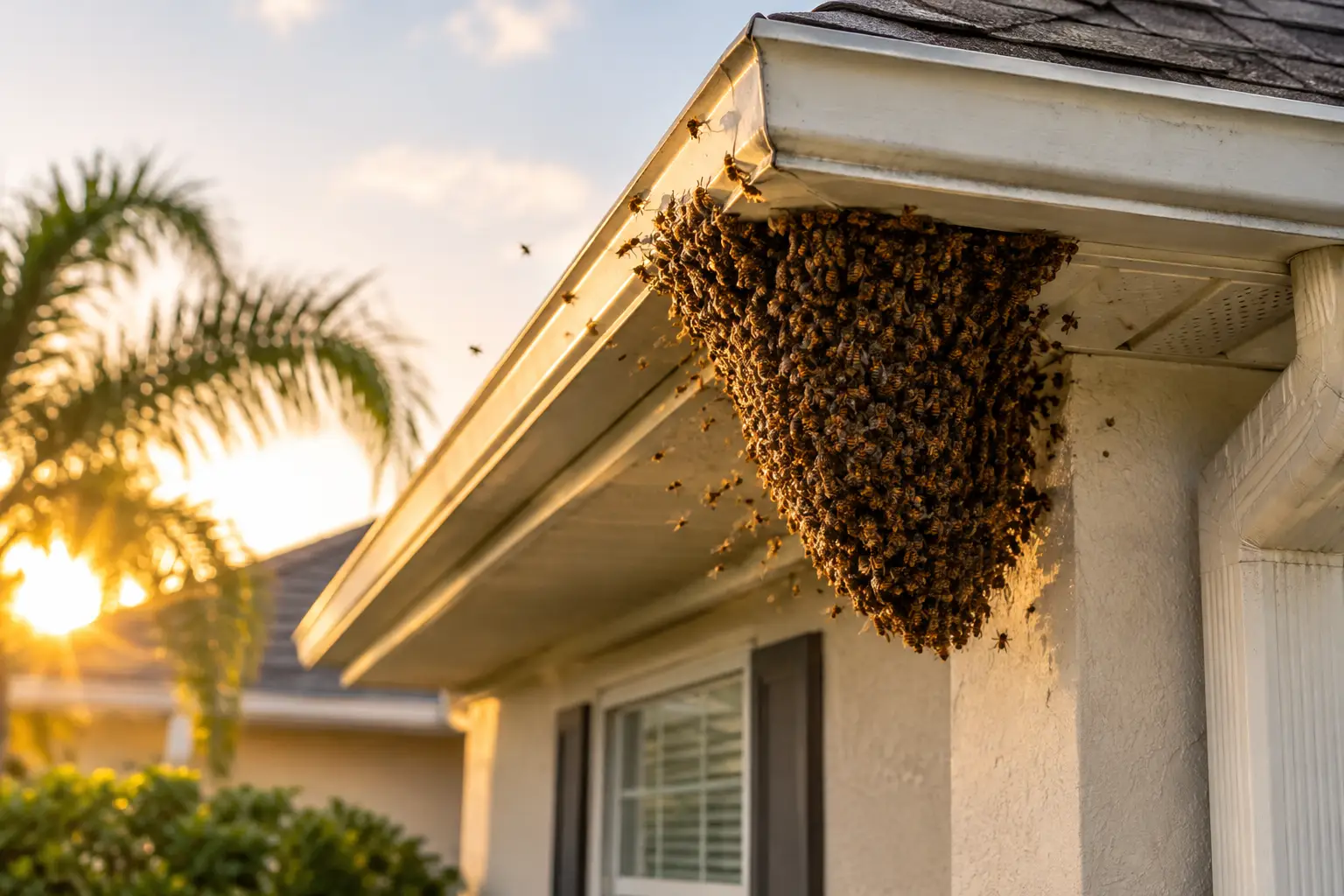

A bee appearing near a ceiling vent can make any homeowner wonder: can bees enter air ducts and travel through the house? They can enter certain parts of an HVAC system, especially exterior vents, returns, and gaps around ductwork. But a colony is more likely to establish itself in a sheltered cavity beside, above, or around the duct than deep inside the ducts that move conditioned air.
That distinction matters. Bees need a protected, dry space with an entrance to the outdoors. An attic, soffit, wall void, roofline, or unsealed return vent can provide exactly that. Once bees are established, the honeycomb, honey, and wax can create a much bigger property issue than the occasional bee seen at a register.
Can Bees Enter Air Ducts and Build a Hive?
Yes, bees can access air ducts, but the situation depends on the design and condition of the system. Exterior intake vents, dryer-style exhaust openings, damaged screens, disconnected duct sections, and poorly sealed gaps can all give scout bees a route indoors.
In many homes, the bees are not actually living inside the main supply ducts. They may be occupying the framing cavity around a duct chase, the insulation area above a return, or an attic space where flexible ductwork runs. From a homeowner’s point of view, it can look like the bees are coming from the vents because that is where the activity becomes visible.
A functioning HVAC system also creates conditions bees generally do not prefer. Strong moving air, frequent temperature changes, and smooth metal surfaces are not ideal for building comb. Still, if a system is off for long periods, a duct is damaged, or an exterior opening leads to a quiet cavity, bees may use it.
Why Bees Are Drawn to Vents and Duct Areas
A honey bee colony does not choose a nesting site at random. Scout bees search for enclosed spaces that are dry, shaded, defensible, and large enough for comb expansion. In Southwest Florida, rooflines, attic voids, soffits, and utility penetrations can offer those conditions year-round.
Vents are especially attractive when a cover is missing or damaged. A small opening is enough. Bees can enter through gaps that homeowners may barely notice, then move into a larger cavity behind the vent cover or surrounding structure.
Warmth can also play a role. Ductwork and adjacent building cavities may retain heat, particularly near roofs and exterior walls. That does not mean an HVAC unit is inviting bees into the home, but it can make an already accessible void more suitable for a colony.
Signs Bees May Be Using Your HVAC Area
The clearest sign is steady bee traffic at one exterior opening. A few bees investigating a vent may be a passing swarm or scouts looking for a home. Consistent flight activity, especially bees entering and leaving the same gap throughout the day, points to an established colony.
Inside, you may notice bees near a particular register, return grille, ceiling fixture, or wall. A low hum behind drywall can be another clue, although it is not always easy to hear over air conditioning equipment. In advanced cases, honey may stain a ceiling or wall, or a sweet odor may become noticeable near the affected area.
Do not assume every flying insect near a vent is a honey bee. Wasps, yellowjackets, and other insects can use similar openings, but they require different removal methods. Correct identification is essential before anyone attempts treatment or repairs.
The Risks of Bees in or Near Ductwork
The immediate concern is often stings, particularly for families with children, pets, or people with severe allergies. A colony near an air return or breached duct may allow individual bees to enter living spaces. Disturbing the colony by banging on walls, running loud equipment nearby, or spraying an insecticide into the opening can increase defensive behavior.
The longer-term concern is the hive material left behind. A mature colony can contain heavy comb filled with honey, pollen, brood, and wax. If bees are killed without removing that material, honey can melt in Florida heat and seep into insulation, drywall, and duct chases. The odor can attract ants, roaches, wax moths, rodents, and other pests.
There is also an HVAC performance issue. Comb or nesting debris can obstruct a vent opening, contaminate nearby insulation, or interfere with duct connections. The extent of the damage depends on the colony’s location, how long it has been present, and whether the duct itself is open to the nesting space.
What Not to Do When Bees Are Near a Vent
Do not spray pesticide, foam, or household insect killer into a vent or air duct. Beyond the safety concerns, chemicals can leave residue in areas connected to indoor air movement. They may kill some bees while leaving the queen, comb, and honey behind, which does not solve the structural problem.
Avoid sealing the entrance while you still see active bee traffic. Trapped bees may find another way into the home, and the colony material remains in the cavity. Sealing should happen after the colony and comb have been fully removed.
It is also wise not to cover a vent with plastic, tape, or a towel as a temporary fix. HVAC openings have a job to do, and restricting them can create ventilation or equipment problems. If bees are entering an opening connected to the home, limit access to that area and seek professional assessment promptly.
How Humane Bee Removal Protects the Home
Proper live bee removal addresses both sides of the problem: protecting people and preserving a valuable pollinator colony. The goal is to locate the queen, carefully remove the bees and comb, and relocate the colony to an appropriate apiary rather than poisoning it in place.
For a colony in a wall, soffit, attic, or duct-adjacent cavity, removal may require a targeted opening in the structure. This is often the most responsible approach because it allows the comb and honey to come out too. The access area can then be cleaned, repaired, and sealed so another swarm cannot claim the same space.
The exact method depends on the location. Bees clustered at an exterior vent may be part of a temporary swarm and can sometimes be collected with minimal structural work. A colony that has been active for months inside a duct chase is more involved. A thorough inspection determines whether the hive is in the duct, beside it, or somewhere else entirely.
At Beeswild, live removals are designed around safe relocation and complete hive removal, not a quick chemical treatment that leaves a future mess inside the building. For homeowners and property managers, that approach helps protect the structure while giving the colony a permanent home away from people.
After Removal: Repairing the Entry Point
Once removal is complete, the former entry point should be repaired with materials suited to the opening. Exterior vents may need a properly fitted, airflow-safe cover. Gaps around ducts, roof penetrations, and soffits may need sealing or flashing repair. Damaged screens should be replaced with a durable option that does not restrict required ventilation.
If honey or comb was found near HVAC components, ask whether duct cleaning or inspection is appropriate. It is not always necessary to clean the entire system. If the colony was in an adjacent cavity and the ducts remained sealed, a focused repair may be enough. If comb, debris, or insects entered the ductwork, an HVAC professional can evaluate the affected sections.
A final check is valuable because bees can return to a familiar scent or opening. Watching the area for renewed activity after repairs helps confirm the problem has been resolved.
A vent should move air, not house a colony. When bees choose a space near your ductwork, quick, careful action can prevent honey damage, reduce sting risks, and give the bees the chance to keep doing their essential work somewhere safer.

No responses yet