
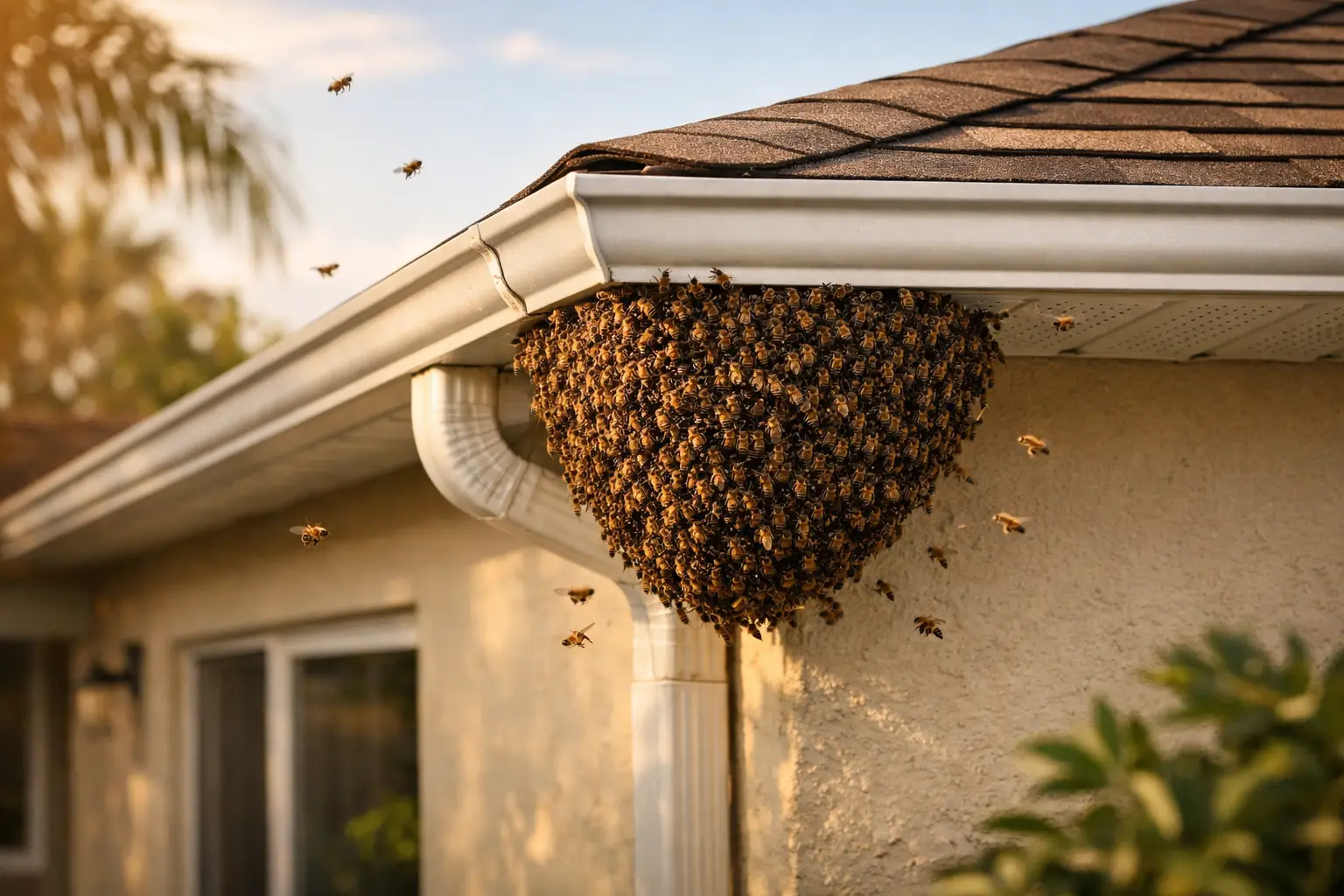

That faint buzzing near the roofline is easy to ignore until it turns into a steady stream of bees slipping in and out of a soffit vent. If you need to stop bees entering soffit spaces, the first thing to know is that the opening is rarely the real problem. The opening is just the doorway. The reason bees keep using it is usually because the space behind it feels dry, protected, and ideal for a colony.
For homeowners, that can quickly become more than a nuisance. A soffit colony can grow large, store honey inside the structure, stain materials, attract ants and roaches, and create a sting risk near doors, patios, or walkways. For property managers and HOAs, it becomes a liability issue just as fast. The right response is not simply blocking a hole and hoping the activity stops.
Why bees choose soffits
Soffits give bees something they actively seek out – a sheltered cavity with stable temperatures and limited disturbance. In Florida, especially during warm months, those roofline voids can be perfect nesting sites. Small gaps around vent screens, fascia joints, utility penetrations, or warped trim are often all they need.
A swarm looking for a home can test multiple points before settling. Once scout bees approve the cavity, the colony begins moving in. At that stage, what looks like a few bees can become thousands within a surprisingly short time.
This is why sealing a visible gap without understanding what is happening inside can backfire. If bees are already established behind the soffit, closing the entrance can trap live bees in the structure or force them deeper into the building envelope.
How to stop bees entering soffit before they move in
Prevention works best when bees are only investigating and have not started building comb. You can often tell the difference by watching activity. A few bees checking a gap on and off may be scouting. A steady pattern of bees entering with purpose, especially over several hours or days, suggests active occupation.
If the bees are still scouting, the goal is to make the site unattractive fast. That usually means repairing gaps, replacing damaged vent screens, securing loose soffit panels, and sealing construction joints with exterior-grade materials that match the structure. Fine mesh over vulnerable vents can help, but airflow still matters, so the material has to be appropriate for the vent design.
It also helps to look beyond the exact entry point. Bees often exploit the weakest section nearby, not necessarily the same hole every time. If one corner of the soffit has moisture damage, wood rot, or separation at the fascia line, that whole section should be inspected.
Stop bees entering soffit openings the right way
Homeowners often ask whether they should caulk the hole at night, spray foam into the gap, or use a hardware cloth patch and call it done. Those methods can work only when you are certain no colony is present. If bees have already started comb inside, closing the entry is not a fix. It is a trap.
Here is the trade-off. A quick seal may stop visible traffic for a day or two, which feels like success. But if brood, honey, and live bees remain inside, pressure builds. Bees may chew into adjacent areas, emerge indoors, or die inside the cavity, leaving behind wax and honey that continue damaging the structure.
Sprays create their own problems. Poisoned colonies inside soffits often collapse in place. That leaves comb to melt, ferment, and leak. Dead bees and abandoned honey also attract secondary pests. In structural bee work, the mess left behind is often more expensive than the original removal.
Signs bees are already living in the soffit
The pattern of activity tells a lot. If you see bees using one opening continuously through the day, carrying pollen on their hind legs, or clustering at the entrance, there is a good chance you have an established colony. A light tapping sound, a warm section of wall or soffit, or occasional bees appearing indoors can also point to a nest inside the structure.
Another clue is timing. Swarms tend to appear suddenly. Established colonies become more consistent. If the same location has had steady bee traffic for more than a few days, assume there may be comb inside until proven otherwise.
This matters because the next step changes completely. Prevention is a sealing job. An active colony is a removal job followed by repair and exclusion.
What humane removal actually solves
Live bee removal is not just about getting insects out of sight. It addresses the colony, the comb, the honey, and the reason they chose that spot. That is the only way to reduce the chance of repeat occupation.
In a proper structural removal, the technician identifies the colony footprint, opens only what is necessary, removes bees and comb, and then cleans the cavity before sealing and restoring access points. If relocation is possible, the colony can be rehomed rather than destroyed. For an eco-conscious homeowner, that is usually the best outcome. For a commercial property, it is also the cleaner long-term risk decision.
Not every situation is identical. A small new colony in an accessible soffit may be straightforward. A large established hive extending into eaves or wall voids is more technical. The longer it remains, the larger the repair scope can become.
Why soffit bees are often misdiagnosed
People commonly say they have bees in the soffit when they actually have wasps, hornets, or carpenter bees around the roofline. The response should be different for each. Honey bees are cavity nesters and often move into voids. Paper wasps build exposed comb. Carpenter bees bore into wood individually. Treating them all the same usually leads to poor results.
Honey bees also vary in temperament. Some colonies remain fairly calm if left alone. Others are defensive, especially near an entrance. In Southwest Florida, where aggressive genetics can occur, caution matters. If bees are near a front door, pool area, playground, or business entrance, this is no longer a wait-and-see situation.
Prevention after removal matters as much as removal itself
Once the colony is out, the structure needs to be made less appealing. This is where many repeat infestations begin. If the cavity still smells like beeswax and the entry point is poorly sealed, new scouts may return.
A good post-removal plan usually includes replacing damaged soffit material, screening vents correctly, sealing gaps at trim intersections, and checking adjacent roofline sections for secondary access points. In some cases, staining or odor treatment inside the void is needed because scout bees can be drawn to residual hive scent.
This is also the time to look at broader building conditions. Roof leaks, soft wood, and loose panels are not just maintenance issues. They create habitat. A building that sheds water properly and has tight roofline construction is simply harder for bees to occupy.
When you should not handle it yourself
If you are seeing more than occasional scout bees, hearing buzzing in the soffit, noticing bees indoors, or dealing with activity near children, pets, tenants, or customers, it is time to step back. Ladder work near an active colony adds a fall hazard to a sting hazard. For businesses and HOAs, it also creates liability if an untrained person disturbs the colony.
Humane structural bee removal is especially important when the colony is established. The goal is not just to make the bees disappear from the outside. The goal is to solve the structural problem without creating a hidden one behind the wall or roofline.
For property owners in Southwest Florida, this is not rare. Warm weather extends bee activity, and soffits stay attractive for much of the year. Companies like Beeswild handle these cases with live removal and relocation because killing the colony inside the structure often leaves the worst part behind.
A practical way to think about next steps
If bees are only scouting, seal and repair vulnerable soffit openings quickly. If bees are entering and exiting with consistency, assume there may be a colony and avoid blocking the entrance until the space is properly assessed. That one distinction can save a lot of money and a lot of damage.
The safest fix is the one that deals with both the bees and the building. When you treat the soffit as part of the problem, not just the hole you can see, you have a much better chance of keeping bees out for good.
If bees have picked your roofline, act early. A small problem at the soffit can become a structural cleanup job faster than most people expect.

3 Responses
[…] timing is critical: never seal an opening with active bee traffic. If bees are entering and exiting a hole, there may already be a colony inside. Closing it can trap […]
[…] not seal the entrance while bees are active. Closing the visible hole can trap bees inside and force them to find another […]
[…] are one of the most frequent bee entry points because they offer shade, height, and access to enclosed attic or roof spaces. Look for loose […]