
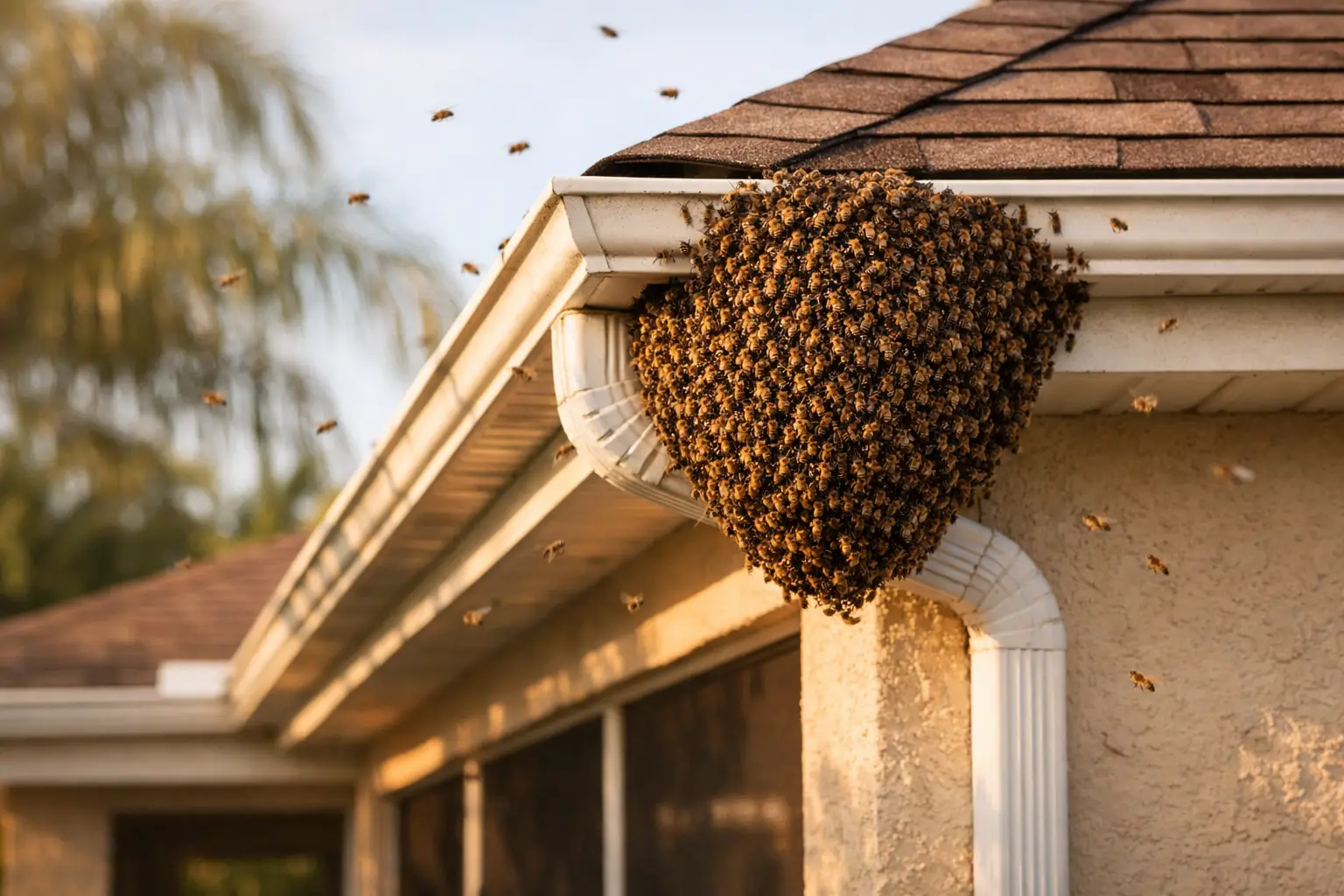

The price usually stops feeling abstract the moment you hear buzzing in a wall, see bees pouring out of a soffit, or spot a swarm hanging over the front walk. At that point, honey bee removal cost is not just a number – it is tied to safety, property damage, and whether the colony is handled in a way that actually solves the problem.
For homeowners and property managers, the hardest part is that bee removal pricing can vary a lot from one job to the next. That is not because the industry is hiding the ball. It is because removing a small, exposed swarm from a tree branch is a very different project from opening a stucco wall to remove a mature colony, brood comb, honey stores, and all the residue that would otherwise keep attracting pests.
Why honey bee removal cost varies so much
A realistic quote depends first on what kind of bee situation you have. A swarm is usually the least invasive scenario. Swarms are temporary clusters of bees, often resting on a branch, fence, or mailbox while scouts look for a permanent home. If the cluster is reachable and there is no comb built into a structure, removal is faster and less destructive.
A colony living inside a wall, roofline, chimney, shed, or water meter box is a different matter. Once bees have established comb, stored honey, and started raising brood, the job becomes part bee work and part light demolition. The technician may need to open the structure, physically remove comb, vacuum bees safely, contain honey, and then clean the cavity so the site does not keep drawing future swarms.
That is why one property owner may pay a few hundred dollars and another may pay much more. The labor, risk, equipment, and repair complexity are simply not the same.
What affects honey bee removal cost most
The single biggest factor is access. Bees tucked behind second-story fascia, under barrel tile roofing, or deep inside a block wall take more time and more care than bees hanging in plain view. Height, roof pitch, attic heat, and the need for ladders or lifts all add difficulty.
Colony size matters too. A newly arrived swarm may contain a few pounds of bees and no established comb. A mature colony that has been in a structure for months can hold substantial comb, honey, brood, and a large population. More material means more time to remove, more mess to manage, and more opportunity for hidden damage.
The location of the colony inside the structure also changes the price. Bees in a hollow tree on a property may be removable with minimal impact. Bees behind drywall in a bedroom wall or packed into a soffit over an entryway can require careful opening and cleanup. In commercial spaces, access rules, customer traffic, and liability concerns can also increase labor planning.
Timing can affect price as well. Emergency calls, after-hours response, and jobs involving aggressive bee behavior may cost more. In Southwest Florida, warm weather can support bee activity for long stretches of the year, so delays can allow a manageable issue to become a larger one.
Typical price ranges homeowners may see
For an exposed swarm that is easy to reach, pricing is often on the lower end because there is no structural teardown and usually no honey-filled cavity to clean out. Once bees are inside a structure, costs rise because the real work is not just removing the insects. It is removing the comb and honey and addressing the reason the site would remain attractive if left untreated.
A straightforward structural removal may fall into a mid-range service price. A difficult removal involving masonry, roof systems, second-story access, or a large established hive can climb well beyond that. If repairs are needed after the bee work is complete, that may be billed separately depending on the company and the scope.
This is where cheap quotes can become expensive. If someone only removes visible bees but leaves comb and honey inside the wall, the property owner may soon face melting honey, stained drywall, fermenting odors, ants, roaches, beetles, wax moths, or even rodents. The original bee issue may appear gone, but the structure is still dealing with the consequences.
Low price vs real value
The lowest bid is not always the lowest total cost. Humane live removal often requires more skill than a spray-and-go pest treatment because the goal is to preserve the colony while fully resolving the structural issue. That includes locating the entire nest, removing comb, recovering the queen when possible, and cleaning the cavity well enough that another colony is less likely to move in.
Poison can look cheaper on paper, but it often fails as a complete solution. Dead bees inside a wall do not remove honeycomb. Honey left behind can liquefy in heat, seep through drywall, and attract other pests. If the queen or part of the colony survives, the problem can continue in a weakened but still active state.
A proper removal is really two jobs combined. It is livestock rescue and pest exclusion at the same time. That is one reason specialist pricing differs from general insect control.
Questions to ask before accepting a quote
If you are comparing estimates, ask what is actually included. Does the quote cover just bee collection, or full colony removal? Will the provider remove comb and honey from the cavity? Is cleanup included? Will they seal entry points or identify where a contractor should make repairs? Those details matter more than the headline number.
You should also ask whether the bees will be exterminated or relocated. For many customers, especially those trying to protect pollinators while keeping people safe, that distinction matters. A company that handles live removals should be able to explain the process clearly and tell you what limits exist. Not every situation allows a perfect rescue, especially with unsafe access or highly defensive colonies, but transparency matters.
Insurance and experience matter too. Structural removals carry risk. Opening a wall, working around roofing systems, or handling a colony near occupied areas is not casual work. A professional quote should reflect competence, not just speed.
Honey bee removal cost for commercial and HOA properties
Commercial sites and community properties often face a different pricing reality because the stakes are different. A colony near an entrance, playground, pool deck, dumpster area, or outdoor dining space is a public safety issue. The work may need to happen around residents, customers, or staff, and scheduling may be tighter.
These jobs can involve more documentation, coordination, and containment planning. If a property manager needs a licensed, insured specialist who can communicate clearly with boards, tenants, or maintenance teams, that value shows up in the estimate. The cheapest option may not be the one that best protects the property from repeat issues or liability.
Why location and season matter
Regional conditions affect both bee behavior and service logistics. In Florida, heat, humidity, and long foraging seasons can support rapid colony growth. A small bee problem in spring can become a larger structural removal by summer if it is ignored.
Travel time also plays a role, especially for urgent jobs outside a core service area. A local specialist in Southwest Florida may be able to respond faster and assess whether the issue is a transient swarm or a well-established colony. That distinction can save money if caught early.
When waiting makes the job more expensive
Property owners sometimes hesitate because the first quote feels high. That is understandable. But waiting can raise the cost if the bees are already established inside a structure. More comb gets built. More honey gets stored. More bees emerge. More heat and moisture affect the surrounding materials.
At some point, you are no longer paying just for removal. You are paying for delayed removal plus cleanup plus repair. This is especially true when bees are in walls, soffits, chimneys, or rooflines where honey can spread into building materials.
What a fair quote should feel like
A fair quote should not feel vague. It should explain what the technician believes is happening, what may only be confirmed after opening the area, and what could change the final price. Good bee work involves some uncertainty because colonies are hidden, but that uncertainty should be discussed upfront.
You should also feel that the provider respects both sides of the problem – the people on the property and the bees themselves. Bees are not disposable pests. They are valuable pollinators and managed livestock when handled correctly. Companies built around live removal and relocation, including operations like Beeswild in Southwest Florida, approach the job with that balance in mind.
If you are trying to judge honey bee removal cost, the better question is often this: what will it cost to solve the problem completely, safely, and without creating a bigger mess behind the wall? That is usually the number worth paying attention to. And if you act while the colony is still small, you often give both your property and the bees a better outcome.

No responses yet