
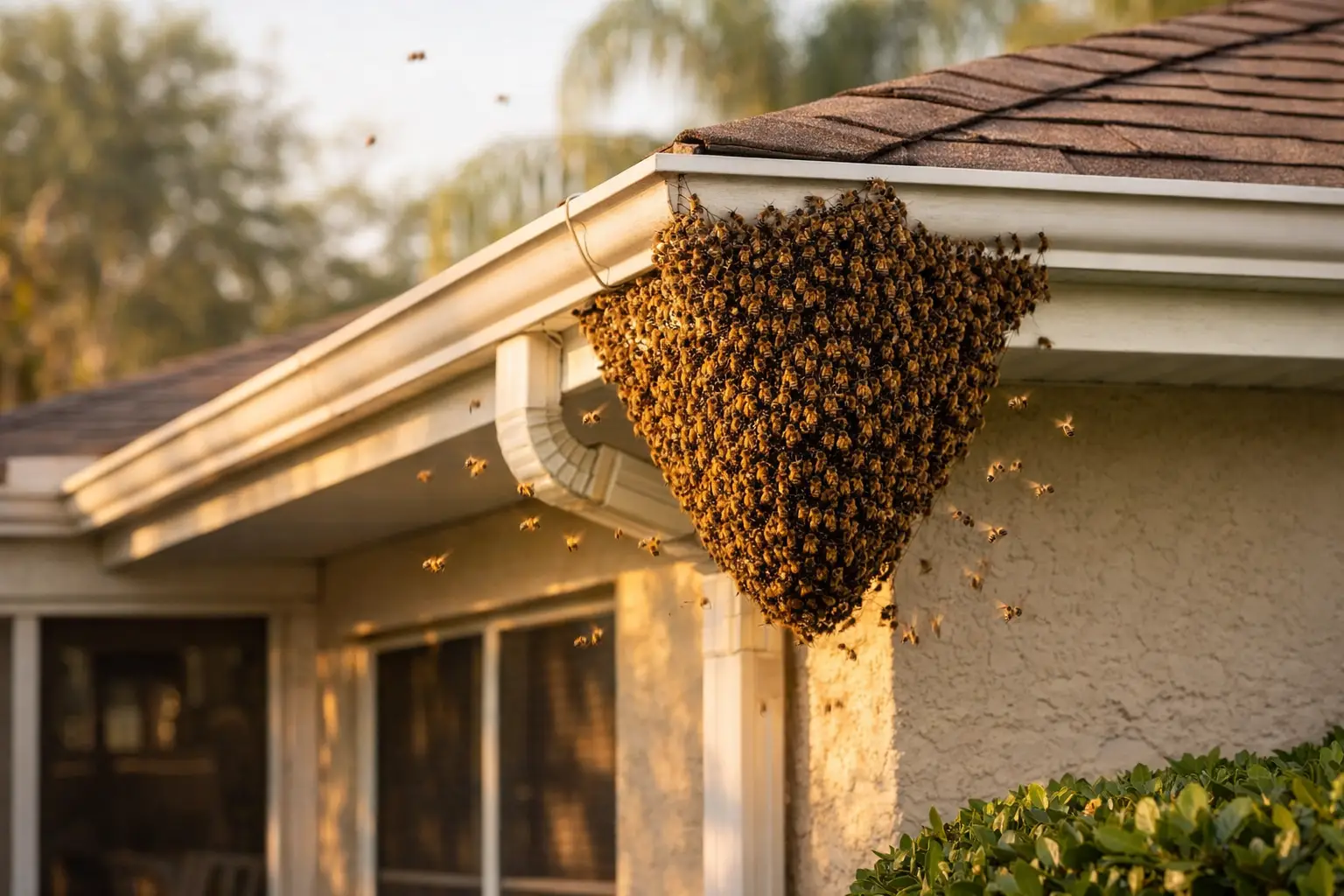

That light traffic of bees near a soffit or water meter is easy to dismiss – until it turns into a steady line of foragers disappearing into your wall. A real guide to bee proofing homes starts there: not with panic, and not with poison, but with understanding how a colony chooses a structure and why small gaps become expensive problems.
In Southwest Florida, warm weather stretches the season and gives scout bees more chances to find protected cavities. Homes offer exactly what colonies look for – shade, dryness, stable temperature, and a small defensible entrance. Once bees move in, the issue is no longer just the insects you see. Honey, wax, brood comb, and trapped moisture can damage building materials long after the colony is gone if the job is handled the wrong way.
Why bee proofing homes matters before bees move in
Most homeowners think about removal only after they hear buzzing in a wall. Prevention is cheaper, safer, and much less disruptive. Bee proofing is really about limiting attractive nesting cavities and sealing the few entry points a scout bee can exploit.
This matters because bees do not need a dramatic opening. A gap along roof flashing, a hole around conduit, a lifted soffit edge, or a crack near a utility penetration can be enough. If the cavity behind it is dry and protected, that small defect can become the front door to a colony.
There is also an important distinction between a temporary swarm and an established nest. A swarm resting on a branch may stay only a day or two while scouts search for a permanent home. A colony inside a structure is different. It is building comb, storing honey, and growing in place. Bee proofing helps prevent that second scenario, which is the one that leads to repairs and repeat activity.
The guide to bee proofing homes starts with inspection
A good inspection is less about seeing lots of bees and more about reading the building. Walk the exterior slowly and look up as much as you look ahead. Rooflines, soffits, fascia boards, gable vents, chimney gaps, siding joints, and wall penetrations deserve the most attention.
Watch for repeated bee traffic at a single spot. One or two bees in a yard may mean nothing. A consistent flight path to a crack or hole usually means something. Mid-morning through late afternoon is often the easiest time to spot this movement.
You should also think about what the home is made of and how it ages. Older homes often have shrinking seals, warped trim, or patched areas that reopen with heat and rain. Newer homes can still have vulnerable utility penetrations or builder gaps around vents and fixtures. Bee proofing is not one repair. It is a habit of catching these weak points before bees do.
The most common entry points
In structural removals, the same problem areas show up again and again. Soffits are a major one because they create long protected cavities. Roof returns and fascia gaps are another, especially where materials have shifted. Water meter boxes, irrigation valve boxes, and hollow block walls can also attract colonies.
Vents deserve special attention. If screening is damaged, missing, or too open, bees may investigate. The same goes for gaps around plumbing, electrical, and HVAC lines. These are easy to overlook because the hole may be hidden behind a cover plate or shaded by landscaping.
What makes a property more attractive to bees
Bees are not targeting a family. They are responding to shelter. Properties with unsealed voids, neglected exterior repairs, and low-disturbance cavities are simply easier to occupy. Empty structures, seasonal homes, sheds, and detached garages can be especially vulnerable because activity is lower and issues go unnoticed longer.
Water access can also play a role. Bees need water for cooling the hive. Birdbaths, leaking spigots, irrigation runoff, and pool areas do not create infestations by themselves, but they can make an area more supportive once bees are nearby.
How to bee proof a home without creating bigger problems
The goal is to deny access, not trap a colony inside. That distinction matters. If you seal a hole while bees are actively using it, you may force them into another part of the structure or leave comb, honey, and brood sealed inside. That can lead to odors, staining, fermentation, and pests.
So before sealing anything, confirm whether the opening is inactive. If there is active bee traffic, the right next step is professional live removal and cleanup, followed by repair and exclusion. Humane relocation protects the colony when possible, and proper removal addresses the material bees leave behind. That is why poison is such a poor shortcut in structural cases. It may kill bees, but it does not remove the comb and often makes the aftermath worse.
Once an area is confirmed inactive, seal it with durable exterior-grade materials appropriate for the surface. Caulk works for narrow stationary joints, but larger voids may need backing material, trim repair, hardware cloth, or replacement components. Quick patch jobs tend to fail in Florida heat, rain, and UV exposure.
Screening, sealing, and repair priorities
Focus first on openings that lead into enclosed cavities. Secure attic and crawlspace vents with proper screening that still allows ventilation. Repair loose soffits and fascia rather than covering over them cosmetically. Close gaps around conduit and pipe penetrations. Replace rotted wood instead of sealing over decay.
There is always a trade-off between speed and durability. Spray foam, for example, can be useful in limited cases, but it is not a universal exterior fix and it degrades when exposed. Fine mesh screening can block bees, but if it is installed poorly, it can restrict airflow or pull loose in storms. The best repair is the one that fits the structure and lasts through weather.
Landscaping and yard conditions
Bee proofing homes is mostly about the building envelope, not removing every flowering plant from the yard. Pollinator-friendly landscaping is not the enemy. What matters more is keeping branches from rubbing against structures, trimming back dense vegetation that hides entry points, and reducing neglected zones where bee activity goes unnoticed.
Ground-level utility boxes should close tightly. Decorative hollow features, overturned pots, and unused equipment should not be left creating sheltered cavities near the home. Think of the yard as part of the inspection area, especially where structures meet irrigation, fencing, and storage.
When prevention becomes a removal issue
If you hear buzzing in a wall, see bees entering the same gap all day, or notice staining around an opening, prevention has already moved into removal territory. At that point, DIY sealing is risky. The same is true if anyone at the property has a sting allergy, if bee behavior is defensive, or if the colony is near a doorway, play area, or business entrance.
Professional help is not just about getting bees out. It is about opening the right area, removing comb and honey, cleaning the cavity, and repairing the access point so the same location does not invite another colony. That final step is where many repeat infestations begin or end.
For homeowners and property managers, a warranty matters here. A same-place removal warranty, such as the three-month coverage offered by Beeswild.com LLC, reflects confidence in the exclusion work, not just the removal itself. That is an important difference when evaluating service quality.
A seasonal approach to bee proofing homes
The smartest time to inspect is before peak swarm activity and again after storm season. In Florida, wind and heavy rain can loosen trim, screens, and flashing faster than people expect. A house that looked tight six months ago may have two or three new vulnerabilities now.
A practical routine is simple: do one careful roofline and exterior check in early spring, another after major summer weather, and a quick visual scan anytime contractors work on roofing, siding, plumbing, or electrical systems. New penetrations and incomplete repairs are common entry points.
For commercial sites and HOAs, scheduled inspections are even more valuable because liability changes the stakes. A colony near signage, dumpster enclosures, outdoor dining, or community mail areas can go from minor concern to urgent safety issue very quickly.
Bee proofing is not about turning a property into a sterile space. It is about respecting how bees behave and making your structure a poor nesting choice. When a home is well sealed, maintained, and watched carefully, bees are far more likely to keep moving and settle somewhere better suited for both them and you.

No responses yet