
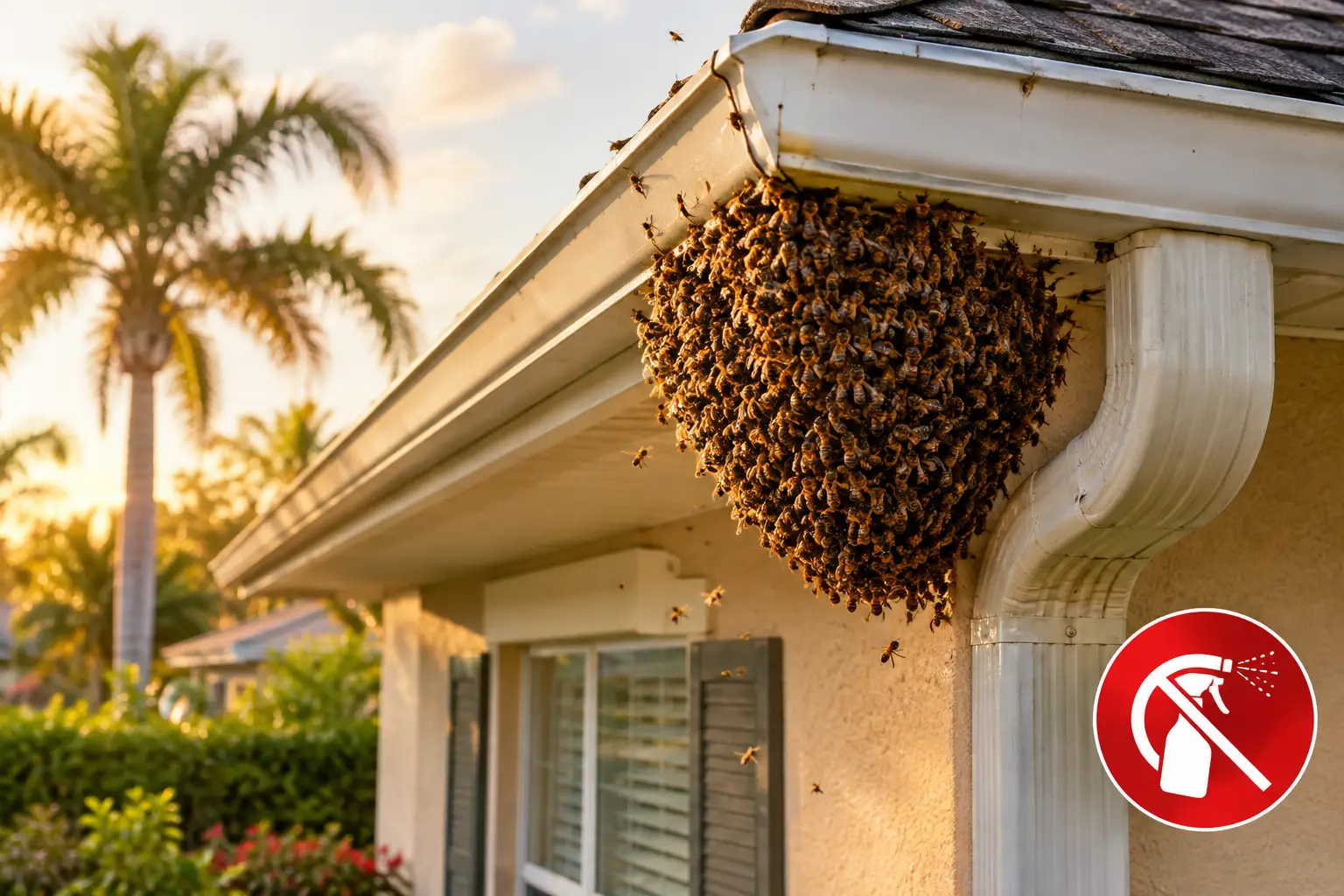

A bee-covered branch can stop a backyard gathering, alarm a neighbor, or make a property manager worry about liability. So, who removes bees from trees? The best call is usually a trained live bee removal specialist or experienced beekeeper equipped to assess the colony, safely collect it, and relocate it rather than destroy it.
The right response depends on what is actually in the tree. A temporary swarm hanging openly from a limb is very different from a long-established colony living inside a hollow trunk. Both deserve professional attention when they are close to people, pets, entryways, playgrounds, or work areas. The removal method, time required, and level of risk are not the same.
Who Removes Bees From Trees?
Live bee removal professionals remove honey bees from trees when the bees create a safety concern or have established a nest where they cannot remain. These specialists combine beekeeping knowledge with removal experience. They know how to handle bees calmly, identify whether a group is a swarm or an active colony, protect nearby people, and move the bees into a transport hive.
Some general pest-control companies will address bee activity, but their approach may focus on extermination. That can be appropriate for certain dangerous insect problems, but honey bees are valuable pollinators and livestock. When live removal is practical, relocation is the more responsible option.
A qualified bee removal professional should explain what they see before recommending a solution. If the bees are honey bees, the goal is generally to remove the queen and as much of the colony as possible. The workers follow the queen into a collection box, allowing the colony to be moved to an apiary or other safe location.
In Southwest Florida, that assessment also matters because bee behavior can vary. A defensive colony should never be approached casually, especially around children, pets, outdoor staff, or customers. Professionals use protective equipment and work methods designed to reduce disturbance.
First, Determine Whether It Is a Swarm or a Colony
A swarm often looks dramatic: thousands of bees clustered in a dense, moving ball on a branch, fence, shrub, or other exposed surface. It may appear suddenly, usually after a colony divides. The bees are typically resting while scout bees search for a permanent home.
Although a swarm can still sting if threatened, it is often easier to collect than an established colony. There may be no honeycomb in the tree and no large honey stores to remove. A beekeeper can frequently place a collection box below or beside the cluster and gently guide the bees into it.
A colony is more established. You may notice bees entering and leaving the same opening in a hollow trunk, knot hole, or cavity day after day. Inside, there may be comb, brood, honey, pollen, and a queen. This is not simply a cluster that can be shaken into a box.
Removing an established colony may require carefully opening access to the cavity, removing comb, collecting bees, and closing the opening afterward. Leaving honeycomb behind can attract ants, wax moths, beetles, rodents, and new bee colonies. The job is more involved, but complete removal protects both the tree area and the property around it.
When a Tree Colony Needs Professional Removal
Not every bee colony in a tree requires immediate action. A healthy colony high in a large tree, far from regular foot traffic, may be able to remain safely where it is. Honey bees play a direct role in pollinating gardens, farms, and natural landscapes.
The decision changes when people must pass near the tree or when the colony shows defensive behavior. A professional evaluation is wise if the nest is near a front door, driveway, pool, patio, sidewalk, school area, playground, restaurant seating, or worksite. Commercial properties and HOAs have an added responsibility to reduce foreseeable risks for visitors and residents.
Call for help promptly if bees have stung someone, are following people, are repeatedly bumping into faces, or react aggressively when the tree is approached. Avoid mowing, trimming, pressure washing, or using loud equipment nearby until the situation has been assessed. Vibrations and disturbance can trigger a defensive response.
A dead or storm-damaged tree deserves special attention. Cavities can make excellent bee homes, but weakened limbs can fail without warning. Tree work and bee removal sometimes need to be coordinated so neither crew is put at unnecessary risk.
What Safe Live Bee Removal Looks Like
A responsible removal starts with observation. The specialist watches flight patterns, identifies the nest entrance, estimates the colony’s size, and checks whether access is safe. They also consider where the bees might fly during the work and how to protect nearby people and animals.
For an exposed swarm, removal may be relatively quick. The crew places a hive box near the bees, transfers the cluster, and waits for stragglers to follow the queen. The branch is then checked to ensure that the majority of the bees have left.
For bees inside a tree cavity, the process takes more patience. The access point may need to be carefully widened so comb can be removed without damaging more of the tree than necessary. The bees are vacuumed or guided into a hive box using equipment designed for live collection. Comb containing brood is often secured into frames so the developing bees can continue in their new home.
Afterward, the cavity should be cleaned as thoroughly as access allows and sealed or protected. This step is not cosmetic. Residual wax and honey can attract pests and may invite another swarm to occupy the same space. A trained provider will be candid about the limits of a particular tree cavity, especially if the colony is deep inside decayed wood or inaccessible high in the canopy.
Why Spraying Bees in a Tree Can Create a Bigger Problem
Homeowners sometimes consider aerosol insecticides, soap sprays, fire, water hoses, or knocking down a branch. These methods can make a manageable situation dangerous in seconds. Disturbed bees may defend the colony, and a partial treatment can leave injured or agitated bees behind.
Poison also does not solve the underlying site issue when honeycomb remains in a cavity. Dead bees and stored honey still create an attractive food source for other insects and animals. If the tree is close to a structure, foraging bees may also move toward another void in a wall, soffit, roofline, or shed.
Relocation requires more labor than simply applying chemicals, and it is not always possible in every circumstance. That is the trade-off. Yet when a colony can be rescued, live removal avoids unnecessary bee loss while addressing the homeowner’s legitimate safety and property concerns.
What to Do While You Wait for Help
Give the bees space. Keep children, pets, guests, and maintenance crews away from the tree, and ask neighbors not to investigate. If the colony is near a path or entrance, use a safe alternate route until a professional arrives.
Do not throw objects at the cluster, cut the limb, cover the nest with a bag, or seal an active opening. Bees trapped inside a cavity may find another exit, sometimes in a less convenient direction. Do not smoke them out or try to move a hive after dark. Low light does not make an established colony harmless.
If possible, take a photo from a safe distance and note the tree’s location, the height of the bees, and whether you see them using a hole in the trunk. This information helps a removal specialist arrive prepared. If anyone has a known severe sting allergy, prioritize distance and seek emergency medical care immediately for signs of a serious reaction, including trouble breathing, facial swelling, widespread hives, dizziness, or vomiting.
Choosing a Bee Removal Company
Ask whether the company performs live removal and relocation, not only extermination. Ask how they handle comb and honey in tree cavities, whether they are insured, and what follow-up they provide if bees return to the same location. Clear answers are a good sign.
It also helps to ask whether the company can identify honey bees before work begins. Many flying insects are mistaken for bees, including wasps, yellow jackets, and carpenter bees. Each requires a different response, and a professional should not promise a one-size-fits-all treatment from a description alone.
For Cape Coral and surrounding Southwest Florida properties, Beeswild.com provides live bee removal and relocation, with colonies rehomed in safe farm areas when conditions allow. The company also offers a three-month same-place-removal warranty, which provides reassurance when a former nesting site needs monitoring after service.
The safest next step is simple: step back, keep the area quiet, and let a trained bee professional determine whether the bees are resting, nesting, or defending a colony. That measured response protects your household while giving a valuable colony its best chance to keep doing the work bees do best.

No responses yet