
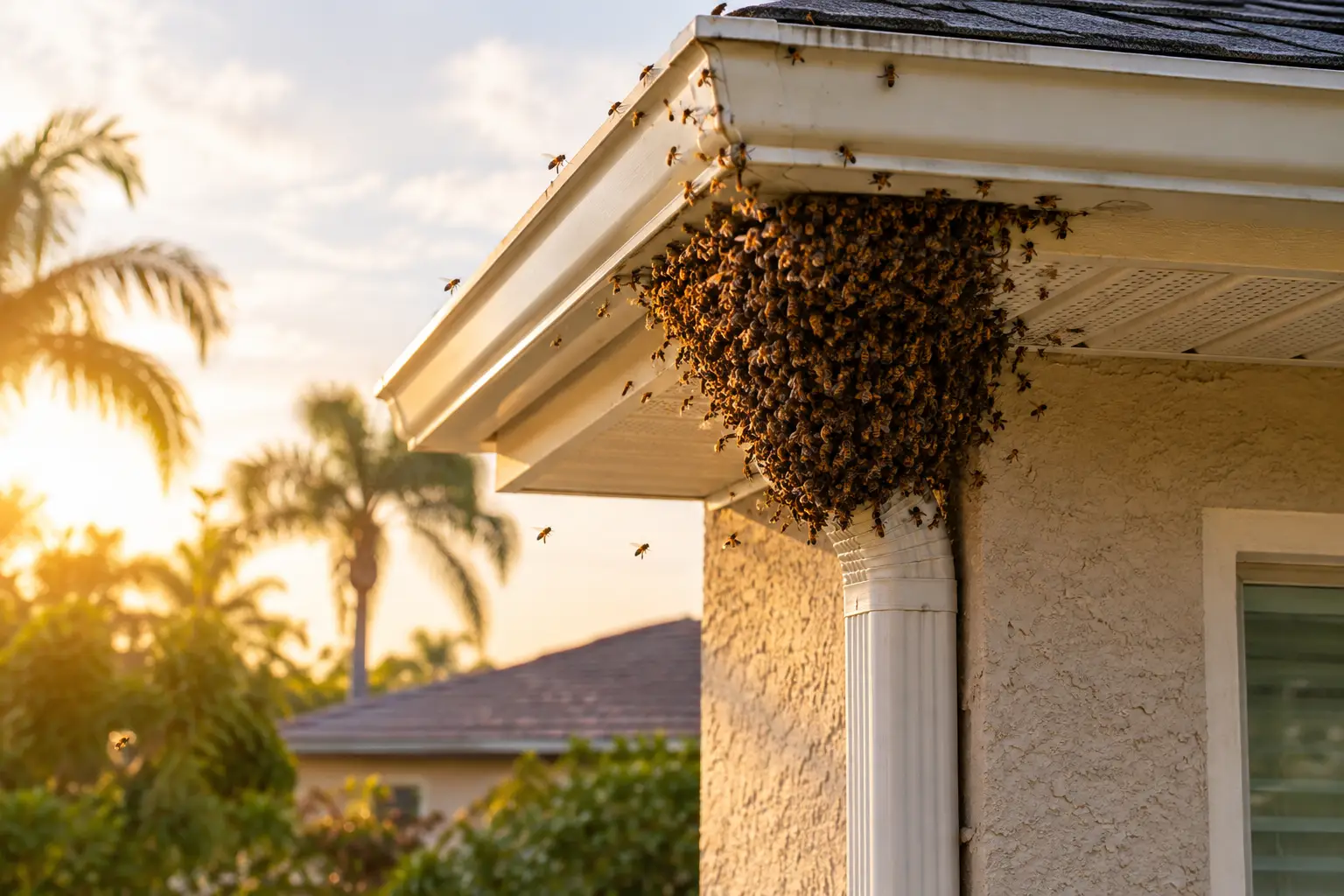

A steady stream of bees disappearing behind a stucco crack, vent, or roofline is more than a nuisance. Can bees damage stucco walls? Yes, but usually not because bees eat stucco. The larger risk is what an established honey bee colony builds and stores inside the wall cavity: wax comb, honey, pollen, brood, moisture, and a living population that can grow quickly.
For a Southwest Florida homeowner, the visible bees are often only the first sign. A colony may be tucked behind the exterior finish, between framing members, or above a soffit where the wall connects to the roof. Leaving it in place can turn a small entry point into a costly cleanup and repair issue.
Can Bees Damage Stucco Walls Directly?
Honey bees do not chew through sound stucco the way termites damage wood. They normally enter through an existing opening, such as a gap around a utility penetration, an unsealed crack, a missing screen, a loose trim detail, or a small break near the roofline. Once they find access to a protected cavity, the space behind the stucco can be an attractive, dry place to establish a hive.
That distinction matters. The stucco may not be the original problem, but an active colony can make a small construction defect much more serious. Bees can use openings surprisingly small, then build comb over a broad area inside the wall. The longer the colony remains, the more material accumulates behind the finish.
In some cases, what looks like a bee problem is actually a solitary bee or wasp using a small surface hole. Solitary bees are generally temporary and do not build large honey-filled colonies in wall cavities. Honey bees are different. Regular flight traffic in and out of one opening, especially on warm days, is a strong reason to have the area evaluated by a qualified bee removal professional.
The Damage Usually Happens Behind the Stucco
The most significant damage from honey bees is indirect. A mature colony can store substantial honey and build multiple sheets of wax comb within a wall. That material does not disappear when bees leave or are killed.
Honey is the primary concern. In Florida heat, honey and wax can soften, seep, and stain. It may travel through insulation, sheathing, drywall, electrical openings, or ceiling areas before a homeowner sees evidence indoors. A sweet odor, sticky spot, yellow-brown stain, or unexplained activity from ants can all point to stored honey inside a cavity.
Moisture is another concern. Honey absorbs water from humid air, and leaks around the original bee entry point can compound the problem. Over time, moisture may contribute to deterioration in nearby wood components, corrosion around metal fasteners, or damage to interior finishes. Not every colony causes these outcomes, but the risk increases with colony size and duration.
An abandoned hive also attracts other pests. Ants, roaches, wax moths, beetles, and rodents may be drawn to honey, pollen, wax, and brood remnants. This is why simply waiting for the bees to leave is rarely a complete solution when a colony has been established in a wall.
Weight and localized repairs
Comb is light by itself, but a large colony storing honey can add meaningful weight inside a confined space. More often, the practical issue is not wall collapse but the need to open a controlled section of stucco or interior drywall to remove the comb completely. A careful removal can involve targeted access, rather than broad demolition, followed by proper sealing and repair of the original entry point.
The repair should address both the visible exterior finish and the hidden pathway bees used. If the entry gap remains open, another swarm may move into the same cavity later.
Why Spraying or Sealing the Opening Can Backfire
It is understandable to want the bees gone immediately, especially near doors, patios, pools, children, pets, or outdoor work areas. But spraying an active colony or sealing its entrance while bees and comb remain inside the wall often creates a second problem.
If a pesticide kills the colony but leaves honey and comb behind, the residue remains available to melt, ferment, attract pests, and stain finishes. Surviving bees may also seek another exit and emerge through an interior wall, ceiling, light fixture, or vent. Sealing the entrance can trap bees inside and force them toward living spaces.
There is also a practical wildlife concern. Honey bees are valuable pollinators, and a removable colony can often be relocated rather than destroyed. Humane live removal focuses on taking out the bees, the comb, and the stored material whenever the structure allows. This protects the home while giving the colony a chance to continue in a managed apiary.
What Professional Live Bee Removal Should Address
A proper structural bee removal is more than collecting the bees visible outside. The work begins with locating the colony and determining how far the comb extends. A trained technician may assess flight patterns, wall features, roofline details, and signs of activity inside or outside the building before selecting the safest access point.
The goal is to remove the colony with as little disruption to the structure as practical, then remove comb and honey residue from the affected cavity. The technician should also identify the entry route so it can be sealed after the bees are out. This sequence is essential: remove the colony and attractants first, then close the opening.
For occupied homes, safety planning matters as much as removal. The work area may need to be kept clear of people and pets, and nearby windows, doors, or HVAC openings may require attention. Colonies can become defensive when disturbed, particularly if they have been in a wall for some time. Do not attempt to open stucco, spray the entrance, or block bee traffic yourself.
Beeswild provides live bee removal and relocation in Southwest Florida, including structural situations involving walls, soffits, and roof areas. Their approach is built around preserving viable colonies while addressing the construction conditions that allowed bees to move in.
Signs a Colony May Be Inside Your Wall
A swarm resting on a branch or exterior surface is usually temporary. A colony inside stucco is more likely when bees are following the same flight path into a crack or gap day after day. Activity may increase in the morning and afternoon as foragers leave and return.
Watch for bees entering near a hose bib, electrical conduit, attic vent, soffit, fascia board, window trim, or a crack in the stucco finish. Indoors, warning signs include a honey-like smell, a faint buzzing in a wall, discolored drywall, sticky residue, or a sudden increase in ants near one area.
Do not assume that fewer visible bees means the issue is resolved. Weather, time of day, and colony behavior can change flight activity. A professional inspection can distinguish between a temporary swarm, a small exterior cluster, and an established structural colony.
Preventing Bees From Returning to Stucco Walls
Prevention is mostly about building maintenance. Inspect exterior walls, roof transitions, and service penetrations periodically, especially after storm damage or repairs. Cracks, missing sealant, loose screens, and openings around pipes or cables deserve prompt attention.
Use appropriate exterior-grade materials for repairs, but do not seal a suspected bee entry point until you are certain no active colony is inside. If bees have already occupied the cavity, sealing first may push them indoors or leave honey and comb trapped behind the wall.
After removal, ask what opening was used and whether nearby gaps could create another access route. A sound exclusion repair is specific to the structure. It should keep bees out without blocking drainage details or creating a new moisture problem in the stucco system.
A wall colony is manageable when addressed early and correctly. Keeping the bees, comb, and honey together as one removal problem protects the property far better than treating the visible entrance alone.

No responses yet