
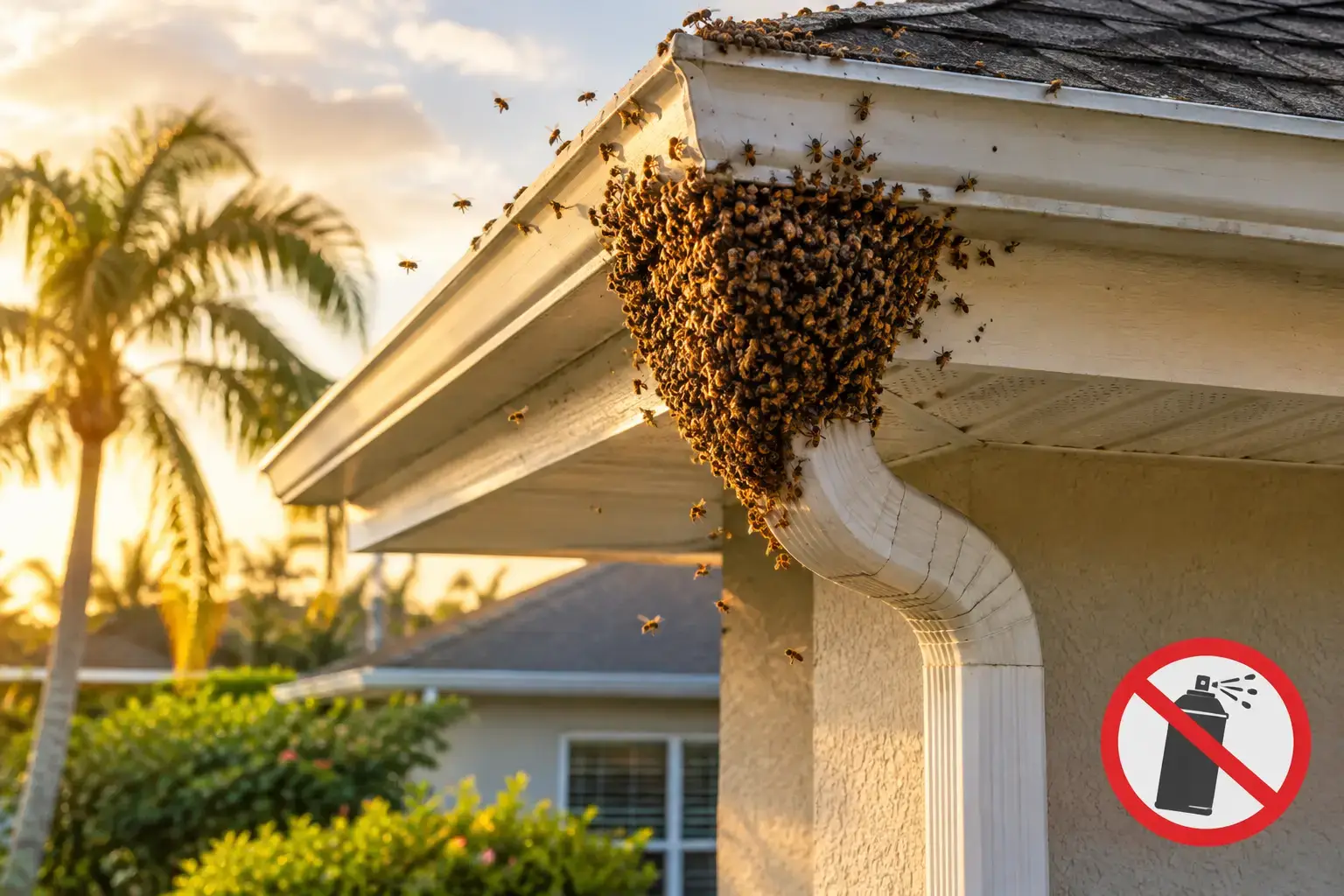

A sudden aggressive bee response near a home, pool deck, storefront, or playground changes the situation quickly. Bees that were barely noticeable one day may begin flying toward people, bumping into faces, or stinging after someone walks near a wall, tree, roofline, or utility box. That behavior is alarming, but it is not random. It is usually a colony’s defense system reacting to a perceived threat close to its nest.
For Southwest Florida property owners, the practical goal is simple: protect people and pets without making the bee problem worse. A measured response can preserve a valuable colony, prevent repeat activity in the same structure, and reduce the risk of honey, wax, and pests being left behind.
What an Aggressive Bee Response Means
Honey bees are not generally looking for conflict away from their hive. Foraging bees move from flower to flower and usually have little reason to defend themselves. The behavior changes near a colony, where worker bees guard the entrance, protect brood, and defend stored honey.
An aggressive response can include persistent circling, bees flying directly at a person, repeated stings, or bees following someone well beyond the nest area. One defensive bee can also release an alarm pheromone after stinging. That scent alerts other guard bees and can intensify the response, especially if a person keeps swatting or remains close to the colony.
The intensity varies widely. A small, recently established colony may react very differently than a large colony that has occupied a wall cavity for months. Genetics, colony condition, weather, vibration, odors, and proximity to the entrance all matter. In Florida, concern is higher because Africanized honey bee genetics occur in the state. These bees cannot be reliably identified by appearance in a yard, and behavior alone does not provide a definitive identification. What matters in the moment is managing the safety risk as if a highly defensive colony may be present.
Common Triggers for Defensive Bee Behavior
The most common trigger is disturbance near the nest. A colony hidden in a soffit, shed wall, water meter box, palm tree, or roof void may tolerate normal activity at a distance. Once mowing, trimming, pressure washing, construction, or repeated foot traffic occurs near its entrance, guard bees may react.
Lawn equipment is a frequent problem. Mowers, trimmers, leaf blowers, generators, and power tools create vibration and noise that can disturb bees inside a cavity. A homeowner may not even know a colony is present until a routine chore passes directly beside the entrance.
Strong scents can also contribute. Perfume, hair spray, gasoline, sweat, and the odor of a crushed bee may provoke attention from guard bees. Dark, textured clothing and quick movements can make a person more noticeable as well. These factors do not create aggression by themselves, but they can increase the chance of a defensive encounter when someone is already too close.
Weather and colony stress add another layer. Storms, extreme heat, food shortages, predator pressure, and damage to the hive can make colonies more reactive. A hive that has been sprayed, sealed into a wall, or partially removed may become especially dangerous because surviving bees cannot access their normal entrance or protect the colony effectively.
A swarm is usually different from an established colony
A visible cluster of bees on a branch, fence, or vehicle may be a swarm. Swarming is how honey bee colonies reproduce: the old queen leaves with part of the worker population to search for a new home. Swarms can look dramatic, but they often have no comb, brood, or honey stores to defend yet. They are frequently less defensive than a colony living inside a structure.
That does not mean a swarm should be handled casually. People should keep their distance, bring pets indoors, and avoid spraying it with water or chemicals. A swarm can settle into a wall or roof opening surprisingly fast, turning a relatively straightforward relocation into a more involved structural removal.
What to Do When Bees Become Aggressive
If bees begin flying at you or stinging, leave the area immediately. Move indoors, into a vehicle, or to another enclosed space. Cover your face and eyes as you go, but do not stop to swat bees. Running to a pond or pool is not a dependable solution because bees may wait near the surface or remain active around the area.
Once safe, keep others away. Bring children and pets inside, pause landscaping work, and avoid opening doors or windows closest to the activity. If the colony is at a business, HOA common area, school, or public facility, restrict access to the affected zone until a qualified professional can assess it.
For multiple stings, stings involving breathing difficulty, facial or throat swelling, dizziness, or a known severe allergy, seek emergency medical help immediately. Remove visible stingers promptly by scraping them out with a flat edge such as a card. The key is speed, not the specific removal method. Clean the area and monitor for worsening symptoms.
Do not plug the bees’ entrance, especially when they are living in a wall, attic, or roof void. Sealing an active colony can drive bees into the building interior or force them to find another exit. It also leaves comb, honey, brood, and wax in place. In Southwest Florida’s heat, that material can melt, leak, ferment, attract ants and roaches, or draw new bee colonies to the same location.
Why Spraying Often Creates a Larger Property Problem
It is understandable to want the bees gone immediately, particularly after a sting incident. But a pesticide treatment may kill part of a colony without removing the hive materials or stopping the underlying attraction of the cavity. Dead bees do not solve honey-filled comb inside a wall.
Chemical treatments can also create an unpredictable defensive period. Distressed bees may emerge from multiple gaps, relocate deeper into a structure, or become difficult to remove safely. If the queen and much of the colony survive, activity can continue despite the initial treatment.
Live removal addresses the entire problem: the bees, the queen, the comb, and the honey stores. The opening is then repaired or sealed only after the cavity has been cleared. This is the difference between temporarily reducing visible bee traffic and preventing a repeat colony from taking over the same space.
What professional assessment looks for
A qualified bee removal team evaluates where bees are entering, how long the colony may have been established, the likely size of the cavity, and whether people can safely use the surrounding area during removal. Thermal imaging, careful exterior observation, and knowledge of building construction can help locate a colony without unnecessary demolition.
The removal method depends on the site. A reachable swarm may be collected quickly, while a mature colony inside stucco, block, siding, or a roofline requires controlled access and full comb removal. The least invasive approach is preferable, but complete removal is often the better long-term choice when bees have built inside a structure.
Beeswild serves this need by relocating viable colonies to managed farm settings rather than treating them as disposable pests. For homeowners and property managers, that approach protects the property while giving the colony a real chance to continue its role in pollination.
Preventing Another Defensive Bee Incident
After removal, prevention is largely about excluding future colonies before they move in. Honey bees can use surprisingly small gaps around soffits, fascia boards, vents, utility penetrations, and damaged siding. Repairing those openings, keeping trees and shrubs trimmed away from rooflines, and checking seldom-used structures can reduce opportunities for nesting.
Property managers should also train maintenance crews to stop work if they see concentrated bee traffic entering a building opening. Continuing with a mower, ladder, or pressure washer near an unknown colony turns a maintenance issue into a potential injury and liability issue.
Bees deserve protection, but a defensive colony in the wrong place needs professional handling. When an aggressive bee response occurs, distance and calm decisions are the safest first tools – followed by removal that protects both the people on the property and the colony itself.

No responses yet