
You hear buzzing near the soffit, see a few striped insects circling the entryway, and suddenly the question matters a lot: are these honey bees or wasps? Good honey bees vs wasps identification can shape what you do next, because the right response for a pollinator colony is very different from the right response for a wasp nest.
For homeowners and property managers, misidentification is common. From a distance, both can look yellow, fast-moving, and unwelcome. Up close, though, they tell very different stories through body shape, flight pattern, nesting habits, and how they react when people get too close.
Honey bees vs wasps identification at a glance
The fastest visual clue is body shape. Honey bees look thicker and softer, with a fuzzy, golden-brown body. Wasps look smoother, shinier, and more sharply defined, often with a narrow waist that makes the body look pinched in the middle.
Color can help, but it is not the best place to start. Honey bees are usually warm amber, brown, and muted gold with darker bands. Wasps tend to show brighter, cleaner contrast, especially yellow and black. In Florida, that high-contrast look often points people toward yellowjackets or paper wasps.
Movement is another clue. Honey bees usually move with purpose from flower to flower or in a steady line to and from a nest entrance. Wasps often seem more erratic around food, trash, patios, rooflines, and sheltered corners. If insects are hovering around a sugary drink or outdoor meal, that leans wasp more than honey bee.
How to tell by body shape and texture
Honey bees are stout and hairy
Honey bees are built for collecting pollen. Their bodies are more rounded than wasps, and they have visible fuzz, especially on the thorax. That fuzz is not a minor detail. It helps pollen stick to their bodies, which is one reason they are such effective pollinators.
Their legs can also offer a clue. Worker honey bees may carry pollen in packed clumps on their hind legs. If you notice little yellow or orange bundles on the back legs, you are almost certainly looking at a honey bee.
Wasps are sleek and narrow
Wasps have less hair and more shine. Their bodies look cleaner, harder, and more angular. The waist is usually the giveaway. Many wasps have a very distinct narrow middle between the thorax and abdomen, giving them that classic sharp, streamlined look.
Paper wasps also tend to have longer legs that hang down noticeably in flight. Honey bees do not usually show that same dangling-leg profile.
Behavior differences that help with identification
Honey bees are focused on forage and colony traffic
Honey bees are generally not looking for trouble away from the nest. When they are out in the yard, they are usually gathering nectar, pollen, water, or plant resins. Around flowers, they tend to stay busy and relatively indifferent to people unless they are trapped, stepped on, or threatened.
Near a colony entrance, behavior changes. Guard bees may investigate movement, vibration, or noise close to the nest. If bees are entering and exiting one small opening in a wall, eave, or hollow tree in a steady stream, that is a strong sign of a honey bee colony rather than a casual wasp presence.
Wasps are more likely to investigate people and food
Wasps can be predatory, territorial, and highly interested in human activity. They may circle outdoor seating, garbage cans, pet food, grills, and sugary drinks. That behavior often makes them feel more aggressive, even when they are simply searching for food.
It depends on the species and the season. Early in the year, wasps may be less noticeable. Later in summer and early fall, they can become much more persistent around people. If you are seeing insects repeatedly land on food or hover around a trash enclosure, wasps are the more likely match.
Nest clues: where they live and what they build
Honey bees vs wasps identification by nest type
Nest structure is one of the most reliable ways to separate bees from wasps, but only if you can observe it safely from a distance.
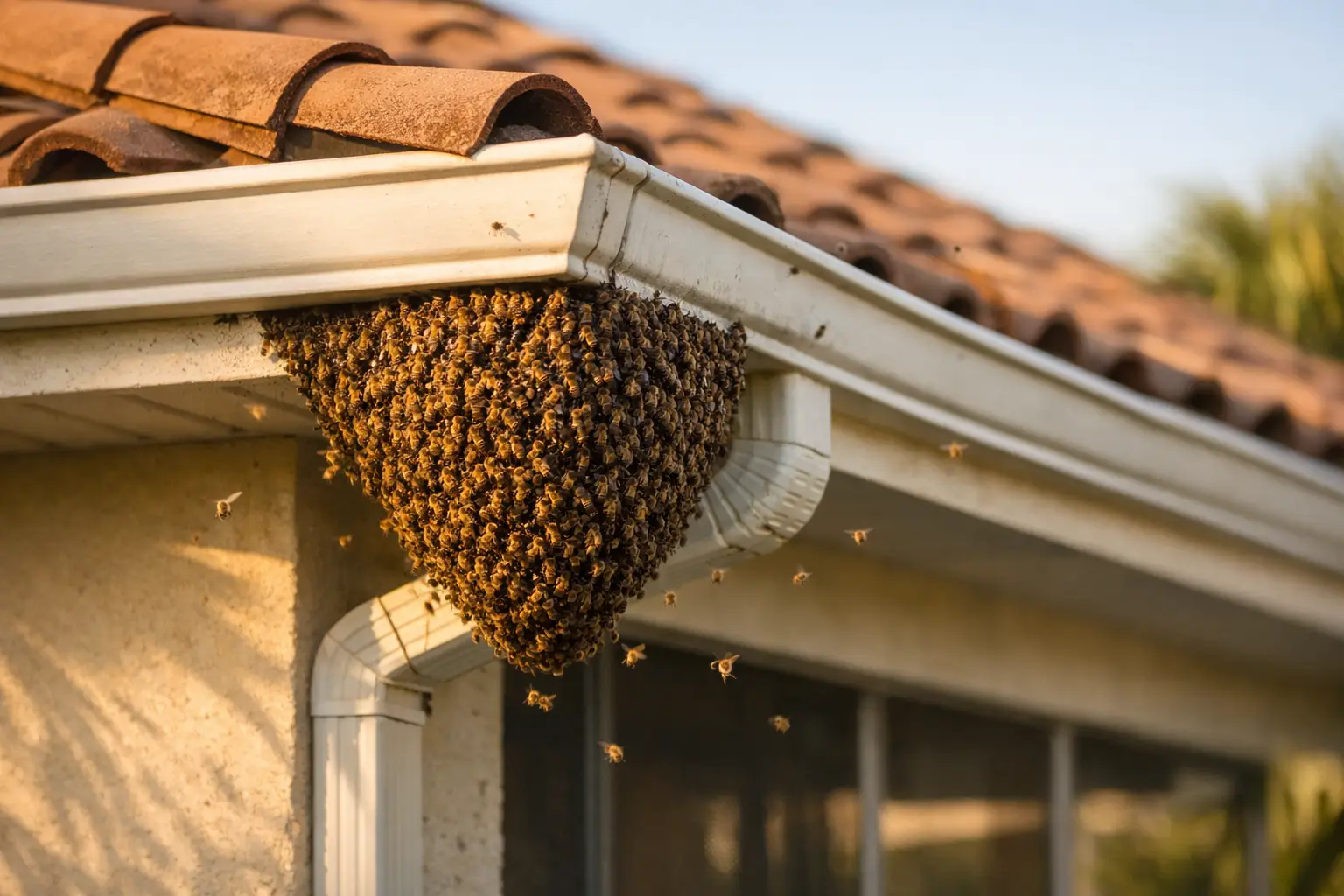
Honey bees build wax comb. Inside a wall, soffit, chimney void, or hollow tree, that comb is usually hidden from view. What you often notice first is traffic at the entrance. Bees may use a gap as small as a crack in siding or fascia and move in a steady line. Over time, you might also notice staining near the opening or hear activity inside the wall.
Wasps build different kinds of nests depending on the species. Paper wasps make open, umbrella-shaped comb nests, often under eaves, railings, and covered fixtures. Yellowjackets may nest underground or inside wall voids, but their nest material is paper-like, made from chewed wood fibers, not wax. Hornet nests are enclosed and papery, often football-shaped and suspended from branches or structures.
If the nest is exposed and looks like gray paper, it is not a honey bee nest. If the insects are disappearing into a structure and you cannot see the comb, identification gets trickier and should be handled cautiously.
Common mistakes people make
One frequent mistake is calling every striped insect a bee. Another is assuming every insect near a wall void is a wasp because it looks fast or intimidating. In reality, established honey bee colonies often live quietly inside structures for weeks or months before anyone realizes what is there.
People also confuse bumble bees with honey bees. Bumble bees are larger, rounder, and even fuzzier than honey bees. They usually do not create the same kind of large, permanent structural colony that honey bees do.
Florida adds another layer of confusion because defensive honey bees and social wasps can both create urgent safety concerns. The visual differences still matter, but so does behavior around the nest. If any stinging insect is acting highly defensive near a building entrance, playground, mailbox, meter box, or roofline, distance matters more than curiosity.
Why proper identification matters before treatment
A honey bee colony in a wall is not handled the same way as a wasp nest under an eave. Honey bees are valuable pollinators and, when possible, should be removed alive and relocated. Poisoning bees inside a structure can also create secondary problems, including dead brood, melting comb, leaking honey, staining, odor, and pests drawn to the aftermath.
With wasps, the response depends on species, location, and risk level. Some small paper wasp nests in low-traffic areas may be monitored. Others, especially around doorways, schools, pool enclosures, or commercial walkways, may require prompt removal.
This is where homeowners often need practical judgment, not guesswork. If the insects are entering a wall, roof, or soffit, and you cannot clearly identify them from a safe distance, treating first and asking questions later can make the situation worse.
A safe way to check what you are seeing
Start from a distance. Watch the insects for a few minutes without blocking their flight path. Look for body shape, whether they appear fuzzy or smooth, and whether they are traveling to flowers, food, or a single building opening.
If you can safely do so, note the nest material. Waxy comb points to bees. Gray or tan paper points to wasps. Do not tap the wall, spray anything, or climb close for a phone photo if the insects are concentrated around an entry point.
Timing can help too. Honey bees often keep regular daytime traffic to and from the nest. Wasps may seem more individually scattered unless you are close to their nest. That said, behavior alone is not perfect. Structural nests can fool even experienced property owners.
In Southwest Florida, where warm weather keeps insect activity going longer, fast identification matters because colonies and nests can expand quickly. A small problem near a soffit or utility box can become a larger safety and repair issue if left alone.
When to call a professional
Call for help if insects are entering a structure, if anyone on the property has a sting allergy, or if the nest is near a doorway, play area, pool equipment, or high-traffic commercial space. Those situations call for more than a quick internet comparison.
A professional can identify the insect, locate the nest, and explain the right next step. For bees, that may mean live removal and relocation. For wasps, it may mean targeted removal based on species and access. Beeswild, for example, works from the standpoint that bees are livestock worth saving when removal is possible and safe.
The most helpful next move is usually the calmest one. If you are unsure whether you are seeing bees or wasps, keep people and pets back, avoid spraying, and let identification guide the solution. That protects your property, reduces sting risk, and gives pollinators a better chance when they are the ones on site.

No responses yet