
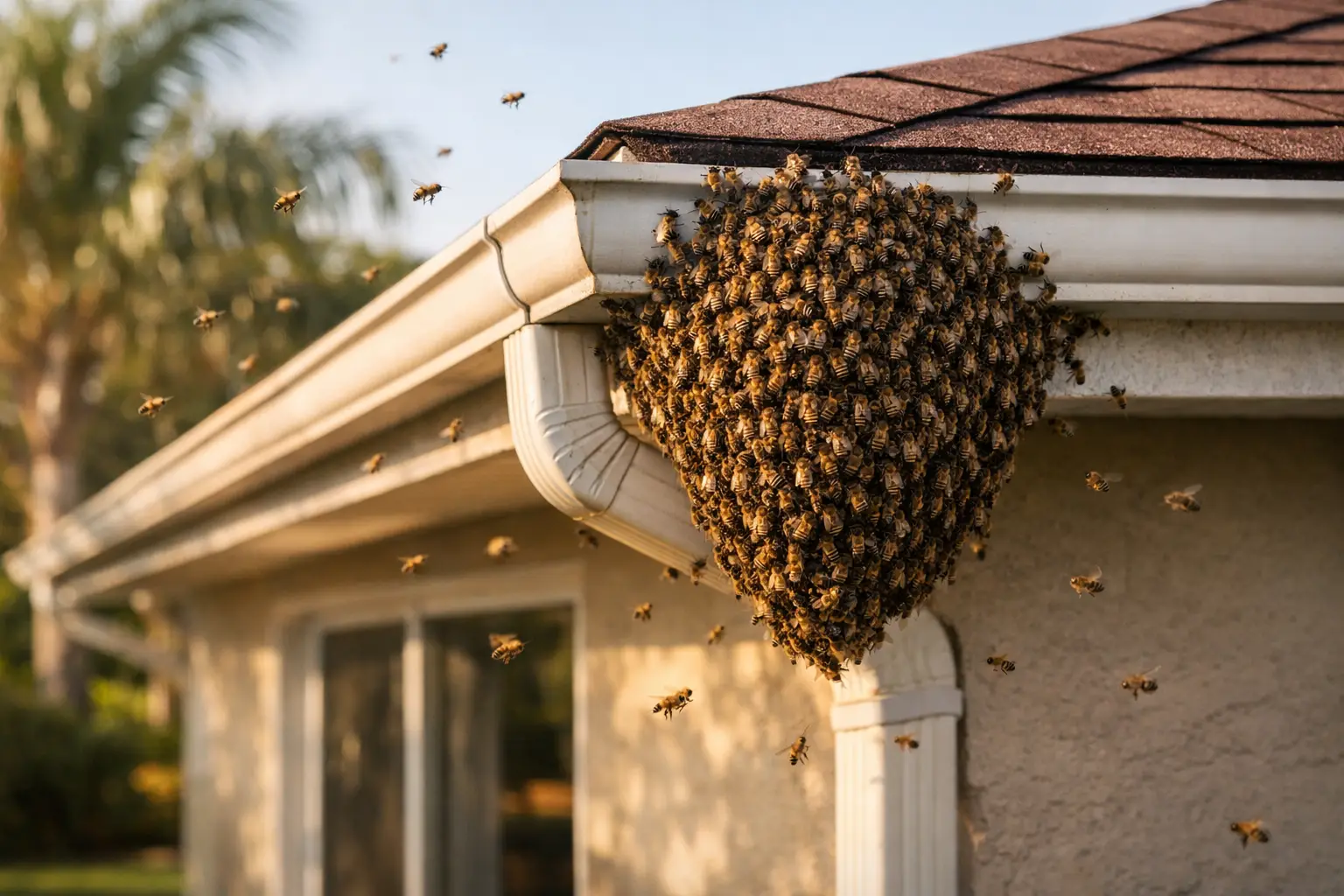

You usually do not notice a chimney colony the day it starts. You notice it when bees begin tracing a steady line in and out of the flue cap, when a faint buzzing carries into the fireplace, or when warm weather turns a small hidden nest into a serious structural problem. Bees in chimney removal is not just about getting insects out of sight. It is about protecting people, preventing honey damage inside the chimney system, and preserving a valuable colony whenever possible.
For homeowners, the first instinct is often to block the opening, light a fire, or call whoever can get there fastest. Those reactions are understandable, but they often make the job harder and the property riskier. A chimney is a confined vertical structure. Once bees establish comb inside it, the issue becomes part bee removal and part building problem.
Why bees choose chimneys
From a honey bee’s point of view, a chimney can feel like ideal real estate. It is dark, sheltered, elevated, and usually protected from direct weather. If the top is uncapped, damaged, or loosely screened, scout bees may treat it like a hollow tree. That is especially common during swarm season, when a colony is actively searching for a cavity large enough to build out comb.
Not every bee sighting at a chimney means there is a full colony inside. Sometimes a swarm lands briefly on the exterior and moves on. Sometimes a few bees investigate the opening and never commit. But if you see regular traffic over several days, especially with pollen coming in on their legs, there is a good chance brood comb is already being built inside.
That distinction matters because a swarm hanging outside can often be collected with minimal structural work. A colony that has moved down into the flue is a different kind of removal entirely.
Bees in chimney removal is a structural job
When bees settle inside a chimney, the visible insects are only part of the problem. The real issue is the comb. Honey bees do not simply occupy a space. They build wax comb, store nectar and honey, raise brood, and expand as conditions allow. In a chimney, that can mean sheets of comb attached to the flue wall or tucked into smoke chambers and voids.
A proper removal has to address all of it. If bees are taken out but the comb remains, melted wax and fermenting honey can soak into masonry, leak into walls, stain ceilings, and attract ants, roaches, rodents, and new swarms. In warm climates like Southwest Florida, that process can accelerate fast.
This is why humane bee removal is often misunderstood. People imagine the bees are the whole problem. In reality, the colony and the material it built are equally important.
Why poison usually makes things worse
Poison may sound like the fastest option, but in chimney work it often creates a second, more expensive problem. Dead bees remain in place. So does the brood, the honey, and the wax. Without live workers to ventilate and maintain the nest, the colony breaks down inside the structure.
That can lead to odor, staining, pest infestations, and honey seepage through tiny gaps around the chimney chase or fireplace surround. It also does not guarantee future prevention. New swarms are strongly attracted to old comb scents. A treated chimney that was never properly cleaned can become a repeat site.
For homeowners worried about children, pets, tenants, or customers, there is another issue. Agitated bees do not always stay in one place. Improper treatment can drive surviving bees into adjacent voids or interior living areas.
What proper live removal looks like
The right method depends on where the colony is located inside the chimney and how accessible the structure is. There is no honest one-size-fits-all answer. A straightforward flue removal is very different from a colony that has extended into a smoke shelf, attic interface, or wall cavity beside the chimney.
A professional assessment starts with behavior and access. Where are bees entering? How high is the colony? Is the chimney active for fireplace use? Is the structure masonry, prefab metal, or wrapped in a decorative chase? Those details determine whether the colony can be cut out directly, trapped out under limited conditions, or whether part of the surrounding material must be opened.
In most established chimney colonies, direct live removal is the cleanest approach. That means accessing the colony, removing the bees, physically removing the comb, and cleaning the area so it is less attractive to future swarms. If the colony is healthy, it can often be relocated to an apiary and managed properly rather than destroyed.
That last part matters. Honey bees are livestock. They pollinate crops, support local agriculture, and remain worth saving when the job is done correctly.
Why timing changes the removal
Season affects both bee behavior and removal complexity. During active spring and summer buildup, colonies can be large, productive, and heavy with stored nectar. That increases the amount of comb and honey that must be handled. In cooler periods, there may be less traffic at the entrance, but the colony can still be established deep inside.
Weather matters too. Rain, wind, and extreme heat can change when a team can safely work on a roofline or chimney top. For commercial properties and HOAs, that can influence scheduling, tenant communication, and safety planning.
What homeowners should do first
If you suspect a colony in the chimney, stop using the fireplace immediately. Do not light a fire to smoke them out. Besides the obvious safety issue, heat can melt comb and push honey deeper into the structure. It can also force bees into living spaces.
Do not seal the top or close off visible entry points. Trapping bees inside sounds logical, but it creates stress in the colony and often redirects bees to another escape route, sometimes through vents, wall gaps, or the fireplace itself.
Keep people and pets back from the area, especially if the colony seems defensive. Then document what you see. A short video of flight activity can help a removal specialist determine whether it is a small swarm, an established colony, or even a different stinging insect entirely.
If you are dealing with a shared building, restaurant patio, clubhouse, or apartment block, treat it as a liability issue as much as a maintenance issue. Restricted access and fast professional evaluation are usually the safest path.
The chimney repair side of the job
A bee removal is not fully finished when the last bee is gone. Chimneys need exclusion work or the problem can repeat. That may involve installing or replacing a proper chimney cap, repairing damaged screening, sealing construction gaps outside the flue pathway, or correcting conditions that made the cavity inviting in the first place.
This is one of the biggest differences between a temporary fix and a real solution. Removing bees without addressing entry conditions is like patching a roof leak without replacing the broken flashing.
For older homes, especially those with decorative chimney structures or unused fireplaces, the repair conversation is worth having early. Access is easier when the removal team and repair team are thinking about the same structure at the same time.
What affects cost and complexity
Homeowners naturally want a simple number, but chimney bee work depends on access, colony size, roof height, whether the comb has extended beyond the flue, and what repairs are needed afterward. A small colony near the top is one kind of job. A mature colony in a tall chimney with limited roof access is another.
Commercial sites add their own variables. Pedestrian traffic, business hours, parking lot control, lift access, and insurance requirements can all affect how the work is staged.
That is why the cheapest quote is not always the least expensive outcome. If comb is left behind or entry points are not corrected, the follow-up damage can cost more than doing the removal properly the first time.
Choosing the right company for bees in chimney removal
Ask whether the company performs live removal, not just extermination. Ask whether they remove comb, not just bees. Ask how they handle cleanup and what prevention steps are included or recommended after the colony is out.
It is also fair to ask about warranty terms for the same location. A company that understands structural bee work should be able to explain what is covered, what depends on repairs, and what conditions can attract future swarms. In Southwest Florida, where bee pressure stays high for much of the year, that clarity matters.
Beeswild.com LLC approaches this work as both bee rescue and long-term colony management, which is very different from simply killing insects in place. That matters when the goal is to protect the structure and keep viable bees in circulation.
A chimney colony can feel alarming when you first discover it. But the fix is usually straightforward when the work is handled early, carefully, and with full attention to both the bees and the structure they moved into. The best next step is the calm one – stop using the fireplace, avoid quick chemical fixes, and get a real assessment before a hidden colony turns into hidden damage.

No responses yet