
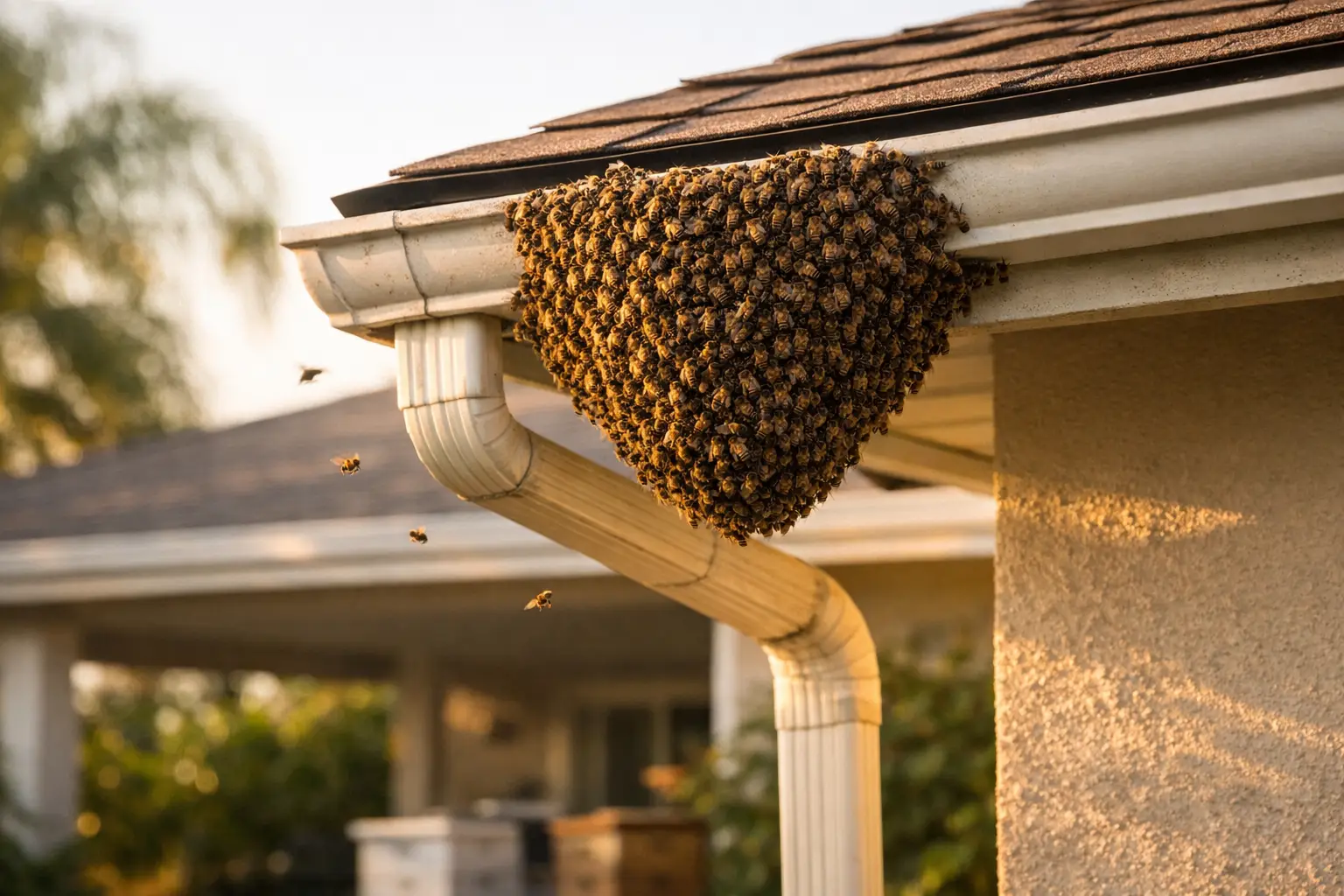

A decade ago, a rooftop hive in a city was a novelty. Now it is just as likely to be part of a school garden, hotel amenity plan, or sustainability program. Urban beekeeping growth trends are no longer driven by hobby curiosity alone. They are tied to food systems, pollinator awareness, local ordinances, property management, and a growing understanding that bees in cities can be both an asset and a liability, depending on how they are handled.
That distinction matters. A managed hive on a suitable rooftop is not the same thing as a feral colony inside a wall cavity. Public conversations often blur those categories, and that is where poor decisions start. The rise of urban beekeeping has created real opportunities for pollinator support, but it has also raised the stakes for proper placement, humane relocation, and informed oversight.
What urban beekeeping growth trends actually show
The clearest pattern is that urban beekeeping is becoming institutional, not just personal. Early growth came from backyard hobbyists and small community gardens. The current phase includes commercial properties, municipalities, schools, restaurants, and residential developments that want visible environmental programs.
Some of that growth is cultural. People are more aware of pollinator decline and want practical ways to help. Some of it is economic. Local honey has strong consumer appeal, and properties with green initiatives often see branding value in visible ecological projects. Some of it is simply land use reality. In dense areas, cities are where people live, build, and make policy, so that is where more beekeeping activity is now organized.
Still, growth is uneven. Cities with clear ordinances, beekeeper education networks, and inspection support tend to see healthier expansion. Cities that encourage hives without standards often run into neighbor conflicts, swarming complaints, and abandoned equipment. Growth by itself is not proof of success. Good management is.
Why cities can support bees surprisingly well
Many people assume rural areas are always better for bees. In practice, that depends on forage quality, pesticide pressure, water access, and seasonal diversity. Some urban zones offer a wider range of flowering plants than large single-crop agricultural areas. Residential landscaping, parks, medians, and botanical plantings can create a long bloom window.
That does not mean every city is ideal. Heat islands, limited water, storm exposure, and poor hive placement can stress colonies. In Southwest Florida, for example, weather patterns, long nectar flows, and dense development create a very different management picture than a northern city with a short season. Urban beekeeping works best when it is treated as site-specific livestock care, not decorative sustainability.
This is one of the biggest shifts behind urban beekeeping growth trends. The conversation has moved away from simple enthusiasm and toward operating conditions. More serious keepers and property owners now ask the right questions first. Is there enough forage within flight range? Is there a water source? What is the impact on nearby residents? Who handles swarms, aggressive behavior, or colony failure? Those questions protect both people and bees.
The biggest driver is not honey – it is awareness
Honey matters, but it is rarely the main force behind expansion. Most urban hive projects start with education, ecology, or public image. Schools use hives to teach biology and food systems. Hotels and mixed-use developments use them to demonstrate environmental commitments. Homeowners want to support pollinators and feel connected to local agriculture.
Awareness has a positive side. It leads more people to call for live removal instead of extermination when colonies appear where they do not belong. It also helps the public understand that bees are not disposable insects. They are managed livestock with ecological value.
But awareness can also create oversimplified messaging. “Save the bees” is useful as a starting point, yet it does not explain species differences, structural risks, or public safety concerns. Honey bees in a managed hive are one thing. A defensive colony established in a soffit near a school walkway is another. Responsible urban beekeeping requires both conservation thinking and risk management.
Growth brings more regulation, and that is usually a good sign
When hives increase in cities, local rules usually follow. That can frustrate hobbyists, but sensible regulation tends to improve outcomes. Setback requirements, colony limits, water-source rules, registration standards, and complaint procedures all help define what responsible management looks like.
For homeowners and HOAs, clear rules reduce conflict. For commercial properties, they reduce liability. For municipalities, they create a framework for public safety without defaulting to chemical elimination. This is especially important in regions where aggressive colonies are a concern and where a quick, professional response may be needed.
The best regulations do not treat every bee situation the same. They distinguish between legal apiaries, temporary swarms, nuisance colonies, and structural infestations. That distinction supports better decisions. A beekeeper managing healthy colonies in approved equipment should not be handled the same way as a property owner with bees entering a wall through a utility gap.
The hidden side of urban beekeeping growth trends
The visible side of urban beekeeping is photogenic – rooftop hives, jars of local honey, pollinator gardens. The hidden side is structural bee activity. As more people become comfortable with bees nearby, some delay action when colonies move into roofs, eaves, block walls, chimneys, or soffits. That delay can become expensive.
A colony inside a structure does not stay harmless because it is “natural.” Honey, brood, wax, and moisture can damage materials and attract ants, roaches, rodents, and other pests after the bees are gone. Poisoning a colony inside a wall often leaves the comb behind, which is why the problem returns in a different form. This is where education matters most.
Urban beekeeping growth trends have increased public tolerance for bees, which is helpful up to a point. The trade-off is that tolerance sometimes turns into inaction. Managed hives belong in managed equipment. Colonies in buildings need proper live removal and full remediation.
What property owners should understand before adding hives
Not every property should host bees. That is the honest answer. A site may have poor flight paths, heavy foot traffic, inadequate buffer space, or neighbors with valid safety concerns. On commercial sites, entrances, loading zones, parking layouts, and outdoor dining all matter. On residential properties, children, pets, pools, and fence lines matter.
If a hive is appropriate, management plans should be clear before bees arrive. Who inspects the hive? Who responds to swarms? What happens if a colony becomes defensive? Where does the water come from? Who is responsible if the project is abandoned six months later?
This is where professional guidance makes a difference. Bees are not a set-and-forget amenity. They are livestock that need monitoring, seasonal management, and contingency planning. A well-run urban hive can be a real asset. A neglected one quickly stops being educational and starts becoming a neighborhood problem.
Why live removal and relocation are becoming part of the same conversation
As city beekeeping expands, so does demand for humane, skilled removal. That is a logical connection. More public awareness means more people want bees preserved rather than destroyed. At the same time, more development means more opportunities for colonies to establish themselves in structures where they are unsafe.
These two realities now overlap. Ethical urban beekeeping is not just about installing hives. It is also about knowing when bees must be relocated and how to do that without leaving damage behind. Companies that understand both bee behavior and structural removal are filling an important gap because they can protect people, preserve viable colonies, and reduce repeat infestations.
That hybrid model is especially relevant in fast-growing regions. In areas like Southwest Florida, where warm weather supports extended bee activity and construction patterns create nesting opportunities, the line between apiculture and public safety is thinner than many people realize. Beeswild operates in that space by pairing live removal with relocation into managed farm environments, which is a more complete answer than simple extraction.
Where the trend goes next
The next stage of urban beekeeping will likely be less about raw hive counts and more about quality control. Expect stronger standards, better beekeeper training, and more attention to carrying capacity in dense neighborhoods. Cities will keep supporting pollinators, but the strongest programs will recognize that not every property needs hives and not every bee issue is a beekeeping opportunity.
There is also likely to be more separation between pollinator-friendly landscaping and honey bee promotion. That is healthy. Supporting pollinators can mean planting better forage, reducing unnecessary pesticide use, preserving habitat, and using live removal when colonies show up in the wrong place. Hives are one tool, not the whole strategy.
For homeowners, managers, and public agencies, the practical takeaway is simple. If bees are on your property, identify the situation before reacting. A swarm, a managed hive, and a structural colony each require a different response. The smartest path is the one that protects people first, preserves bees when possible, and respects the fact that good intentions are not the same as good bee management.
Cities are making more room for bees. The real test is whether we make enough room for informed decisions too.

No responses yet