

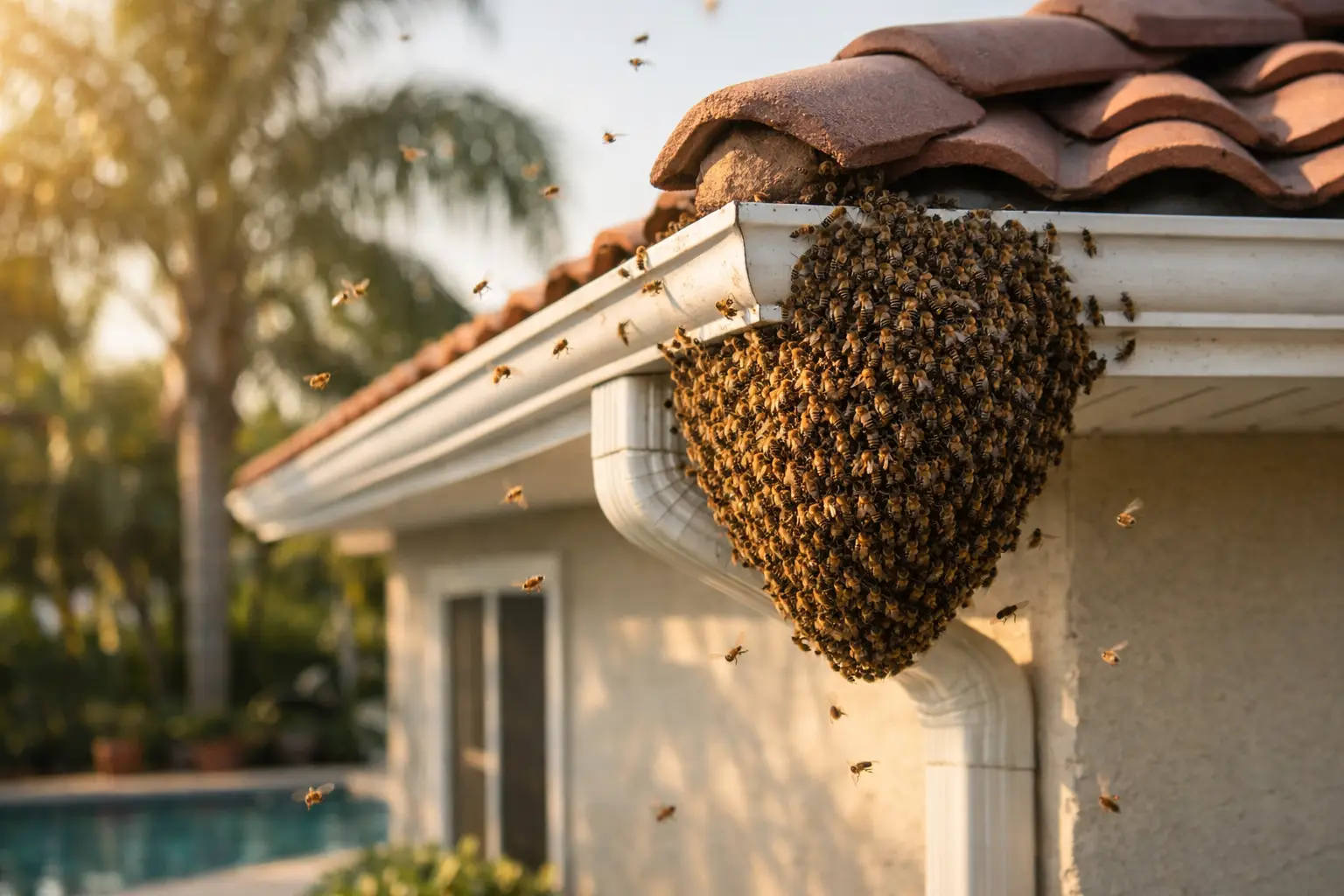

A colony behind a soffit is not simply a bee problem. It is a living, working group of pollinators that may already have filled a wall, roofline, or utility space with wax, brood, honey, and thousands of bees. A local honey farm offers a more responsible answer than extermination when removal is needed: protect people and structures first, then preserve viable colonies by moving them to a managed apiary.
That distinction matters in Southwest Florida, where warm weather supports long active seasons and colonies can establish themselves in homes, sheds, commercial buildings, and community structures. The best outcome is not merely making bees disappear from sight. It is removing the colony correctly, addressing what attracted it to the space, and giving the bees a safe place to continue their work.
A Local Honey Farm Is More Than a Place to Buy Honey
Most people picture a honey farm as rows of wooden hive boxes in an open field. That is part of the picture, but a working apiary is also a managed environment. Beekeepers monitor colonies, provide appropriate hive space, assess food stores, watch for pests and disease, and make seasonal decisions that support colony health.
For a farm that accepts rescued colonies, the work begins before the bees reach the apiary. A colony removed from a structure must be handled with care. The queen, workers, brood comb, and usable resources need to remain together as much as possible. Once relocated, the bees need time to orient to their new home, settle into equipment, and resume normal foraging.
Honey production can be one result of this stewardship, but it should not be the only measure of a farm’s value. Healthy bees pollinate flowering plants, support local agriculture, and contribute to the living systems around homes and neighborhoods. A well-managed apiary turns a stressful wildlife conflict into an opportunity to keep that value in the landscape.
Why Structure Removal and Bee Farming Belong Together
A swarm resting on a branch can sometimes be collected with minimal disruption. An established colony inside a wall is different. It may have been there for months or years, with large areas of comb concealed behind stucco, siding, drywall, fascia, or roofing material.
Removing only the visible bees does not solve that situation. If honeycomb and brood remain in place, the odor can attract other insects, wax moths, rodents, and eventually another bee colony. Honey can soften and leak in Florida heat. Dead bees and abandoned wax can create a lasting sanitation and property-maintenance issue.
That is why live removal must be paired with practical construction awareness. The objective is to access the colony carefully, remove bees and comb, clean the cavity, and close or repair access points as appropriate. The exact method depends on the location, the building materials, the colony’s size, and whether the bees are defensive. There is no one-size-fits-all approach that is safe for every property.
A farm-based removal service has a clear reason to preserve the colony through that process. The bees are not treated as disposable pests. They are livestock and pollinators with a destination after removal. At Beeswild, rescued colonies can be relocated to managed farm areas rather than destroyed simply because they chose the wrong place to build.
Why Poison Often Creates a Second Problem
Chemical treatment may kill bees in an inaccessible cavity, but it does not remove the comb, honey, or physical evidence of the colony. It can also leave homeowners waiting for a problem inside the structure to develop after the activity outside has stopped.
Live removal is more labor-intensive because it addresses the source. That makes it especially valuable when bees have entered walls, roofs, soffits, chimneys, or other enclosed spaces. It may require opening a limited section of a structure, but controlled access and proper cleanup are generally preferable to leaving a large decaying colony inside.
There are situations where safety conditions limit what can be done immediately. Highly defensive bees near an entryway, a school, or a busy commercial area require a carefully managed response. A qualified beekeeper evaluates behavior, location, access, and risk before deciding how to proceed.
How Rescued Bees Become Farm Colonies
Relocation is not as simple as moving a box of bees from one address to another. A colony is organized around its queen, brood, stored food, and the familiar scent of its comb. The closer those elements stay together during a removal, the better the colony’s chance of settling into a new hive.
After removal, beekeepers typically secure the colony in suitable equipment and transport it to a safe apiary location. The bees may be given time to acclimate before their hive is opened fully. Their behavior is observed over the following days and weeks, particularly whether they are bringing in pollen, caring for brood, and building or repairing comb.
Some rescued colonies thrive quickly. Others need more support, especially if they were stressed by a difficult extraction, had limited food stores, or were already weakened before removal. Weather, forage availability, parasites, and queen condition all affect the outcome. Humane removal is a commitment to giving colonies a real chance, not a promise that every colony can be saved under every condition.
When a colony stabilizes, it becomes part of the farm’s broader apiary management. Over time, it may contribute to pollination and, when the bees have enough resources for themselves, honey production. Responsible beekeeping does not take every drop of honey from a hive. Bees need adequate stores to support their own colony through periods when flowers are scarce.
What Homeowners Should Do When Bees Arrive
The first priority is distance. Keep children, pets, visitors, and outdoor workers away from a swarm or active entry point. Avoid spraying the bees with water, insecticide, or household chemicals. Do not seal a hole while bees are actively using it, since they may seek another route into the building or become trapped inside.
A swarm often appears as a temporary cluster of bees on a tree limb, fence, vehicle, or exterior wall. Established colonies show more consistent activity: bees flying in and out of the same crack, vent, roof edge, or wall opening over multiple days. You may also notice buzzing in a wall, staining near an entry point, or a sweet odor in advanced cases.
Photos taken from a safe distance can help a removal professional understand the situation, but close inspection is not worth the risk. In Southwest Florida, some colonies can be unusually defensive. Treat any unknown colony with caution, particularly if it is near a door, walkway, pool area, playground, or place where people gather.
What Property Managers Need to Consider
For an HOA, restaurant, retail center, or municipal facility, bee activity can become a public-safety and liability concern quickly. The goal remains humane relocation when feasible, but the response also needs to account for pedestrian traffic, employee safety, access restrictions, and the location of vulnerable people.
A professional assessment should identify whether the bees are a temporary swarm or an established structural colony. It should also consider the likely extent of comb, the safest work window, and how the area will be secured during removal. Documentation of the condition and repair recommendations can help property managers make informed maintenance decisions afterward.
The least expensive quote is not always the least expensive solution. A service that only eliminates visible bees may leave behind contamination or create repeat occupancy at the same opening. Proper exclusion matters. Once a colony is removed, gaps, cracks, and vulnerable construction details should be corrected so another swarm is less likely to move in.
Honey With a Local Story Has Real Meaning
People often look for local honey because they want to know where their food comes from. That curiosity can lead to a more useful question: how are the bees cared for, and what role does the farm play in the community?
A honey farm that rescues colonies connects food production with practical conservation. It recognizes that bees sometimes create real hazards in human structures, while refusing the false choice between protecting a building and protecting pollinators. Both can be done when removal is planned, skilled, and followed by responsible apiary care.
If bees are active around your home or property, give them space and seek a qualified live-removal assessment before taking action. A safe relocation can protect the people who use the property while allowing a colony to keep doing the work bees were built to do.

No responses yet