
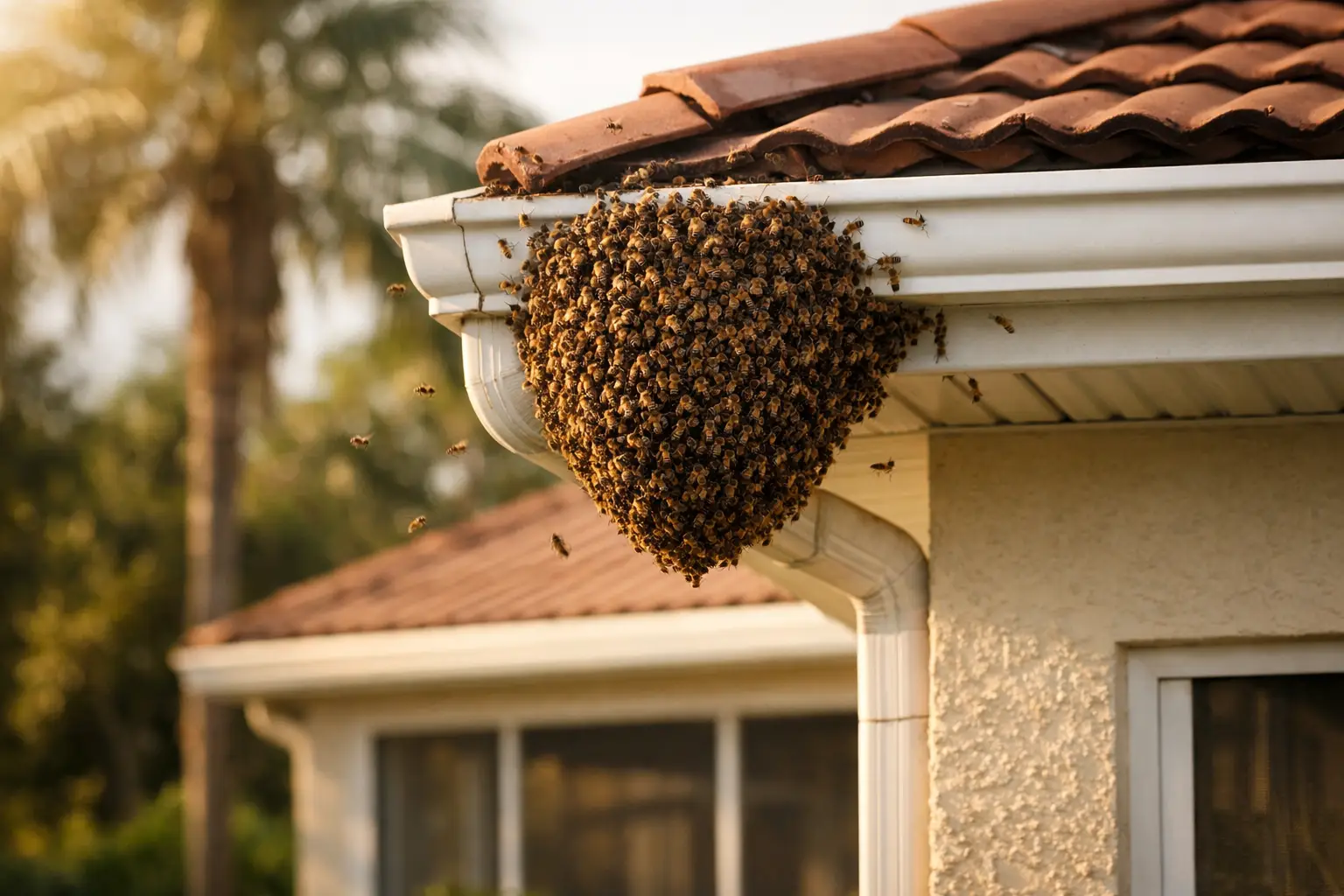

A cluster of bees on a tree branch can look alarming, but a colony entering a wall, soffit, roofline, or pool enclosure creates a different kind of problem. Fort Myers live bee removal is designed to protect the people around the property while preserving a valuable pollinator colony and preventing the structural damage that comes from leaving comb and honey behind.
For homeowners, the concern is usually immediate: children play nearby, pets are in the yard, or bees are moving through a gap near a bedroom or lanai. For property managers and HOAs, the stakes also include visitor safety, tenant complaints, and potential damage to shared structures. The right response depends on whether the bees are temporarily resting or have established a permanent hive.
Swarm or Established Colony?
A swarm is a temporary mass of bees, often gathered around a branch, fence, mailbox, vehicle, or exterior wall. Swarming is part of honey bee reproduction. The bees leave an overcrowded colony with their queen and pause while scout bees search for a new home. A swarm may move on naturally, but it can also settle into an opening in a building within hours or days.
An established colony is different. Bees repeatedly entering and exiting one specific opening – often a soffit vent, roof gap, wall penetration, shed, or utility enclosure – usually indicate that comb has already been built inside. A colony can remain hidden for months or years, expanding its comb, storing honey, and raising brood within a protected cavity.
The distinction matters because a swarm can often be collected intact from its temporary location. An established colony requires access to the cavity, removal of the bees and comb, cleanup of honey residue, and closure of the entry point. Simply making the visible bees disappear does not solve the structural problem.
Why Fort Myers Live Bee Removal Requires More Than Spraying
Chemical extermination may seem faster, but it often leaves the underlying hive in place. Dead bees, wax comb, stored honey, and developing brood remain inside the wall or roof cavity. In Southwest Florida’s heat and humidity, that material can melt, ferment, leak through drywall, stain ceilings, and attract ants, roaches, wax moths, rodents, and other pests.
Honey can be particularly destructive when it is left behind. It follows gravity and heat, so a small colony in an attic or exterior wall can become a much larger cleanup issue after treatment. If surviving bees or a new swarm detect the remaining scent and comb, they may attempt to occupy the same location again.
Live removal addresses the entire colony rather than treating bees as disposable pests. A trained bee removal team identifies the colony’s entry route and likely comb location, gains the least invasive practical access, removes bees and hive material, and prepares the area for proper sealing. The rescued colony can then be relocated to an apiary where it can continue its role in pollination and honey production.
This approach does involve a trade-off. Structural removal may require opening a limited section of soffit, siding, fascia, roof material, or wall finish to reach the hive. That is not unnecessary damage. It is often the only reliable way to remove comb and honey rather than trapping them inside the structure. The goal is controlled access and a clean cavity, not a cosmetic shortcut that creates a later repair emergency.
What a Professional Live Removal Process Looks Like
Each property presents different access and safety conditions, but a complete live removal generally follows a clear sequence.
Assessment of Bee Activity and Building Access
The first step is observing bee traffic and identifying the entry point. A professional considers the height of the colony, the construction material, nearby electrical or plumbing components, roof access, and who may be exposed to bee activity. Colonies in a tree cavity require a different plan than colonies behind stucco, beneath tile roofing, or within a second-story soffit.
Bee behavior also matters. Some colonies are calm and manageable, while others respond defensively when disturbed. In Florida, where more defensive genetics can occur, homeowners should not attempt to seal openings, spray bees, or knock down visible comb. Disturbing a colony without protective equipment and a removal plan can escalate the risk quickly.
Safe Collection of Bees and Queen
The removal team uses protective gear, specialized bee-handling equipment, and controlled techniques to collect the bees. Keeping the queen with the colony is central to successful relocation, since the colony is naturally organized around her. Workers can be transferred into appropriate transport equipment while minimizing stress and unnecessary loss.
The objective is not to chase bees away from the house. It is to remove the colony from the structure and keep it together well enough to establish it in a safer agricultural setting.
Comb, Honey, and Residue Removal
Once bees are removed, the comb must be taken out. This includes brood comb, honeycomb, wax, and as much residue as practical from the cavity. Removing these materials reduces odors and removes the food source that attracts secondary pests.
This stage is why a company that understands both building cavities and beekeeping is valuable. The work requires patience. Honey-filled comb is heavy, fragile, and messy, while brood comb must be handled carefully if the colony is being relocated. The removal process should protect the property as much as possible without leaving the source of future damage behind.
Exclusion and Same-Place Prevention
After the cavity is cleared, the original entry point needs to be closed with appropriate materials. A colony can fit through surprisingly small gaps, especially around rooflines, vents, pipe penetrations, and trim. Proper exclusion focuses on the actual access route, not just the most visible hole.
A same-place removal warranty can provide added reassurance when the removal and exclusion steps are completed as recommended. Beeswild.com offers a three-month same-place-removal warranty, reflecting the practical fact that successful bee control depends on both colony removal and preventing reentry at the original location.
What Homeowners Should Do Before Help Arrives
Keep people and pets away from the bee activity, especially if bees are concentrated near a doorway, pool area, play space, or vehicle. Do not spray insecticide, use a hose, cover the opening, or try to seal a gap while bees are actively flying. Those actions can force the colony deeper into the structure or provoke defensive behavior.
If the bees are outside, observe from a safe distance. Note where they are entering, when activity is strongest, and whether the cluster is growing or shrinking. A photo taken from a safe location can help a removal professional assess whether the situation appears to be a swarm or an established colony.
If someone is stung and experiences difficulty breathing, swelling of the face or throat, dizziness, widespread hives, or other signs of a severe allergic reaction, seek emergency medical help immediately. Bee removal protects property and reduces risk, but medical emergencies always come first.
Considerations for Commercial Properties and HOAs
At a restaurant patio, shopping center entrance, clubhouse, school-adjacent facility, or community mailbox station, bee activity can create a legitimate liability concern. Still, urgency should not lead to an incomplete treatment that leaves honey in a wall or creates a recurring issue.
Commercial and HOA decision-makers should document the location, restrict access where necessary, and arrange an assessment that accounts for customer traffic, tenant operations, building access, and restoration needs. Timing may need to be coordinated around business hours, but delaying too long can allow a small colony to become a larger structural removal.
The Value of Relocation After Removal
Honey bees are livestock with a role far beyond the immediate property where they are found. Relocation gives a healthy colony an opportunity to continue pollinating crops and producing honey in an environment designed for beekeeping rather than inside a residence or commercial structure.
That does not mean every bee situation should be treated casually. A colony near a family, public walkway, or occupied building needs professional action. Humane removal is practical precisely because it addresses both realities: people need a safe property, and viable honey bee colonies deserve a chance to continue working in a suitable home.
When bees choose your building, the most helpful next step is simple: create distance, avoid DIY treatments, and arrange for the colony, comb, and honey to be handled as one complete job.

No responses yet