
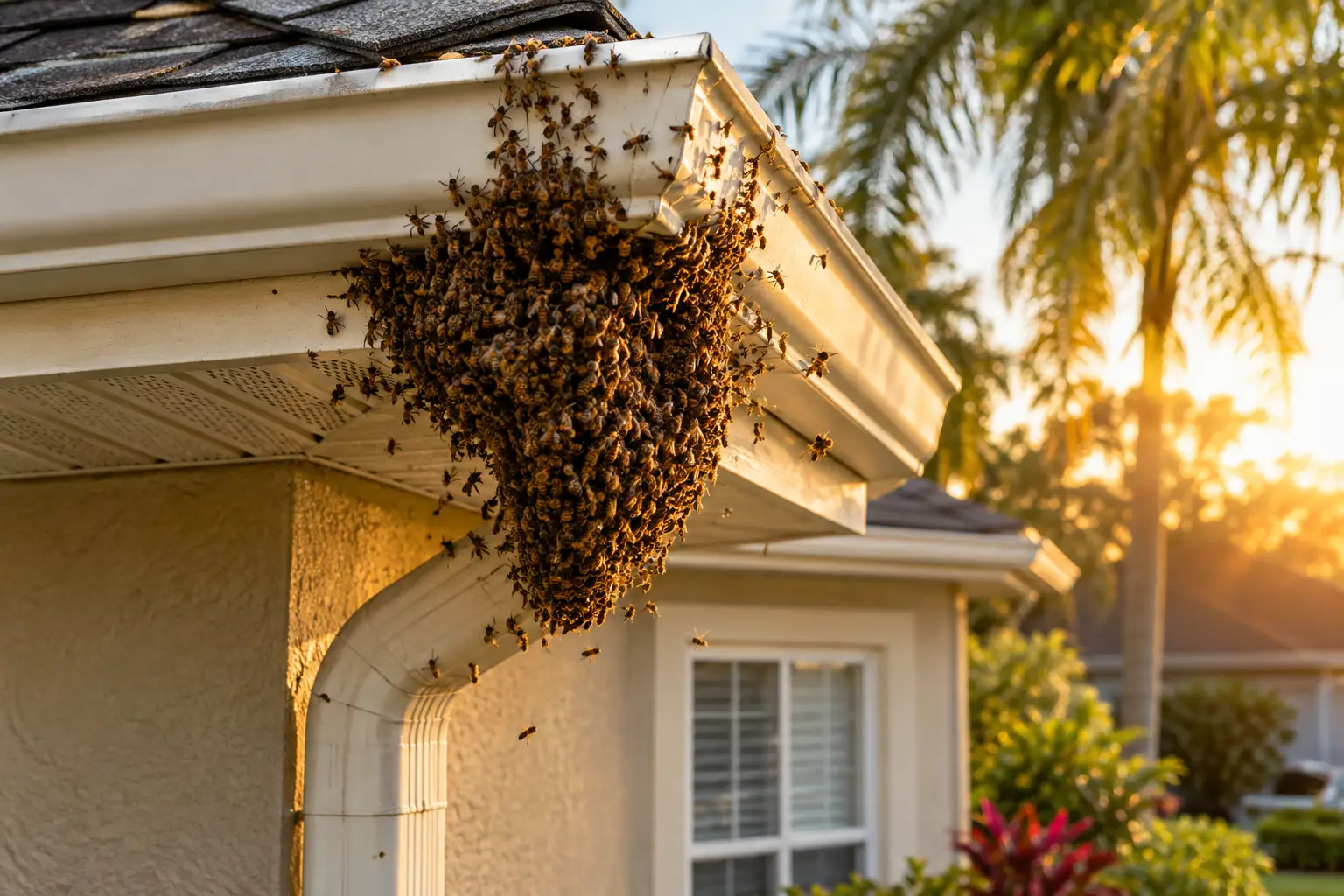

A bee flying near a roof vent is not always an emergency. A steady stream of bees entering one small gap, however, usually means a colony has found protected space inside the structure. Homeowners searching for ways to keep bees out vents need to solve two separate problems: safely addressing any bees already inside and preventing a new colony from moving in.
That order matters. Sealing a vent while bees, comb, honey, and brood are still behind it can turn an outdoor concern into a costly structural issue. The goal is not simply to block bees. It is to remove established colonies humanely, protect the building, and make the vent unsuitable for the next swarm.
Know the Difference Between a Swarm and a Vent Colony
A swarm is a temporary cluster of bees, often hanging from a branch, fence, or exterior wall. It may remain for only a few hours or days while scout bees search for a permanent home. A swarm near a vent does not necessarily mean bees are living inside it.
A colony is different. You may see regular bee traffic from dawn until late afternoon, with workers entering and leaving through the same louver, soffit gap, or roof opening. In Southwest Florida, warm weather gives colonies a long active season, and shaded attic vents or soffit systems can offer the dry, protected cavity bees seek.
Listen carefully from a safe distance. A low, steady buzzing in a wall, ceiling, or attic area can indicate an established colony. Dark staining, sticky residue, or bees gathering at a particular vent opening are additional signs. Do not put your face near the opening or spray anything into it. Defensive behavior can increase quickly when a colony feels threatened.
Do Not Seal an Active Bee Colony Inside a Vent
The most common mistake is sealing an entry point immediately after noticing bees. It seems logical, but it can trap thousands of bees inside the structure. They may then look for another exit through a light fixture, wall gap, window frame, or interior ceiling opening.
Even if the bees die, the problem does not disappear. Honey, wax, pollen, and brood can remain in the cavity. In Florida heat, abandoned comb can melt or leak, staining drywall and attracting ants, roaches, wax moths, and rodents. The odor can also draw another swarm later.
Poison creates similar complications. It may kill some bees without removing the comb or honey, and injured colonies can become more defensive. It also conflicts with the purpose of protecting pollinators when a live removal and relocation is possible. Professional structural removal focuses on locating the colony, removing bees and comb, cleaning the cavity, and then closing the entry correctly.
How to Keep Bees Out of Vents After Removal
Once a vent is confirmed empty and all bee material has been removed, exclusion is the long-term answer. The right method depends on the type of vent. A cover that works on a static attic vent may be unsafe for a dryer vent, so avoid using one solution everywhere.
Protect attic, gable, and roof vents
Attic vents, gable vents, and certain roof vents are common access points because their louvers can leave small openings around the edges. Install a purpose-made exterior guard or corrosion-resistant metal screen designed for that vent type. The cover must allow adequate airflow while preventing bees from reaching the interior cavity.
Avoid placing loose screening directly over a roof vent. It can sag, collect debris, restrict airflow, and create a maintenance problem. A properly fitted guard should sit securely, withstand wind and rain, and remain easy to inspect.
Inspect soffit vents and eaves
Soffit vents are especially vulnerable when screens are torn, panels are loose, or construction gaps exist where the soffit meets the fascia. Bees can use surprisingly narrow openings, particularly around corners, utility lines, and damaged trim.
Check these areas from the ground first. If you find an open seam but no bee activity, seal it with an exterior-grade material appropriate for the surface. Replace broken vent panels rather than covering them with a patch that blocks ventilation. Your attic needs airflow to manage heat and moisture, so exclusion should preserve the vent system’s intended function.
Treat dryer vents differently
Dryer vents need free exhaust flow. Fine mesh over a dryer vent may catch lint, restrict airflow, and raise a fire risk. Instead, use a dryer vent cover designed to close when the dryer is off and open fully during operation. Keep the duct and exterior hood clean according to the appliance manufacturer’s guidance.
If bees are entering a dryer vent, stop using the dryer until the situation is assessed. Heat, vibration, and disturbed bees are a poor combination. A removal professional can confirm whether bees are at the exterior hood only or have traveled farther into the duct or wall cavity.
Close the Gaps Bees Actually Use
Vent guards work best as part of a broader exterior inspection. A colony may enter through a nearby crack rather than the vent itself, especially if the vent is simply where you first noticed activity.
Look around rooflines, eaves, siding transitions, chimneys, attic access points, and pipe penetrations. Pay close attention to openings behind decorative trim and beneath loose fascia boards. Repair damaged wood, resecure loose panels, and seal non-ventilation gaps after confirming bees are not using them.
For property managers and HOAs, routine inspections after storm season are particularly useful. Wind-driven rain, lifted flashing, and damaged soffits can create access points across multiple buildings. Finding and repairing those openings early is less disruptive than responding to a colony after it has filled a wall or attic cavity with comb.
When a One-Way Exit Is Appropriate
In some cases, a trained bee removal specialist may use a one-way exclusion device. This allows foraging bees to leave but makes it difficult for them to re-enter. It is not a simple DIY fix. The method requires careful timing, a known colony location, and a plan for removing comb from the structure.
A one-way device can fail if there are secondary entrances, if the queen and brood remain inside without proper management, or if the exit path sends bees toward a doorway or public walkway. It may also be inappropriate for a highly defensive colony or a location near children, pets, customers, or neighbors.
The trade-off is straightforward: a quick patch may look cheaper, but incomplete removal can lead to repeat bee activity, trapped bees indoors, and damage that costs far more to repair. A thorough removal protects both the structure and the colony whenever safe relocation is possible.
When to Call for Professional Bee Removal
Call a qualified live bee removal professional when bees are entering a vent consistently, buzzing is audible inside a wall or attic, or the location is high, inaccessible, or near an occupied area. This is especially urgent when a family member has a severe sting allergy or the colony is near a school, pool, entrance, restaurant patio, or shared community space.
In Cape Coral and throughout Southwest Florida, Beeswild can assess active colonies, remove and relocate bees, and address the comb that makes a structure attractive to future swarms. Their process is designed to solve the source of the issue rather than leaving honey and nesting material behind. A three-month same-place removal warranty also gives property owners added reassurance after a properly completed removal.
Wear protective clothing only if you must be near the area, keep children and pets away, and avoid mowing, pressure washing, or striking the vent while bees are active. Calm distance is safer than a rushed attempt to fix the opening.
A vent can be protected effectively, but only after you know what is behind it. Remove active colonies correctly, clear the nesting material, and then use vent-specific exclusion that keeps the air moving while keeping bees from returning.

No responses yet