
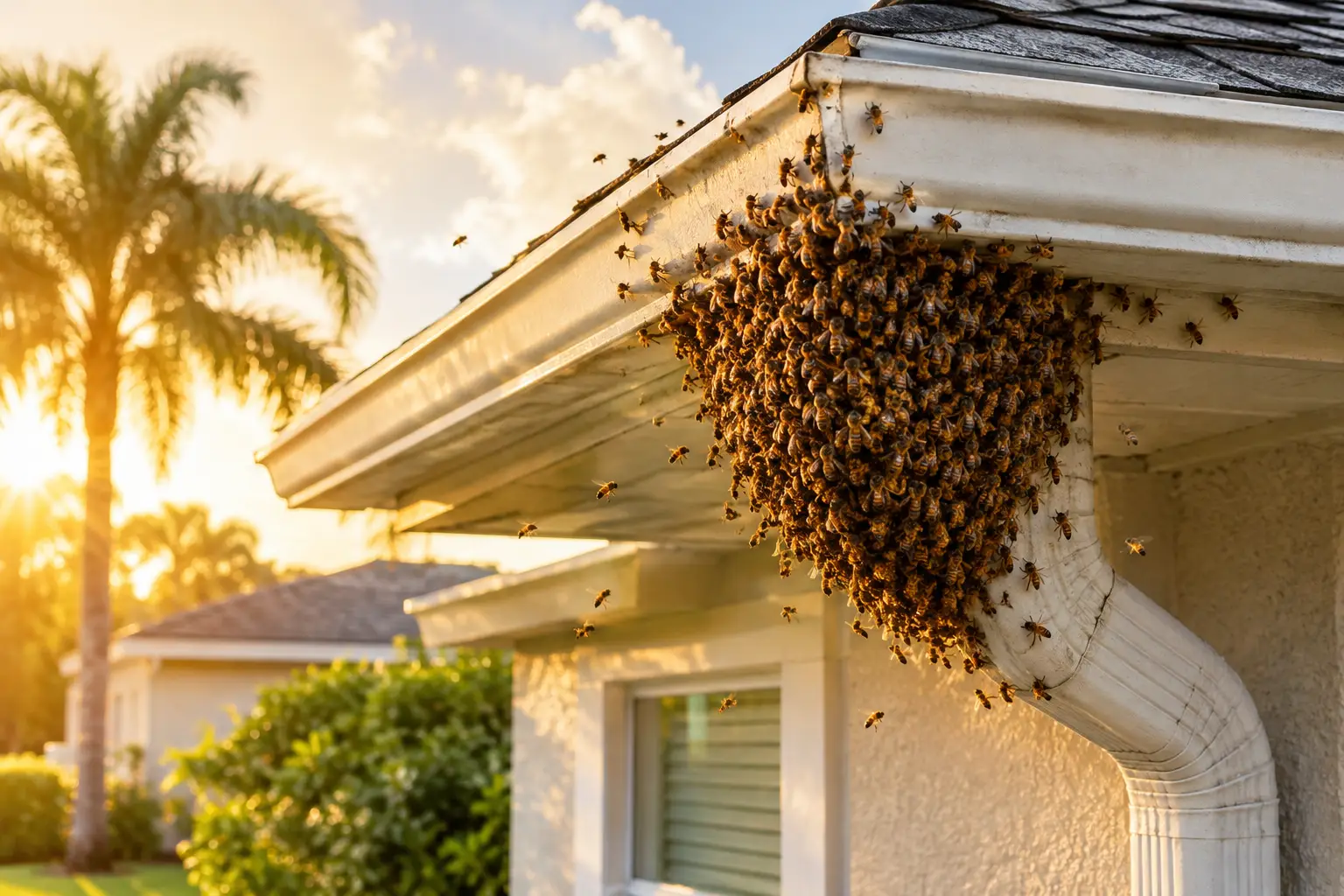

A bee colony behind a soffit, inside a wall, or under a roofline is not a problem to put off until the weekend. The more established the colony becomes, the more honeycomb, stored honey, and bees may be present. Knowing how to prepare for bee removal helps protect your family, prevents unnecessary property damage, and gives a live-removal team the conditions needed to safely relocate the colony.
Preparation does not mean getting close to the bees or attempting to control them yourself. It means creating a safe work area, sharing useful information with the removal professional, and avoiding actions that can turn a manageable colony into a costly structural issue.
First, Tell a Swarm From an Established Colony
A swarm is a temporary cluster of bees, often hanging from a branch, fence, mailbox, or exterior wall. It may look alarming, but a swarm is typically scouting for a new nesting location. If it has just appeared, it may leave on its own. Still, it should be assessed by a qualified bee professional, especially when it is near entrances, sidewalks, play areas, or businesses.
An established colony has moved into a cavity and built comb. You may notice steady bee traffic entering a small opening in a wall, roof, utility box, shed, or tree. In Southwest Florida, bees can take advantage of warm attics, soffits, block walls, and roof voids throughout much of the year. A colony inside a structure needs careful removal of the bees, comb, honey, and access point. Removing only the visible bees does not solve the underlying problem.
When you call, explain where you see bee activity, how long it has been happening, and whether the bees seem unusually defensive. A photo taken from a safe distance can help identify whether the situation is likely a swarm or a structural colony. Do not approach the opening to get a better image.
Keep People, Pets, and Traffic Away
The most useful step in preparing for bee removal is to establish distance. Keep children, pets, visitors, and maintenance workers away from the active area. If the bees are using an entrance near a doorway, pool deck, patio, garage, or walkway, use another route until the removal is complete.
Bees defend their colony when they believe it is under threat. Vibrations from lawn equipment, pressure washing, hammering, and repeated foot traffic near the nest can make them more reactive. Postpone mowing, trimming, roof work, exterior repairs, and other noisy activities near the colony. If you manage a commercial property or HOA, notify tenants or residents about the temporary work zone and direct them around it.
Do not stand below a swarm or gather nearby to watch. A calm, controlled area gives the removal crew room to work safely and reduces the chance of accidental stings.
Do Not Spray, Seal, Smoke, or Disturb the Entrance
Homeowners often try to solve the problem quickly by spraying insecticide into an opening or sealing it with caulk, foam, or tape. These actions can make a live removal much harder and create problems inside the structure.
Poison may kill some bees, but it does not remove the comb, honey, wax, pollen, or remaining brood. That material can melt or ferment in a wall, stain ceilings, attract ants and roaches, and draw rodents or other insects. Closing the bees’ only entrance can force surviving bees into living spaces through wall gaps, light fixtures, vents, or plumbing openings.
Avoid using smoke, water, household chemicals, or a vacuum. Do not knock down a visible cluster, block an entry hole, or attempt to cut into siding, drywall, or soffits. Live bee removal is most effective when the colony remains accessible and the bees’ flight path is undisturbed until the crew arrives.
Clear the Work Area Before the Appointment
Structural bee removal may require access to a ladder, roof edge, attic, wall, or exterior utility area. Before the scheduled visit, move outdoor furniture, grills, potted plants, vehicles, and other obstacles away from the work zone when it is safe to do so. Keep gates unlocked or make arrangements for access.
If the colony is near a garage, clear enough space for equipment and a technician’s vehicle. For bees inside a wall or ceiling, the removal team may need access from indoors or outdoors depending on the colony’s location and how the building was constructed. Move fragile items, electronics, wall decor, or furniture from the immediate interior work area if requested.
There is a practical trade-off here. A small amount of access may be needed to remove a colony correctly, but a professional should explain the proposed entry point and why it is the least disruptive option. Ask whether the plan includes removing all accessible comb and honey, repairing or closing the bee entry point, and what cleanup is expected afterward.
Prepare Useful Information for the Bee Removal Team
A few details can save time and help the crew choose the right equipment. Note when you first saw activity, whether bee traffic changes during the day, and where the bees enter the structure. If you have observed bees inside the home, identify the rooms, vents, or fixtures where they have appeared.
Tell the technician about prior pest-control treatments, roof repairs, water damage, renovations, or known voids in the affected area. Older homes, additions, decorative columns, chimneys, and utility penetrations can create hidden pathways. If there are solar panels, power lines, irrigation equipment, pool screens, or delicate landscaping near the nest, mention them before the appointment.
For commercial sites, designate one decision-maker who can authorize access and answer building questions. This prevents delays when the crew needs entry to a locked electrical room, roof hatch, tenant space, or maintenance closet.
Plan for the Day of Removal
On removal day, keep windows and doors near the colony closed. Bring pets indoors, and let household members know not to use the closest exterior exit. If a vehicle is parked directly beside the bee activity, ask the technician whether it should be moved before work begins. Do not move it on your own if doing so requires walking through the bees’ flight path.
Bee removals can take longer than people expect because responsible work involves more than collecting visible bees. The crew may need to locate the full colony, carefully remove comb, contain bees for relocation, clean the cavity, and identify the original entry point. Weather, roof height, structural access, colony size, and bee behavior can all affect the timeline.
If someone in the household has a known severe bee-sting allergy, tell the crew and make sure they have their prescribed emergency medication available. A person who develops trouble breathing, facial or throat swelling, widespread hives, dizziness, or fainting after a sting needs emergency medical care immediately.
Ask What Happens After the Bees Are Removed
The work is not fully complete when bee activity stops. A properly handled structural removal should address the materials that attract future pests and the opening that allowed the bees to enter. Ask the provider how they handle comb and honey removal, whether the cavity is cleaned, and who is responsible for repair or exclusion work if an opening must be sealed.
It is also reasonable to ask about follow-up coverage. Bees may occasionally return to an overlooked access point or residual scent near the original location. Beeswild, for example, provides a three-month same-place-removal warranty, which gives homeowners a clear expectation for follow-up if activity resumes in the same area.
After removal, watch from a distance for a few days. Some returning foragers may circle the former entrance, but that activity should steadily decline. Report persistent traffic, new bee entry points, honey leakage, or insects gathering around the affected wall or ceiling.
How to Prepare for Bee Removal Without Harming the Colony
Live removal and relocation recognize a simple fact: honey bees are valuable pollinators and agricultural livestock, even when their chosen home is unsafe for people. The goal is not to leave a colony in a wall indefinitely. It is to remove it thoroughly, protect the structure, and give the bees a chance to continue contributing to the environment from a managed apiary.
Your role is straightforward: give the colony space, do not interfere with its entrance, prepare safe access, and choose a provider who can explain the work clearly. A calm response in the first hours after you notice bees can be the difference between a successful relocation and a much larger repair problem later.

No responses yet