
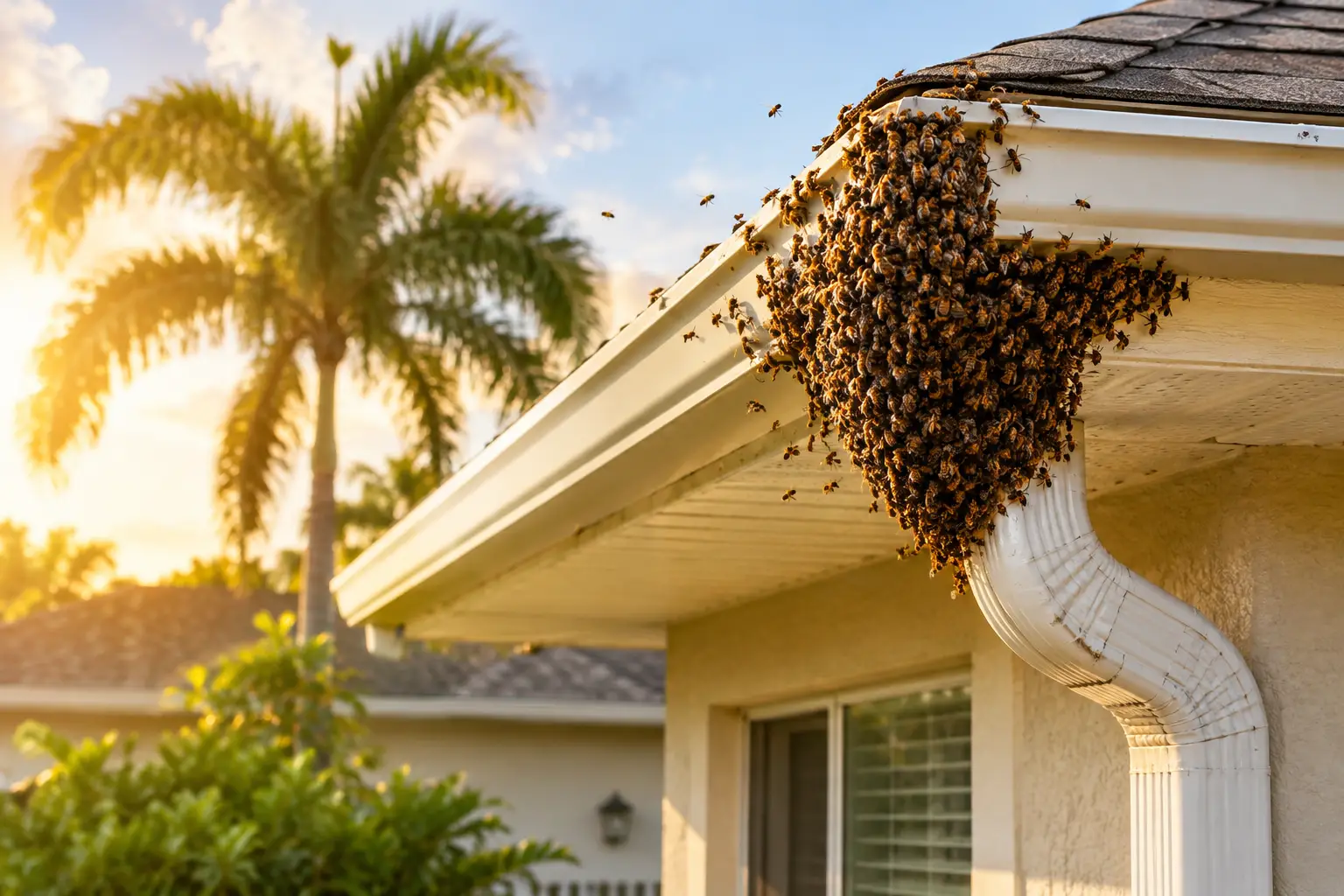

A few bees visiting a flowering shrub are part of a healthy Florida yard. A steady stream of bees disappearing into a soffit, wall gap, roofline, or utility box is different. Effective bee infestation prevention starts with recognizing when bees are scouting for a home and closing off the spaces that can become expensive structural colony sites.
For homeowners, the concern is rarely just stings. A colony inside a wall can store honey, produce wax and brood, attract ants and other pests, and create stains or odors after an incomplete removal. For property managers and HOAs, the same issue can become a safety and liability concern in shared areas. Prevention protects people and buildings while avoiding unnecessary harm to valuable pollinators.
Why bees choose buildings in Southwest Florida
Honey bees are not looking for trouble. They are looking for shelter: a dry, protected cavity with a small entrance, enough internal space to build comb, and reasonable access to nearby forage and water. Florida homes provide plenty of options, especially where heat, humidity, storms, and aging materials create openings around roofs and exterior walls.
Common nesting locations include soffits, fascia boards, roof returns, wall voids, chimneys, attic vents, sheds, pool equipment enclosures, and gaps around pipes or electrical penetrations. A cavity does not need a large opening. Bees can enter through a gap that looks insignificant from the ground.
Swarm season also changes the risk. When a colony divides, a queen and part of the workforce may gather temporarily on a branch, fence, vehicle, or exterior wall while scout bees search for a permanent site. That cluster can look alarming, but it is often a short-term stop. The greatest prevention opportunity is before scouts settle on an opening in the structure.
Bee infestation prevention begins with exclusion
Exclusion means identifying and closing potential entry points before bees establish a colony. It is the most dependable long-term prevention measure, but timing matters. Never seal an opening if bees are actively entering and leaving it. Trapping a colony inside can force bees into living spaces, cause them to find a new exit, and leave honey and comb behind in the structure.
Once a cavity has been confirmed empty or has been properly cleared during a live removal, inspect the surrounding area rather than only the visible entrance. Bees may have used multiple access points, and the original gap may be wider than it appears after damaged wood or loose trim is removed.
Focus on rooflines, vents, and utility gaps
Rooflines deserve close attention because they combine warmth, shade, and protected voids. Look for loose soffit panels, deteriorated fascia, separated trim, openings at roof returns, and damaged screens over attic or gable vents. Repairing these problems improves both bee prevention and protection from rain, rodents, and other pests.
Utility penetrations are another frequent weak point. Check where air-conditioning lines, plumbing, wiring, and conduit pass through exterior walls. Use durable exterior-grade materials appropriate for the surface and location. For vents, use properly fitted screening that still allows necessary airflow. A repair that blocks ventilation or creates a moisture problem is not a successful repair.
Ground-level areas matter too. Sheds, decorative columns, outdoor kitchens, water meter boxes, hollow fence posts, and abandoned irrigation enclosures can provide attractive cavities. Regular maintenance is usually less costly than emergency removal after a colony has had months to build comb.
Inspect after storms and repairs
Southwest Florida weather can turn a sound exterior into a vulnerable one quickly. Wind-driven rain, falling limbs, roof work, and heat-related expansion can loosen seals and open gaps. Schedule a visual inspection after major storms and anytime contractors complete roofing, siding, solar, HVAC, or utility work.
This does not require dismantling the property. Walk the perimeter, look upward from a safe position, and note areas with missing screens, warped panels, fresh gaps, or bee activity. If an area cannot be safely inspected from the ground, arrange for a qualified professional rather than climbing onto a roof.
Reduce the conditions that attract scouts
No property can or should eliminate flowers, water, or all insect activity. Bees are essential pollinators, and a bee-friendly landscape is generally a good thing. The goal is not to make the property hostile to bees. It is to keep the structure from becoming their nesting site.
Keep dense vegetation trimmed back from eaves, vents, and utility boxes so inspectors can see potential access points. Remove unused containers, hollow landscape features, and debris that create sheltered cavities near the building. Repair dripping outdoor faucets and irrigation leaks that create dependable water sources directly beside the structure.
Garbage is usually more attractive to yellowjackets than honey bees, but food waste can still increase general stinging-insect activity around patios, trash areas, and commercial outdoor dining spaces. Use tight-fitting lids, clean spills promptly, and position waste containers away from busy entrances when possible.
It also helps to understand what prevention cannot do. Planting fewer flowers near a building may reduce foraging near doors and walkways, but it will not reliably stop a swarm from finding an unsealed wall void. Structural exclusion is the higher-value investment.
Know the difference between a swarm and an established colony
A swarm usually appears as a visible, temporary cluster. It may be quiet, compact, and located on an exposed surface such as a tree limb or mailbox. Scout bees may fly around it, but there is often no regular traffic into a crack in the building.
An established colony creates a more consistent pattern: bees enter and exit the same opening throughout the day, often carrying pollen into the cavity. You may hear a faint hum in a wall or ceiling, notice wax or honey staining, or see increased activity near a soffit. In Florida, established colonies can become defensive when disturbed, particularly if the hive has been in place for some time.
Do not test the situation by spraying water, knocking down a cluster, sealing an entrance, or using consumer insecticide. Disturbance can make bee behavior less predictable and may cause bees to move deeper into a building. Poison also does not solve the structural problem when comb, honey, and dead bees remain behind.
What humane removal adds to prevention
When bees are already established in a wall, roof, or other cavity, prevention shifts from exclusion to proper removal followed by repair. A complete live removal addresses the colony, the comb, stored honey, and the entrance points that could invite another swarm to the same location.
This distinction is critical. Removing visible bees without removing comb can leave behind a powerful attractant. Honey can absorb moisture, ferment, leak through finishes, and draw ants, roaches, moths, and rodents. Remaining wax and hive scent may also make the cavity attractive to future scout bees.
A humane structural removal professional assesses where the colony is located, chooses the least disruptive practical access method, removes hive materials, and recommends or completes exclusion repairs afterward. The right approach depends on the building material, colony location, height, accessibility, and whether there are children, pets, customers, or sensitive operations nearby.
For a storefront, clubhouse, school-adjacent facility, or restaurant patio, prompt professional assessment is especially useful because foot traffic changes the risk. For a homeowner, early attention often means a smaller repair area and fewer surprises inside walls or ceilings.
A practical inspection routine for owners and managers
A seasonal routine catches many issues before they become urgent. In spring and early summer, watch for scouting bees around eaves and openings. During the rainy season, inspect for storm damage and moisture-related deterioration. In fall, review screens, trim, and utility seals before seasonal maintenance projects begin.
Keep a simple record of repairs and observed bee activity, particularly on commercial properties or HOA common areas. Notes about the exact location, date, time of day, and direction of bee traffic can help a removal professional identify the colony efficiently. A clear photo taken from a safe distance can be useful, but never approach a cluster or active entrance just to document it.
If a colony has been removed, ask what repairs are necessary and whether surrounding voids should be inspected. Beeswild provides a three-month same-place-removal warranty, reflecting an essential prevention principle: removal and exclusion work best as one plan, not as separate afterthoughts.
A bee-safe property is not one without bees. It is one where bees can forage in the landscape while the building remains sealed, maintained, and unsuitable for nesting. When activity appears at a structure, early action gives both the property and the colony a better outcome.

No responses yet