
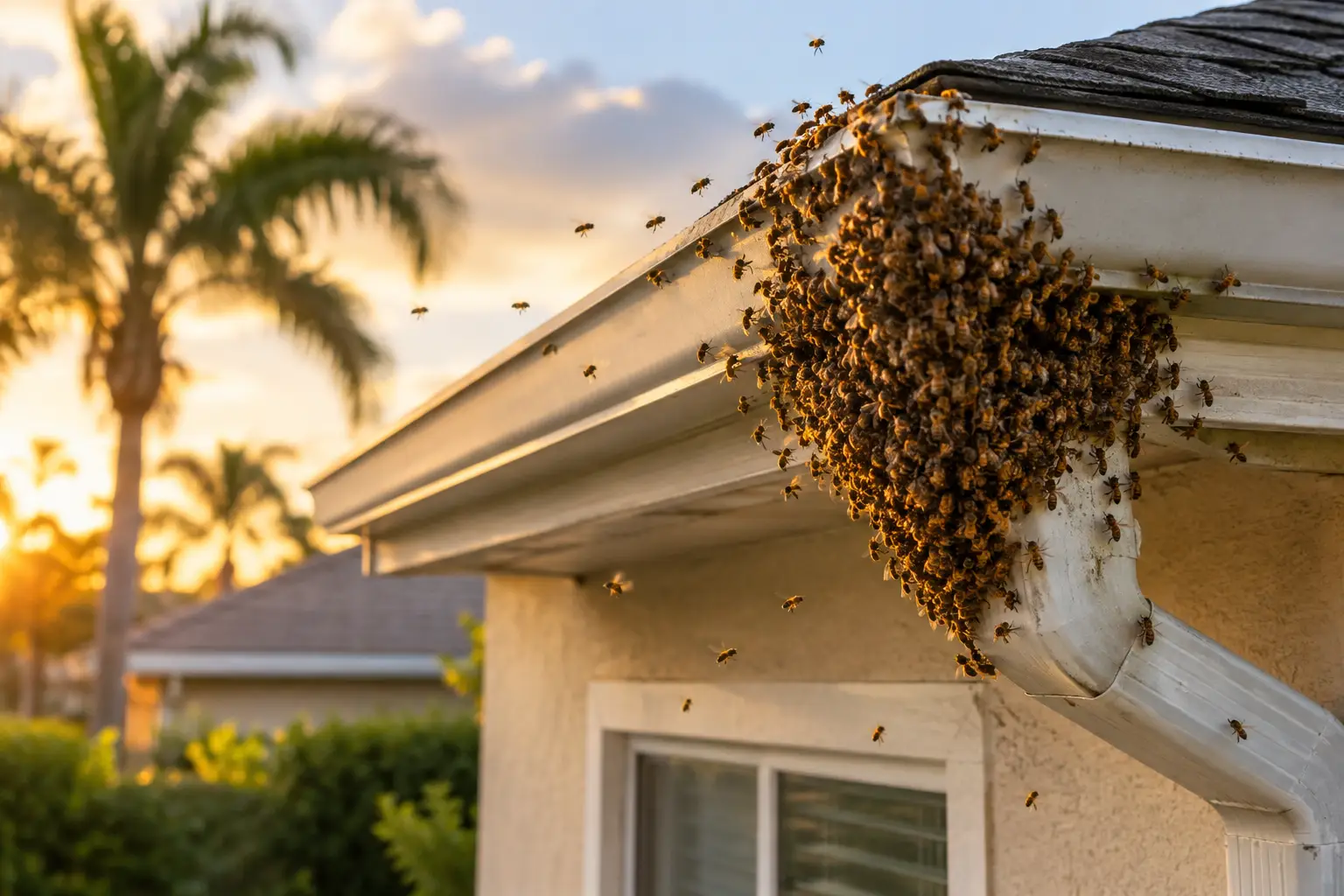

A few bees around a roofline can look harmless from the driveway. But steady flight in and out of one gap near a soffit, vent, chimney, or tile edge usually tells a different story: a colony may be established inside the structure. This guide to rooftop hive risks explains what that can mean for your building, the people around it, and the bees themselves.
A roof colony is not automatically an emergency, but it should not be ignored. In Southwest Florida, warm conditions can allow honey bee colonies to remain active for much of the year. Once bees have access to a protected roof void, they can build substantial comb where homeowners cannot see it – and where a quick spray cannot solve the underlying problem.
Why a rooftop hive becomes a property risk
Honey bees do not chew through sound roofing materials to create a home. They use an existing opening: a loose flashing detail, a damaged soffit, a roof-to-wall gap, an uncapped pipe penetration, or a broken vent screen. The hive itself is only part of the concern. The larger issue is what the colony stores and leaves behind in a confined structural space.
A mature colony can build many pounds of wax comb and store honey, pollen, and brood. That weight may not collapse a properly built roof, but it can stress weak soffits, ceiling cavities, fascia, and damaged framing. More commonly, heat causes honey to soften and leak through insulation or drywall. A brown ceiling stain, sticky residue, or sweet fermented odor can be an early warning that the colony has been there longer than anyone realized.
Comb also attracts other pests after bees leave or are killed. Wax moths, ants, beetles, roaches, rodents, and other scavengers can move into the remaining material. That is why eliminating visible bees without removing the comb is rarely a complete solution. The building still contains food, scent, and nesting material.
Water damage and bee activity can overlap
Roof leaks and bee entry points often share the same cause: a failed exterior detail. Rainwater may enter around compromised flashing or a lifted roof edge while bees use the same opening. It is easy to blame every stain on the hive, or every bee on a roof leak. A careful inspection separates these issues and identifies whether repairs are needed after removal.
For commercial properties and HOAs, that distinction matters. A colony near a rooftop HVAC unit, loading area, pool deck, or outdoor dining space can create a public-safety concern, while an unaddressed entry point can create a recurring maintenance issue.
The safety risk depends on location and behavior
Most honey bees are focused on foraging, not stinging. A bee visiting a flowering shrub is very different from a colony defending an entrance in a roof cavity. Bees become more protective when people, pets, ladders, lawn equipment, or repair crews repeatedly pass close to their hive opening.
The risk increases when the entrance is near a walkway, doorway, balcony, pool enclosure, playground, parking area, or air-conditioning service location. It also increases when someone attempts to block the opening, spray it, knock down comb, or work directly above the colony. Roof access limits a person’s ability to move away safely, so even a small defensive response can become more serious when someone is on a ladder or steep roof.
In Florida, colony temperament can vary. Homeowners should not try to identify a colony’s defensiveness by approaching it. If bees are bumping into people, clustering around an entry, following someone away from the area, or reacting strongly to vibration, keep people and pets clear and arrange a professional evaluation promptly.
A guide to rooftop hive risks starts with accurate identification
Not every flying insect at a roofline is a honey bee. Paper wasps, yellowjackets, hornets, carpenter bees, and even harmless occasional visitors require different handling. Honey bees are generally fuzzy, brown-and-gold insects that fly in a consistent traffic pattern to a single opening. You may see workers returning with pollen on their back legs.
A swarm is also different from an established hive. A swarm is a temporary cluster of bees, often hanging from a branch, fence, or exterior wall while scouts search for a new home. It may leave on its own within hours or days. A colony has already moved into a cavity and is building comb. Repeated flight at the same roof opening over several days is a stronger sign of an established colony.
From ground level, take note of the entrance location, the time of day when activity is heaviest, and whether there are people regularly near the area. Avoid standing directly below the flight path or using a drone close to the entrance. A photograph taken from a safe distance can help a trained bee-removal professional assess the situation.
Why sealing the entrance or using poison often backfires
The understandable instinct is to close the hole immediately. With an occupied hive, that can trap bees inside the structure. The colony may then find another route into an attic, wall, living space, or adjacent roof cavity. If bees are sealed in and die, the honey and comb remain, along with the potential for melting, pests, odors, and staining.
Pesticide treatments create similar problems. Killing a colony inside a roof void does not remove the wax or honey. It can also leave stressed or dying bees seeking alternate exits. For a property owner who wants the bees gone quickly, this can feel like an answer, but it may turn a visible problem into a hidden and more expensive one.
Professional live removal is different. The goal is to locate the colony, safely access the cavity, remove bees and comb, clean the affected space, and identify the opening that needs to be repaired. When conditions allow, the bees can be relocated to an apiary rather than destroyed. Beeswild’s work is built around this approach: protect the structure while preserving viable honey bee colonies.
What proper rooftop hive removal should address
The method depends on the roof type, the colony’s location, building height, weather, and accessibility. Tile roofs, metal roofs, shingle systems, flat commercial roofs, and soffit cavities each require a different access plan. The least invasive option is not always the safest or most complete option if it leaves comb behind.
A thorough service should include more than removing visible bees. It should determine the colony’s full footprint, remove accessible comb and honey, and manage the entrance so bees cannot return. The roof or soffit should then be restored by the appropriate qualified professional if removal access requires it. Before work begins, ask who handles cleanup, exclusion, and any necessary repair coordination.
Timing can matter. Removal during heavy rain, high winds, or severe heat may require added precautions. A colony with brood can also be more complex than a newly arrived swarm. The right plan balances fast risk reduction with careful work that avoids driving bees into the building or leaving a future pest problem behind.
Steps property owners can take right now
Keep the area calm. Move children, pets, and outdoor activities away from the entrance path, especially if the bees are near a door or gathering space. Tell roofers, pool technicians, landscapers, solar crews, and other contractors that bees are present before they arrive.
Do not spray, smoke, flood, tape over, or plug the opening. Do not strike the roof, use a pressure washer near the entry, or climb up to inspect it. These actions can provoke the colony and make later removal harder.
Instead, document the location from a safe distance and request an assessment from a bee-removal specialist experienced with structural colonies. If someone has been stung repeatedly, bees are entering the occupied interior, or a visibly defensive colony is near the public, treat the call as urgent. Anyone showing signs of a severe allergic reaction, including trouble breathing, facial swelling, dizziness, or widespread hives, needs emergency medical care.
A roof is meant to keep weather out and protect the people beneath it. When bees find a way into that system, the most responsible response is neither panic nor delay. Give the colony space, protect the property from further damage, and choose a removal plan that leaves both the structure and the bees in a better place.

No responses yet