
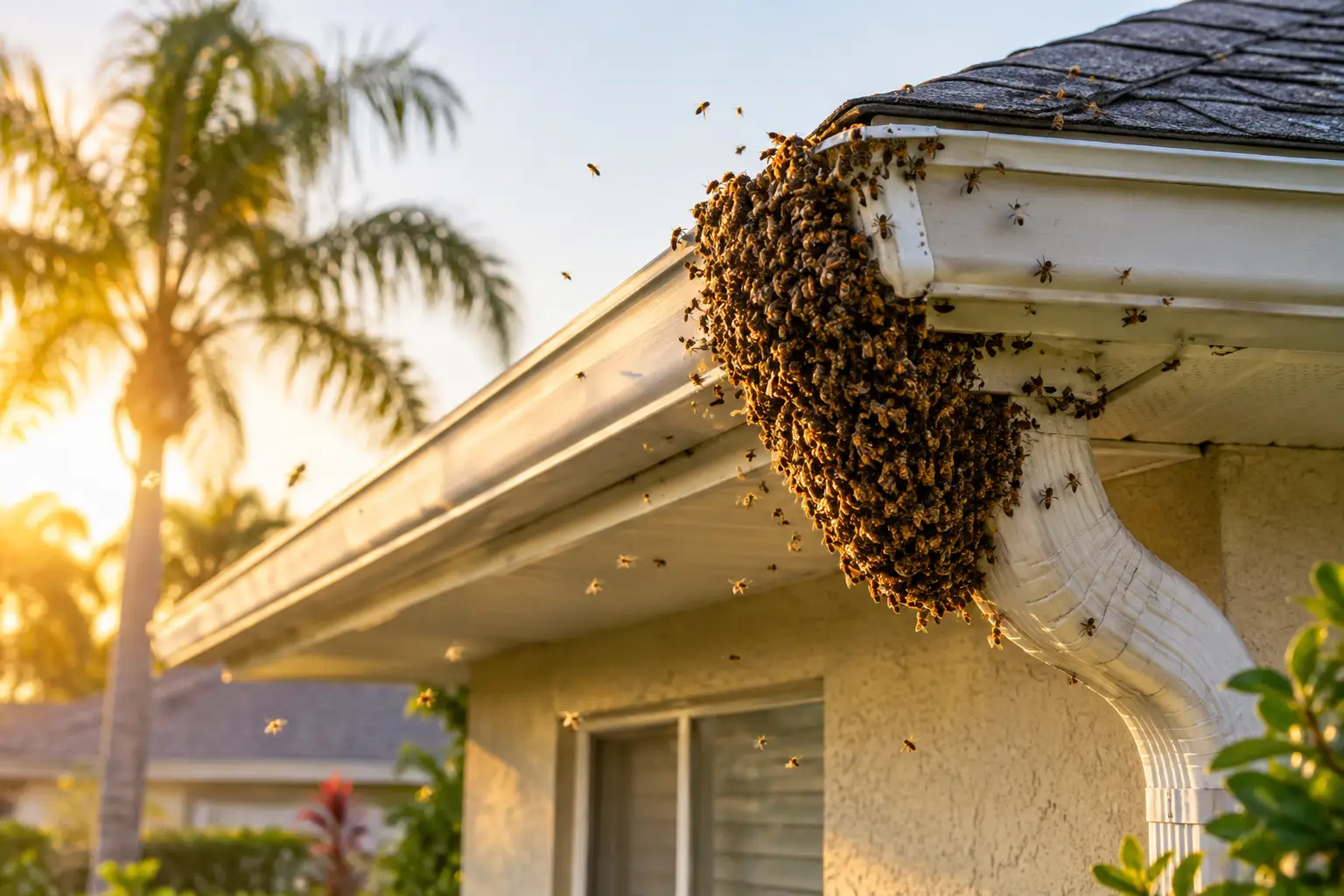

A bee colony can enter through an opening no wider than a pencil. That is why the work is not finished when the visible bees are gone. To properly seal entry after bee removal, the colony, comb, honey, and remaining access routes must be addressed in the right order. Sealing too early can trap bees indoors. Sealing too late can invite a new swarm into the same warm, honey-scented cavity.
For Southwest Florida homeowners, this is especially relevant around soffits, rooflines, block walls, sheds, pool cages, and utility penetrations. Heat, humidity, and frequent colony activity mean a small construction gap can become a recurring bee problem if it is not repaired correctly.
Why sealing is part of a complete removal
Honey bees are not random squatters. Scouts look for protected cavities with a manageable entrance, dry overhead cover, and room for comb. A wall void or soffit that held a colony once has already passed their inspection. If the opening remains accessible, it can attract returning foragers, a neighboring colony, or a new swarm searching for a home.
The greater concern is what remains inside. A responsible structural removal addresses brood comb, stored honey, wax, and bee debris whenever access allows. Leaving those materials behind can lead to honey seepage, fermentation odors, wax moths, ants, roaches, rodents, and damage to drywall or insulation. Closing an opening without handling the source may hide the problem briefly rather than solve it.
This is also why poison is not a repair strategy. Killing a colony inside a structure can leave every pound of comb and honey in place, while allowing pests and moisture problems to develop behind finished surfaces. Live removal and relocation protect the bees while giving the structure a real chance to be restored.
Do not seal an active bee entrance yourself
It can be tempting to fill a gap with expanding foam, caulk, or tape as soon as bees are noticed. Avoid doing that. If bees are still using the entrance, blocking it may force them into wall cavities, attic spaces, or living areas. It may also leave workers, brood, and honey trapped in the structure.
A colony can appear quiet while still being active. Foragers may be out collecting nectar, activity can slow in cooler or rainy weather, and bees may use a second entrance that is difficult to see. Aggressive or Africanized honey bee genetics are also a concern in Florida, so disturbing an established colony without the proper equipment carries unnecessary risk.
The right time to seal is after the removal technician confirms that the colony has been removed, comb has been addressed, and remaining bees have had an appropriate opportunity to clear the area. Depending on the structure and removal method, this may happen immediately after repair work or after a short monitoring period. The timing depends on the site, not a one-size-fits-all calendar.
What a proper entry repair looks like
A durable repair does more than cover the hole bees used. It restores the barrier of the building and closes nearby gaps that could become the next entrance. The best material depends on where bees were nesting and how the structure is built.
Soffits, fascia, and roof edges
Bees often enter where soffit panels meet fascia boards, where screens have pulled loose, or around roof transitions. These locations need weather-resistant materials that remain secure through sun, wind, and rain. Damaged wood may need replacement before gaps are caulked or screened. A patch that looks fine from the ground but leaves an open edge behind it can still be an invitation to another colony.
Roof-related work deserves special care. Walking on roofs, reaching high eaves, or working near electrical service equipment creates risks beyond the bee issue. A qualified removal and repair team can identify whether the entrance is truly at the soffit or whether it connects to a deeper roof void.
Masonry, stucco, and block walls
Florida block construction has many potential access points: weep areas, plumbing penetrations, cracks around conduit, and openings where additions meet original walls. Mortar or appropriate exterior sealant may be used for small defects, while larger openings may require a fitted patch or hardware cloth behind a finished surface.
Not every wall opening should be permanently closed. Some building features are intended to drain water or ventilate a cavity. The goal is to exclude bees without interfering with the building’s moisture management. That distinction matters in humid climates, where an improper repair can create a water problem that costs more than the original bee removal.
Sheds, fences, and outdoor structures
Colonies in sheds, hollow gates, decorative columns, and outdoor storage structures may be easier to access, but they still need a complete cleanup. Remove accessible comb and residue, then close seams with materials suited to the surface. Wood, aluminum, vinyl, and masonry each need different fasteners and sealants to hold up outdoors.
If a structure is old or lightly built, replacement of a panel may be more reliable than layering foam and caulk over rotted material. The least expensive patch is not always the lowest-cost repair over time.
The cleanup step that protects the building
After comb removal, the cavity should be inspected for honey residue, loose wax, dead bees, and damaged insulation. This is the part homeowners rarely see, but it often determines whether the repair lasts.
Honey can liquefy in Florida heat and travel along framing, wiring paths, or drywall seams. Even a small amount can feed ants and roaches. Wax and brood residue can attract wax moths and other insects, while unremoved debris may create odors. Where practical, the cavity should be cleaned, dry materials should be replaced if contaminated, and the repair area should be checked for staining or moisture before it is closed.
Some situations require a measured approach. A large colony behind finished masonry or a difficult roof cavity may involve limited access, and opening the structure can add repair costs. In those cases, the removal plan should explain what can be reached, what cannot, and how the remaining risk will be managed. Clear expectations are better than promising a perfect result where construction limits access.
How to prevent another bee entry
Once the original opening is repaired, take a few minutes to inspect the surrounding area. Bees often use the easiest gap, but that does not mean it is the only gap. Look for deteriorated caulk, loose soffit panels, torn vent screens, openings around pipes, and separations where different building materials meet.
A practical exclusion inspection focuses on gaps around rooflines and eaves, attic or gable vents, utility lines, exterior fixtures, siding transitions, and holes left by old wiring or plumbing. Screens must be firmly attached and fine enough to exclude bees without blocking necessary airflow. Expanding foam alone is rarely a durable exterior solution because sunlight, weather, and animals can break it down.
Monitor the repaired area on warm, active days for the next several weeks. A few confused bees may investigate a former entrance shortly after removal. Persistent traffic, bees disappearing into a crack, or new activity several feet away calls for a prompt recheck. With Beeswild, a three-month same-place removal warranty provides added reassurance when a colony-related concern returns at the original location.
When a repair requires a building professional
Bee removal specialists can identify and close many common entry points, but some repairs extend beyond bee exclusion. Call a qualified roofer, carpenter, stucco contractor, or electrician when the colony exposed rotted framing, roof leaks, compromised wiring, extensive drywall damage, or a failing structural component.
This is not overreacting. Bees may reveal a preexisting weakness that rain, wind, or pests were already exploiting. Fixing the full defect protects the home from more than bees.
A sealed entry should leave your property safer for the people inside and unsuitable for the next colony looking for shelter. Give the bees a chance to be relocated, give the cavity a proper cleanup, and give the repair enough attention to last through the next Florida season.

No responses yet