
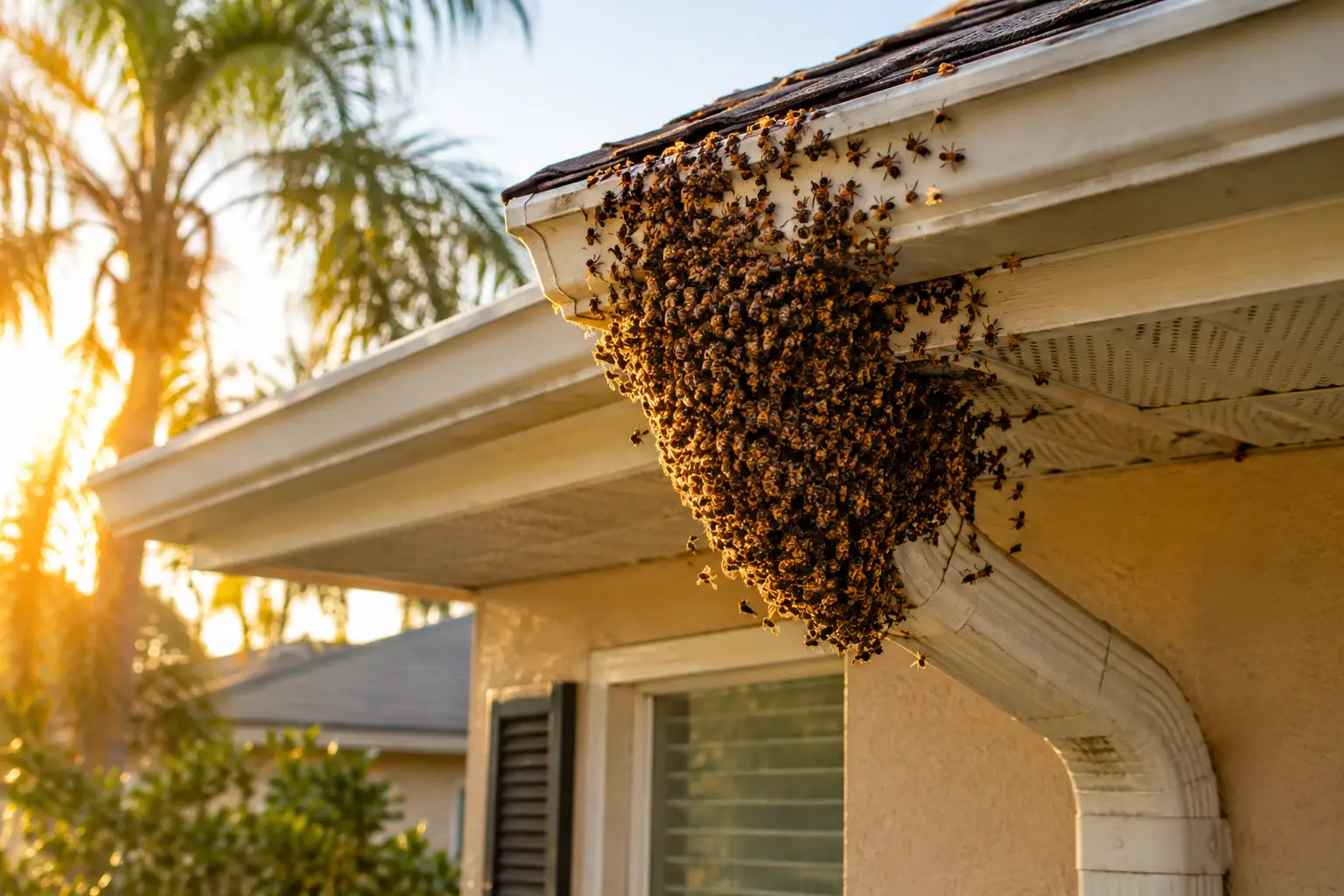

A buzzing cluster on a palm branch can be alarming. A steady stream of bees entering a soffit, roofline, wall, or meter box is a different problem entirely. Bee removal companies help property owners manage both situations safely, but the quality of the work matters. The goal is not simply to make bees disappear for a day. It is to remove the colony, protect people and the structure, and prevent honey, wax, and surviving bees from creating a larger problem later.
For homeowners, businesses, HOAs, and public facilities, the right response balances safety with the value of a living colony. Honey bees are essential pollinators, yet a colony established inside a building can damage materials, attract pests, and create a sting risk near people, pets, entrances, or outdoor gathering areas. Professional live removal and relocation addresses both realities.
A swarm and a colony require different responses
Many calls begin with the word “swarm,” but a swarm is not always a permanent infestation. A swarm is a temporary mass of bees, often gathered around a tree limb, fence, vehicle, or exterior wall while scout bees search for a new home. It may move on without intervention, although its location can still make professional pickup the sensible choice.
A colony is established. Bees are repeatedly entering and leaving one opening, usually during daylight hours, and they have built comb containing honey, brood, pollen, and wax. A colony in a wall or roof cavity has chosen a protected space and can remain there for years if it is not properly removed.
That distinction changes the method, cost, and urgency. Collecting an accessible swarm may involve carefully placing it into a transport box. Removing a structural colony requires locating the full nest, accessing it with as little disruption as possible, removing bees and comb, cleaning the cavity, and sealing likely entry points. A provider who treats both situations as identical may leave the actual source of the problem behind.
Why killing the bees rarely solves a structural bee problem
Chemical treatment can reduce visible bee activity, but it does not remove pounds of honeycomb from a wall. That comb can melt in Florida heat, stain drywall, ferment, or attract ants, beetles, wax moths, roaches, rodents, and new bee colonies. If the queen or part of the colony survives, activity may resume through another opening.
There is also a practical ecological concern. Honey bees are livestock and pollinators, not a nuisance to be discarded whenever a colony occupies the wrong place. Humane removal gives healthy colonies a chance to continue working in managed apiaries rather than dying inside a structure.
Live removal is not a promise that every bee can be handled without risk. Some colonies are defensive, and Southwest Florida can present concerns about Africanized genetics. Experienced professionals assess behavior from a safe distance, use appropriate protective equipment, establish a work area, and choose a method that protects occupants and bystanders. Safety comes first, particularly around schools, playgrounds, public entrances, pets, and anyone with a known sting allergy.
What professional bee removal companies actually do
A thorough removal begins with inspection. The technician watches flight paths, identifies entry and exit points, and estimates where the comb sits inside the structure. This investigation matters because the visible opening is not always directly in front of the colony. Bees can travel through framing, insulation, roof voids, or utility chases before reaching the nest.
Once the colony is located, the removal method depends on access and construction. In some cases, a section of soffit, siding, fascia, roof material, or interior wall must be opened. That can sound disruptive, but controlled access is often less destructive than allowing honey and pests to spread through a hidden cavity. A professional should explain what needs to be opened, why it is necessary, and what repair responsibility looks like before work begins.
The bees are carefully gathered, and the comb is removed. This step is essential. Leaving brood and honey behind invites other insects and animals, while leaving old wax can make the location attractive to future swarms. The cavity should then be cleared of residue as practical, treated only where appropriate, and closed or screened so bees cannot return through the same route.
Finally, a reputable provider relocates viable bees to a managed apiary or safe agricultural setting. This is where a beekeeper-operated removal service differs from a conventional extermination-only approach. The removal is connected to long-term colony care, rather than ending at the job site.
How to evaluate bee removal companies before you hire
The fastest option is not always the best option when bees are inside a structure. Ask whether the company performs live removal, whether it removes comb and honey, and whether it seals the original entry point. Those answers reveal more than a generic promise to “get rid of bees.”
It is also reasonable to ask about insurance, experience with your type of building, and how the team manages defensive colonies. Commercial managers and HOA boards should confirm that the provider can work around tenants, customers, pedestrian traffic, and scheduled operations. A removal beside a restaurant patio or clubhouse requires more planning than a colony in an isolated shed.
Discuss the warranty in plain terms. A warranty should explain what happens if bees return to the same place, how long coverage lasts, and what conditions are excluded. For example, Beeswild provides a three-month same-place removal warranty, which gives property owners a clear period of protection after a properly completed job. It does not mean a new swarm cannot choose another vulnerable opening elsewhere on the property.
Price should be transparent, but it should not be the only decision factor. An estimate for a structural removal may reflect travel, access difficulty, colony size, height, building materials, repairs, and whether multiple visits are needed. A low quote that skips comb removal can become expensive when honey stains appear weeks later or pests arrive in the cavity.
What to do while you wait for help
Keep people and pets away from the area, especially if the bees are concentrated near an entrance or have become defensive. Do not spray water, insecticide, foam, gasoline, or household chemicals into an opening. Agitating a colony can increase stinging risk and push bees deeper into the structure.
Avoid sealing an active entrance before the colony is removed. Trapped bees often find another way out, which may be through an interior wall, light fixture, or vent. Taking a clear photo or short video from a safe distance can help a removal professional identify whether you are seeing honey bees, wasps, yellowjackets, or another insect. Correct identification matters because not every flying insect is a candidate for live bee relocation.
If stinging is actively occurring, or bees are threatening people in a public space, treat the situation as urgent. Move away from the area, protect your face if necessary, and seek emergency medical assistance for signs of a severe allergic reaction, such as difficulty breathing, swelling of the throat, dizziness, or widespread hives.
Prevention starts with the building envelope
After removal, prevention is usually a construction task as much as a pest-management task. Bees can enter gaps that appear too small to matter: loose soffits, uncapped utility penetrations, openings around vents, damaged fascia, gaps beneath roof tiles, and cracks where materials meet.
Repairs should be made after the full colony is out, not while bees remain inside. Durable exclusion materials and sound workmanship matter in Southwest Florida, where heat, rain, wind, and aging exterior components can reopen weak points. Regularly checking rooflines and exterior walls is particularly helpful for seasonal homes, vacant units, and commercial properties with extensive eaves or decorative facades.
The best bee removal protects more than a building. It protects the people who use it, avoids the hidden damage caused by abandoned comb, and gives a valuable colony a safer place to live. If bees are entering a structure, act early and choose a company prepared to remove the whole problem with care.

No responses yet