
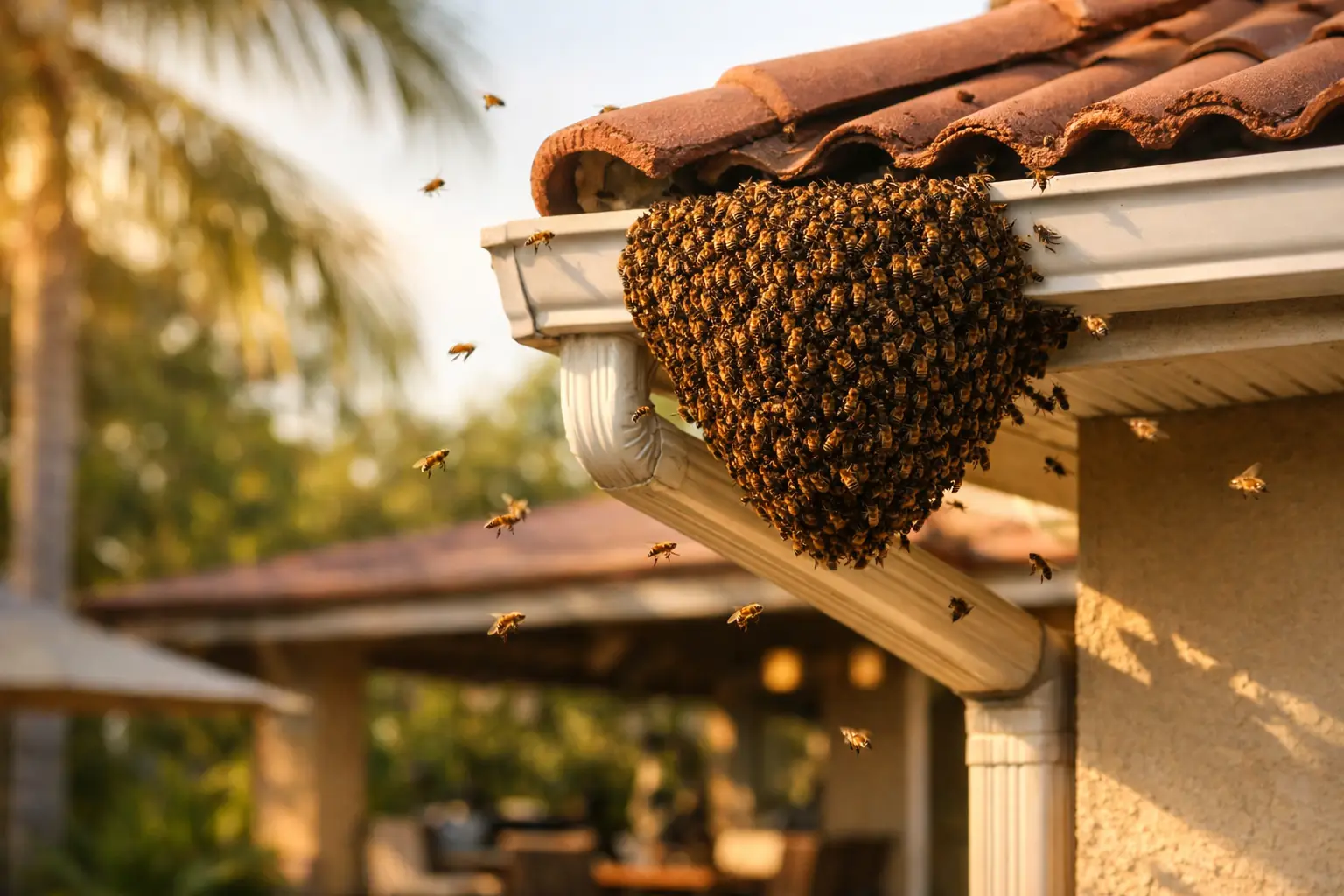

A guest reaches for a sweet tea, notices two bees circling the rim, and suddenly your patio feels less like an amenity and more like a liability. That is where bee safety for outdoor restaurants becomes practical, not theoretical. The goal is not to wage war on pollinators. It is to reduce sting risk for guests and staff while dealing responsibly with an animal that matters to the food system.
For restaurant owners and property managers, the hard part is that bees do not show up for just one reason. Sometimes they are drawn by spilled soda, fruit garnishes, or flowering landscaping near the patio. Other times, the real problem is not foraging bees at all but a colony nesting in a wall, soffit, sign cavity, or roofline close to the seating area. Those are two different situations, and they require different responses.
What bee activity around a restaurant actually means
Not every bee on a patio signals danger. A few bees moving flower to flower in nearby landscaping may have very little interest in your guests. A handful investigating sugary residue on tabletops is more of an operational issue than an infestation. But repeated bee traffic to one section of the building, especially near openings, vents, or façade gaps, can point to a colony established inside the structure.
That distinction matters because surface treatments and casual spraying often miss the source. If bees are nesting in a void, killing visible bees can leave brood, wax, honey, and dead insects inside the wall. That can create odor, staining, melting comb, and attraction for ants or rodents. From a restaurant risk standpoint, that is not a fix. It is delayed damage.
Bee safety for outdoor restaurants starts with attraction control
The fastest way to lower bee pressure on a patio is to make the space less rewarding. Bees are efficient. If they find sugar and moisture in one place over and over, they keep returning.
Start with drinks and residue, because that is where most restaurant bee conflicts begin. Soda nozzles, cocktail stations, bussing tubs, and trash openings all create scent trails. On the guest side, abandoned cups, sticky menus, syrup drips, and fruit scraps can hold enough sugar to keep foragers interested for hours. Tightening cleanup intervals during peak outdoor service usually does more than any off-the-shelf repellent.
Trash management matters just as much. Patio bins should close fully and be emptied before overflow starts. If liners leak into the bin well, bees and other insects will continue investigating even after the visible trash is gone. The same goes for recycling areas with cans and bottles.
Water is the other attractant managers often miss. Condensation runoff, leaky hose bibs, poorly drained mop areas, and puddling near planters can all pull bees in, especially during hot Florida weather. If a patio offers both sugar and water, it becomes a reliable stop.
Landscaping can help or hurt
Outdoor dining and landscaping usually go together, but certain choices bring pollinators right into guest traffic. Flowering plants are not the enemy. Placement is the issue.
If dense blooming beds are pressed directly against host stands, queue areas, or tightly packed dining tables, bees have no buffer from people. Moving nectar-rich plantings farther from seating can preserve the look of the patio while redirecting pollinator activity away from the service path. In some cases, reducing heavy seasonal blooms near entrances is the safer call.
It also helps to look above eye level. Bees may enter building cavities through small gaps around signage, lighting mounts, roof returns, or utility penetrations hidden by vines and ornamental growth. When landscaping starts to conceal those openings, inspections get harder and colonies can establish unnoticed.
Train staff for calm, consistent response
Most patio bee incidents escalate because people panic. A server swats. A guest flails. Someone sprays a general insect killer near food service. None of that improves safety.
Staff should know the difference between routine bee presence and urgent colony behavior. A few foragers on fallen fruit call for cleanup and guest reassurance. A concentrated stream of bees entering and leaving one crack in the wall calls for area control and a professional inspection. Staff should also know that honey bees usually sting defensively, not randomly. Fast movement, crushing, or trapping them against skin makes stings more likely.
Good training is simple. Move food residue quickly. Replace sticky table items. Avoid swatting. Offer to reseat guests if needed. Alert management when bee activity is concentrated in one location or suddenly increases. If a swarm appears, keep people back and do not spray it. Swarms can look alarming, but many are temporary clusters scouting for a new home. They still require professional handling, just not a chaotic one.
When outdoor bee activity points to a structural problem
Restaurants with repeated bee complaints in the same patio zone should assume there may be a nest site nearby until proven otherwise. This is especially true when bees are most active around warm exterior walls, soffits, parapets, meter boxes, or signage.
A structural colony changes the risk level. Traffic can increase day by day. Vibrations from doors, dumpsters, music, or maintenance can agitate the colony. If the bees are in a wall cavity beside outdoor seating, the issue is no longer just guest comfort. It is a facility problem with public safety implications.
This is where humane live removal matters. For a restaurant, the objective is not only to get bees away from customers but to remove comb and colony materials from the structure so the site does not continue causing problems. Poison-only approaches can seem cheaper at first, but they often leave the building owner with a second bill for cleanup and repairs.
Bee safety for outdoor restaurants and liability
Liability is not just about whether someone gets stung. It is about whether management responded reasonably once a hazard became apparent. If staff have documented repeated bee activity near the patio and no one investigates the source, that creates exposure.
A defensible response usually includes three things. First, operational control of attractants such as trash, spills, and standing water. Second, a written protocol for staff so the response is consistent. Third, prompt inspection when bee traffic suggests a colony on site.
For commercial properties, timing matters. Waiting until a weekend rush or private event to address visible colony activity rarely ends well. It is far better to treat recurring bee presence as an early warning sign and inspect before the problem peaks.
What not to do
The worst decisions usually come from trying to solve a building problem with a surface treatment. Spraying bees you can see does not address the nest you cannot see. It can also scatter defensive bees into a dining area and contaminate service zones.
Another mistake is sealing an entry hole while bees are still active inside. That can force bees into the building interior or trap colony materials in the wall. If there is honeycomb behind that surface, the damage does not stop just because the entrance disappears.
Restaurants should also avoid assigning removal to untrained maintenance staff. Working around stinging insects near guests, food service areas, and structural voids is specialized work. The right method depends on species behavior, nest location, access, and what needs to be removed from the structure.
Choosing the right professional response
Foraging pressure and structural infestation are different jobs. A good assessment should tell you which one you are dealing with. If the issue is mainly attraction, sanitation and minor site changes may solve it. If there is a colony in the building, you need removal and likely repairs to prevent reinfestation.
In Southwest Florida, where outdoor dining is common for much of the year, it helps to work with a professional who understands both bee behavior and structural access. Humane relocation is not just an ecological preference. In many cases, it is the cleaner long-term solution because it focuses on complete colony removal rather than temporary knockdown. Beeswild, based in Cape Coral, is one example of a company built around live bee removal and relocation rather than chemical extermination.
A safer patio without treating bees like the enemy
Restaurants sit at an awkward intersection of hospitality, public safety, and the natural environment. You want a patio that feels open and inviting, not sterile. But you also cannot ignore recurring bee activity and hope guests will tolerate the risk.
The practical middle ground is simple. Remove the food and water rewards that draw bees in. Train staff not to escalate encounters. Inspect quickly when patterns suggest a colony in the structure. And if bees have established themselves in or near the building, choose a removal method that protects people without creating a bigger mess behind the walls.
A well-run patio does not have to be hostile to pollinators. It just needs clear boundaries, good sanitation, and a serious response when bee activity crosses from nuisance into hazard.

No responses yet