
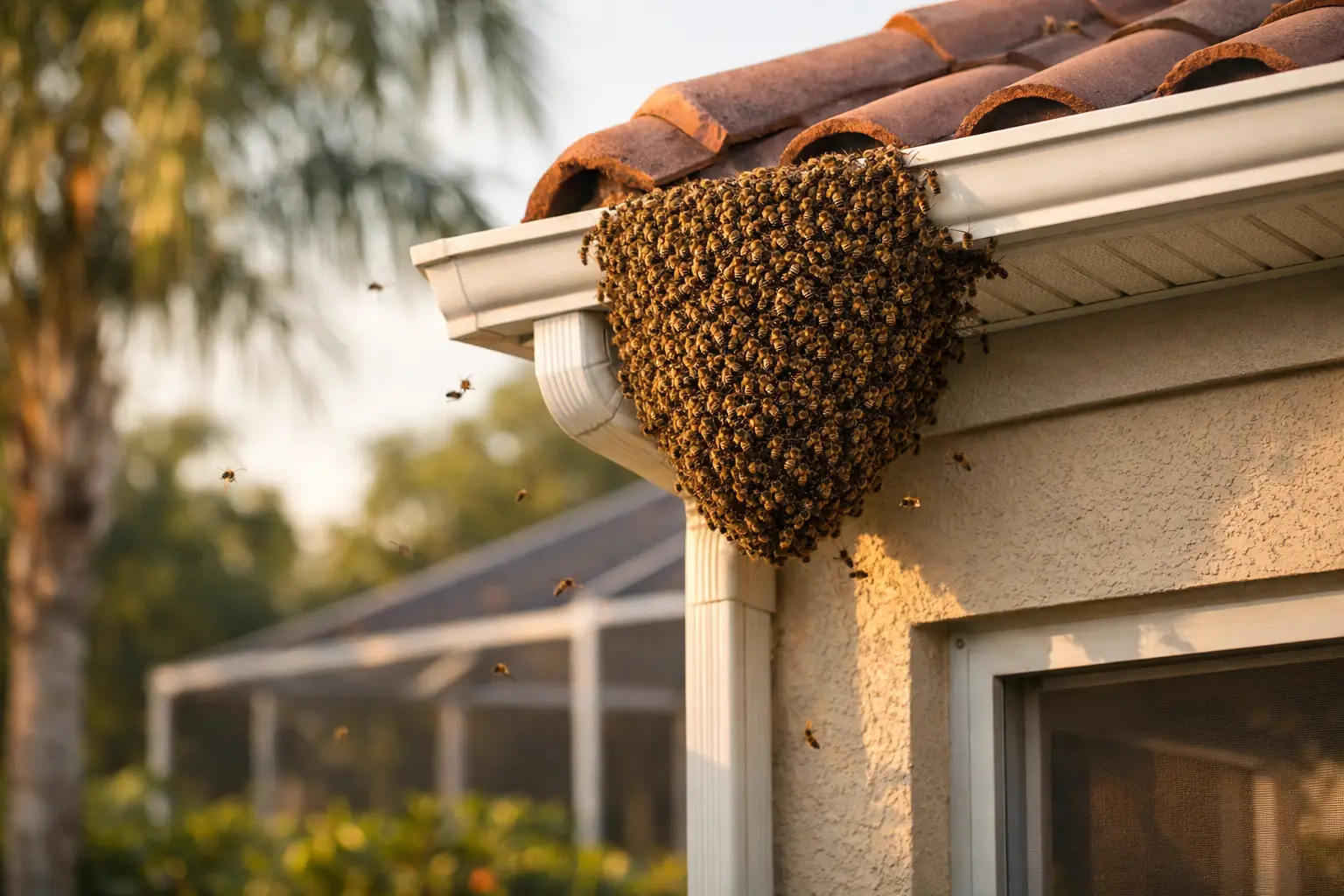

A cluster of bees under an eave can turn a normal afternoon into a fast-moving problem. The question behind searches like beeswild.com best choice for live bee removal is usually not abstract – it is immediate. Are your family, tenants, customers, or building occupants safe, and can the bees be removed without making the situation worse inside the structure?
That question matters because bee removal is not the same as pest spraying. A living colony inside a wall, soffit, roofline, shed, or utility area keeps producing brood, wax, honey, and heat. If the job is handled poorly, the visible bees may disappear for a while, but the comb and honey can remain hidden in the structure. That is when property damage, staining, odor, ants, roaches, rodents, and repeat infestations start becoming the bigger issue.
Why beeswild.com best choice for live bee removal is a fair question
If you are comparing providers, the real test is not who can make bees vanish fastest. It is who can remove the colony correctly, protect people nearby, reduce the chance of bees returning to the same void, and do it without treating pollinators like disposable pests.
That is where a specialized live removal company stands apart from general pest control. Poison may kill exposed bees, but it does not solve the structural problem. In many cases, it leaves comb behind and can trigger exactly the mess property owners were trying to avoid. Live removal takes more labor and more skill because it addresses the entire nest system, not just the flying insects at the entrance.
For homeowners in Southwest Florida, this distinction is practical, not philosophical. Heat accelerates melting comb. Rain and humidity exploit weak points in roofs and walls. A colony in a structure is not likely to become easier or cheaper if it is ignored.
What makes a live bee removal company the right choice
The best choice usually comes down to four things: response, technique, structural understanding, and what happens to the bees after removal.
Response matters because bee issues are often urgent. A fresh swarm hanging from a branch may be simpler to collect than an established colony inside masonry or stucco. Waiting can change the scope of the job. A company that understands bee behavior can often tell, from photos or a phone description, whether you are looking at a temporary swarm, an active structural colony, or a recurring issue tied to old comb.
Technique matters because not all removals are equal. A true live removal aims to preserve the colony, remove comb where needed, recover the queen if possible, and relocate the bees into managed apiary conditions. That approach protects pollinators while solving the property problem at its source.
Structural understanding matters because bees rarely choose easy access points. They enter through gaps in soffits, fascia, cinder block cavities, rooflines, sheds, water meter boxes, and other voids. The person removing them needs to think like both a beekeeper and a building problem-solver. If the colony is extracted but the cavity is left attractive to future swarms, the relief may be temporary.
The final piece is relocation. Humane removal means more than carrying a box of bees away. It means the bees are moved into a safe environment where they can continue functioning as a colony. That is a major difference between rescue and disposal.
Beeswild.com best choice for live bee removal – what stands out
A company built around both bee rescue and bee farming has a practical advantage. It is not removing bees as a side service. It has a place for them to go and a reason to keep colonies alive and viable. That changes the incentives in a good way.
Beeswild.com operates with that hybrid model. It performs live bee removal and relocation, then rehomes rescued colonies in managed farm areas. For customers, that matters because the removal process is tied to a real outcome. The bees are not just taken off-site. They are sustained as part of an ongoing apiculture operation.
There is also a trust factor in specialization. When a company works specifically with bees, it tends to be more honest about what a job requires. Some removals are straightforward. Others involve opening a wall, removing comb, cleaning the cavity, and addressing entry points so another colony does not move into the same space. A specialist is more likely to explain those trade-offs clearly instead of oversimplifying the work.
Another meaningful detail is warranty support. A same-place removal warranty reflects confidence in the process and acknowledges a common customer fear – that bees will return to the exact same location. A three-month same-place-removal warranty does not mean every future bee issue is identical, but it does show accountability where it counts most.
Why poison often creates a second problem
Property owners sometimes ask whether spraying is the cheaper option. It can look cheaper at first, but that depends on what happens next.
When a colony is poisoned inside a structure, dead bees may accumulate in the void and the brood cycle stops, but wax and stored honey are still there. In Florida heat, comb can soften or collapse. Honey can seep into drywall, insulation, or masonry surfaces. The scent can attract other pests, and new swarms may be drawn to residual comb odor later.
This is why non-chemical live removal is often the more complete fix. It deals with the visible bees and the hidden materials they leave behind. It also avoids killing pollinators that still have value as livestock and as part of the broader agricultural ecosystem.
That does not mean every situation is simple. Aggressive colonies, difficult access, and public safety concerns can change the removal plan. But even then, the right provider will explain the safest path rather than defaulting to a shortcut that shifts the problem behind the wall.
What homeowners and property managers should expect
The best bee removal experience is usually calm, direct, and specific. You should expect a provider to ask where the bees are entering, how long activity has been visible, whether anyone has been stung, and whether children, pets, or the public are nearby.
You should also expect an explanation of whether you are dealing with a swarm or an established colony. A swarm is often temporary and more exposed. An established colony has usually begun building comb and storing resources in a cavity. The second scenario is the one that most often requires structural removal.
For commercial properties and HOAs, liability adds another layer. A colony over a walkway, near outdoor seating, by a pool area, or inside a shared wall is not just a maintenance issue. It is a public-facing safety issue. In those cases, speed matters, but so does professionalism. The wrong method can agitate bees, disrupt normal business, or leave structural residue that creates repeat complaints later.
In Southwest Florida, local experience helps because building styles, weather, and bee behavior all shape the job. Cape Coral and surrounding communities have plenty of rooflines, block structures, lanais, sheds, and utility spaces that can become attractive nesting sites. A company familiar with those patterns can usually diagnose the situation more accurately.
When “best choice” depends on your situation
No serious company should pretend every removal is identical. The best choice depends on whether the bees are accessible, whether they are inside a structure, how long they have been present, and how urgent the safety risk is.
If you have a fresh swarm on a tree branch away from foot traffic, the job may be relatively quick. If you have a colony established inside a wall beside a bedroom, restaurant patio, or HOA mailbox cluster, the work becomes more technical. Access, cleanup, repair coordination, and prevention all matter more.
That is why educational, transparent communication matters as much as equipment. Customers under stress need to know what is happening, what is being removed, what is staying, what needs repair, and what the realistic outcome looks like. Reassurance is useful, but only when it is backed by method.
For many local customers, that is the strongest case for a specialist with a rescue-based model. The company is not choosing between your property and the bees. It is solving for both.
If bees have taken over part of your home or building, the smartest next step is usually the simplest one – get an expert assessment before the colony grows, the comb spreads, or the damage gets more expensive. Good bee removal is not just about getting bees out of sight. It is about getting the structure back, safely, while giving the colony a real chance somewhere it belongs.

No responses yet