
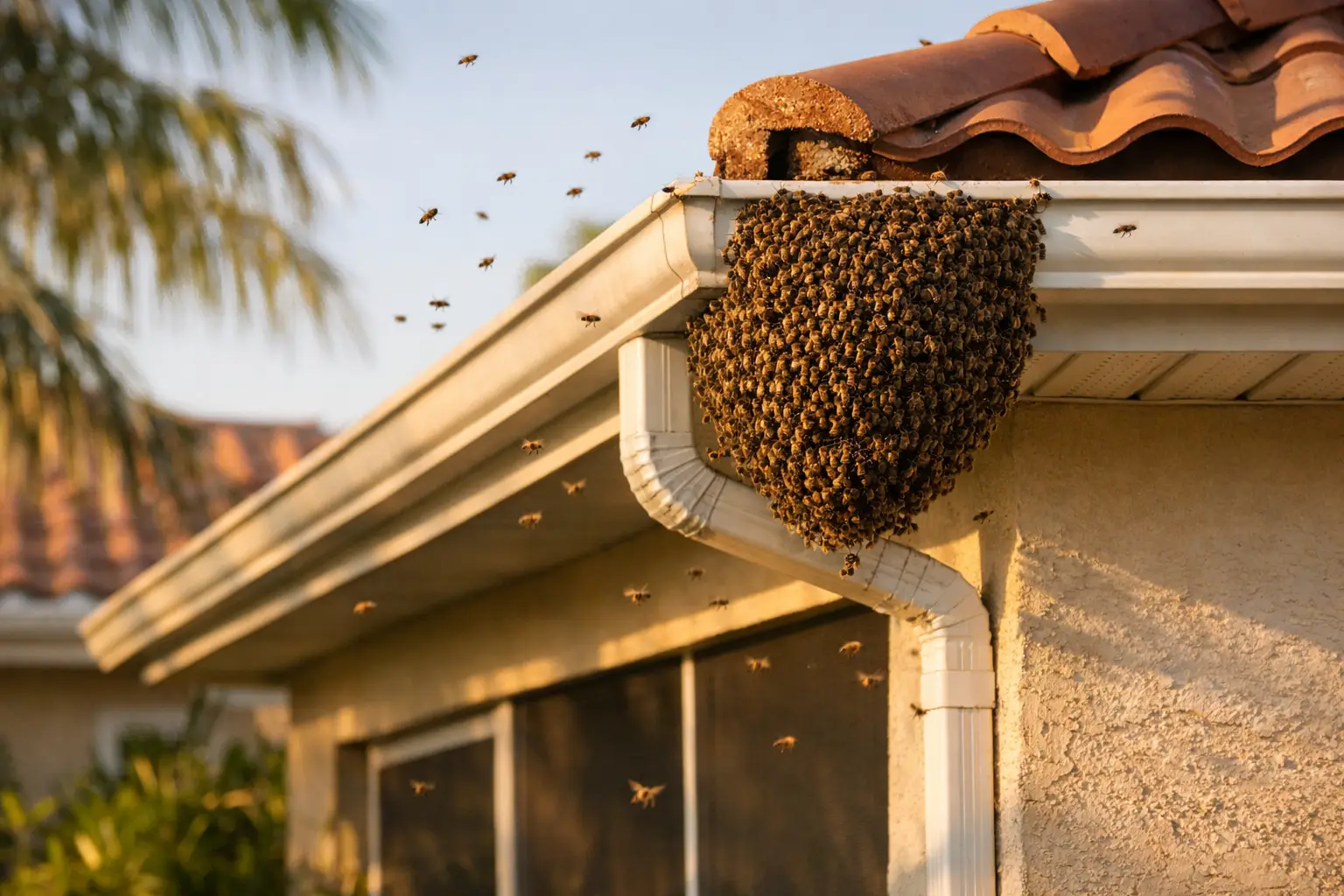

A cluster of bees on a palm tree can look dramatic. A colony inside a wall is the real problem. In Cape Coral, honey bees often move from a temporary swarm to a permanent nest fast, and that is where cape coral honey bee removal needs to be handled with precision, not panic.
For homeowners, the first concern is usually safety. For property managers, it is liability and structural damage. For both, the biggest mistake is assuming the bees will simply leave on their own or that a quick spray solves it. A live colony inside a soffit, roofline, block wall, or attic can keep building comb, storing honey, and attracting more trouble long after the visible bee activity seems to slow down.
Why Cape Coral honey bee removal is different
Southwest Florida gives bees what they need nearly year-round. Warm weather, ornamental landscaping, canals, and sheltered building cavities create ideal conditions for swarms and established colonies. That means bee issues here are not always simple, and the response has to match the situation.
A swarm hanging from a branch is very different from a colony that has been active inside a wall for months. Swarms are typically temporary. They are scouting for a new home and may move within a day or two. Established colonies are another matter. Once bees begin drawing comb inside a structure, they are investing in that space. If they stay undisturbed, the colony grows, honey stores increase, and removal becomes more involved.
This is also why fear-based decisions often make things worse. Poisoning a colony inside a structure does not remove comb, brood, or honey. It leaves organic material behind, which can melt in the heat, stain drywall, attract ants and roaches, and even invite another swarm to occupy the same cavity later.
What live removal actually solves
Proper live removal is not just about getting bees out of sight. It addresses the colony, the comb, the honey, and the access point. If any of those pieces are missed, the problem may return.
When a colony is removed correctly, the work usually includes locating the full nest area, opening the structure as needed, removing live bees and comb, clearing out honey residue, and closing or advising on repair of the entry route. That last step matters more than many people realize. Bees can use surprisingly small gaps around roof transitions, utility penetrations, fascia lines, and masonry openings.
There is also an ecological reason to choose live relocation when possible. Honey bees are livestock. They are managed pollinators with agricultural value, and preserving healthy colonies supports local beekeeping instead of treating every bee issue like a standard pest emergency. That does not mean safety comes second. It means the solution should protect people and preserve bees when the colony can be responsibly relocated.
How to tell if you have a swarm or a structural colony
The timeline and the bee traffic usually tell the story. If you suddenly see a dense ball of bees hanging on a fence, shrub, or tree limb, that is often a swarm. If you see steady in-and-out flight from the same crack or hole over several days, especially during warm daylight hours, you are likely dealing with a colony inside a void.
Sound can be another clue. Homeowners sometimes hear a low buzzing behind drywall or near a soffit before they ever see the entry point. In other cases, a faint honey smell develops indoors. Those signs suggest the issue is already beyond a simple pickup.
It depends on the location, too. A visible swarm in open air may be quicker to remove than bees tucked behind stucco, under tile roofing, or inside a second-story wall. Accessibility changes the scope of the job, and that is one reason phone estimates are often only rough starting points.
What not to do when bees show up
The wrong first move can turn a manageable situation into an emergency. Spraying store-bought insecticide at a swarm or nest entrance often agitates the bees without solving the actual problem. Sealing the hole before removal is another common mistake. If bees are trapped inside, they may push deeper into the structure or find their way into interior living spaces.
Hosing them down is risky and ineffective. So is knocking down comb you can reach while leaving the rest in place. Even if the visible bees disperse, brood and honey left behind continue to create sanitation and pest issues.
If anyone in the home has a known sting allergy, the safest response is simple: keep distance, move pets and children away from the area, and call a professional trained in live bee removal. The goal is controlled handling, not a rushed DIY attempt.
The process behind professional Cape Coral honey bee removal
A good removal starts with inspection, not guessing. The technician identifies the species, evaluates bee behavior, maps likely comb placement, and checks how the bees are entering the structure. That information determines whether the job is a swarm collection, a cut-out from a building cavity, or a more complex structural removal.
During removal, the priority is to contain the bees, protect occupants, and recover the colony as intact as possible. Comb has to come out because it is the core of the nest. Leaving it behind defeats the purpose. Honey and wax residues also need attention because they attract pests and can trigger repeat occupation.
Afterward, the exclusion piece matters. If the entry gap remains open, another swarm may move in. This is where experience with building conditions becomes just as important as beekeeping knowledge. Bee removal is part insect management, part construction awareness.
For many clients, reassurance is a big part of the service. They want to know whether the bees will come back, whether the wall needs repair, and whether the immediate area is safe again. A same-place removal warranty, such as a 3-month warranty offered by some specialized providers, can add practical peace of mind because it shows the work is meant to solve the cause, not just the symptom.
Why humane removal often costs more than spraying
People naturally compare live removal to the lower price of extermination. The difference comes down to labor and completeness. Spraying can be fast, but it is often incomplete when bees are inside a structure. Live removal takes more time because the colony must be accessed, removed, and relocated properly.
That higher upfront cost can be the cheaper decision over time. Poisoned colonies left in walls can lead to honey damage, foul odors, secondary pests, and future bee occupation. Those repairs usually cost more than doing the original removal correctly.
There is also a values question. Some customers want the fastest option no matter what. Others want a solution that respects pollinators and avoids unnecessary killing. In Cape Coral, where bee activity is common and year-round conditions support relocation, humane removal is often the better fit both practically and ethically.
When urgency matters most
Not every bee call is the same level of risk. A calm swarm on a distant tree may allow for a measured response. Bees entering a home wall near a front door, school walkway, pool enclosure, restaurant patio, or HOA common area deserve faster action because people are likely to cross their flight path.
Aggressive behavior changes the equation, too. If bees are chasing, stinging unprovoked, or defending a hidden nest near a high-traffic area, the situation should be treated as urgent. Municipalities, property managers, and homeowners all need a response plan for those cases because delays can increase liability and danger.
For commercial and community properties, documentation and professionalism matter almost as much as the removal itself. The provider should be able to assess the risk clearly, explain the work, and carry out a process that protects the public while addressing the colony fully.
Choosing the right help
The best bee removal provider is not just someone who can make bees disappear for a day. You want someone who understands colony behavior, structural nesting patterns, safe handling, and relocation. In a market like Southwest Florida, that blend matters.
If a company talks only about spraying, ask what happens to the comb and honey afterward. If they promise instant results without inspection, be cautious. A real solution begins with identifying where the bees are, how long they have been there, and what the structure will require to remove them cleanly.
Beeswild, based in Cape Coral, is one example of a company built around that rescue-and-relocate model, combining live removal with long-term beekeeping. That approach makes sense because it treats honey bees as valuable livestock while still addressing the property risk they create when they move into the wrong place.
If bees have chosen your wall, roofline, shed, or storefront, the smartest next step is not to wait for the problem to sort itself out. The earlier a colony is assessed, the more options you usually have, and the better the outcome for your property and the bees.

No responses yet