
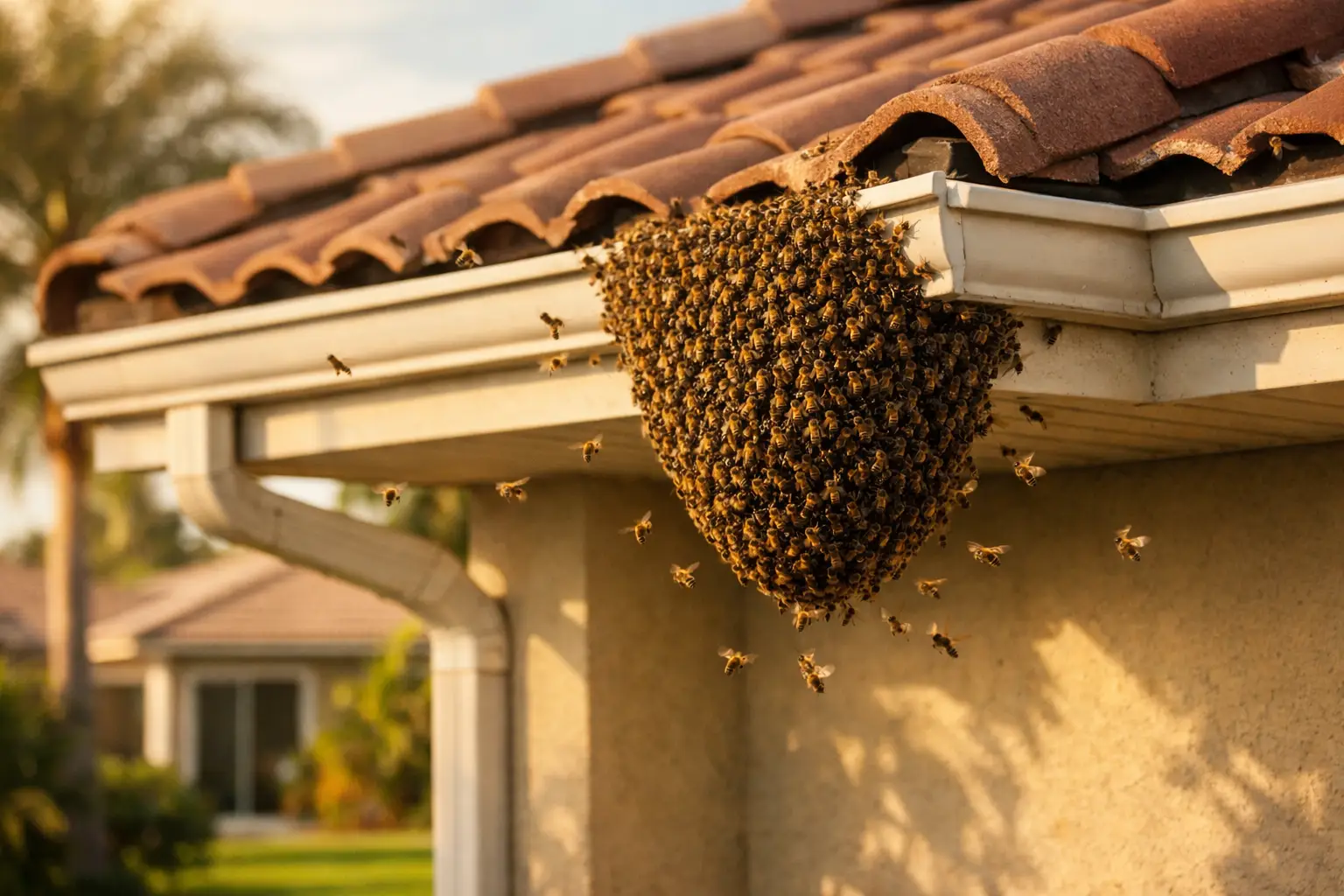

A few bees near a soffit can mean two very different things: a temporary swarm resting outside, or a mature colony already living behind the wall. That distinction drives the decision between beeproofing versus colony removal. One option closes access points to prevent future nesting. The other removes the bees, comb, honey, and brood that are already inside. Choosing the wrong one can leave a home vulnerable to honey leaks, odors, pests, and a new colony moving into the same cavity.
Beeproofing Versus Colony Removal: The Core Difference
Beeproofing, also called exclusion, means locating and sealing the openings bees use to enter a structure. It is a preventative construction measure. It works best when a space is empty, after a proper removal, or when an inspector has confirmed that bees are not established inside.
Colony removal is a structural service for an active hive. A trained removal team accesses the colony, safely collects the bees, removes comb and stored honey, cleans the cavity, and then seals the entry route. When done correctly, live removal addresses both the immediate safety concern and the conditions that attract replacement bees.
The key question is not, “Can the hole be sealed?” Almost any opening can be sealed. The question is, “What is behind that opening?” If thousands of bees, wax comb, pollen, brood, and honey are present, sealing the entrance alone turns the wall or roof cavity into a trap.
When Beeproofing Is the Right First Step
Beeproofing is valuable because Southwest Florida structures offer plenty of appealing nesting spaces. Bees may investigate gaps around roof returns, soffits, vents, fascia boards, utility penetrations, siding transitions, and block-wall voids. Once scout bees find a dry, protected cavity, a swarm may follow.
For an empty void, exclusion can be the most efficient answer. It denies scouts access before a colony becomes established and reduces the chance of a repeat problem after a removal. Property managers can also use beeproofing as part of routine building maintenance, especially at clubhouses, restaurants, mailrooms, and other places where bee activity creates a public-safety concern.
Beeproofing may be appropriate when a swarm is hanging openly on a branch or fence and has not entered the building. Swarms are generally temporary clusters looking for a permanent home. They should still be handled carefully, but there is no hidden comb to remove from the structure. Once the swarm is safely collected, sealing nearby voids can help prevent another swarm from choosing the property.
It is also useful after a colony removal. The removal opening must be repaired and the original entrance sealed with materials suited to the building. Otherwise, the scent of old wax and honey can draw in scout bees, wasps, ants, and other insects.
Why Sealing an Active Colony Can Create Bigger Problems
A colony inside a wall does not disappear because its outside entrance is blocked. The bees may find another route, chew through weak material, or emerge into an interior room through light fixtures, vents, or drywall gaps. If the colony dies in place, the damage can continue after the buzzing stops.
Honey is especially troublesome in Florida heat. Stored honey can soften and leak through ceilings, walls, or insulation. It may leave stains and attract ants, roaches, beetles, wax moths, and rodents. Old comb also holds scent cues that can attract a future swarm. A quick seal can therefore become a more expensive repair later.
Chemical treatments present a similar concern when they are used without removing the comb. Dead bees and honey remain in the structure, while contaminated comb may be unusable for relocation. For a property owner who wants the bees gone and the building protected, a complete removal is usually the more durable approach.
There is one important exception: a professional may sometimes use a controlled one-way exit system as part of an exclusion plan for a difficult-to-access colony. This is not the same as simply plugging a hole. It requires assessment, correct placement, enough time for foraging bees to exit, and a plan for the remaining comb and queen. In many structural cases, direct removal is still the cleaner solution.
What a Complete Colony Removal Should Address
The quality of a removal is measured by more than whether bees are no longer visible outside. A responsible service evaluates the structure, bee behavior, access route, size of the colony, and the likely amount of comb before work begins. Aggressive colonies, including potentially Africanized honey bees, require particular caution. Homeowners should not open walls, spray entrances, or attempt to vacuum bees themselves.
A complete structural removal generally involves four connected tasks:
- Safely collecting and relocating the live bees when conditions allow.
- Removing comb, brood, pollen, and stored honey from the cavity.
- Cleaning the accessible area to reduce lingering odors and pest attraction.
- Closing the original access point and repairing the opening as agreed.
These steps protect the building as well as the colony. At Beeswild, rescued colonies can be rehomed in managed apiaries rather than treated as disposable pests. That approach is especially meaningful when the alternative is a dead hive left to decay inside a home, business, or shared community structure.
Not every removal requires the same level of construction work. A hive in a removable soffit panel is different from one established behind stucco, inside a roofline, or in a masonry cavity. Access, repair scope, and cost depend on the building material and where the comb is located. A clear inspection and explanation of the proposed opening are signs that the service is addressing the real problem rather than offering a one-size-fits-all fix.
How Homeowners Can Tell Which Service They Need
Start by observing from a safe distance. Bees flying repeatedly in and out of one small gap, particularly during warm daylight hours, usually indicate an established colony. A dark stain below an entrance, wax bits on the ground, sticky seepage, a sweet odor indoors, or bees appearing inside the home are stronger signs that comb is already present.
A stationary cluster on a tree limb, mailbox, or exterior wall may be a swarm. It can look alarming, but a swarm has often not begun building comb. It still deserves professional handling, especially near doors, play areas, pets, or public walkways, but the solution may be straightforward collection rather than structural removal.
Do not use expanding foam, caulk, insecticide, water, or smoke on an active entrance. These actions can agitate the bees and make professional removal more difficult. Keep people and pets away from the area, avoid mowing or using loud equipment nearby, and arrange an assessment promptly. If someone has been stung repeatedly, is showing signs of an allergic reaction, or bees are threatening the public, treat the situation as an emergency.
The Best Long-Term Plan Is Usually Both
Beeproofing and colony removal are not competing services when a hive is already inside a building. They are stages of one effective plan: remove the existing colony and its resources, then beeproof the access point so another colony cannot occupy the same void.
For a homeowner, that sequence protects the structure and avoids the disappointment of seeing bees return a few weeks later. For an HOA or commercial manager, it helps reduce liability while preserving an important pollinator whenever safe relocation is possible. Ask whether the provider removes the comb, how they handle the repair opening, and whether they stand behind same-place removal work with a warranty.
The safest choice begins with an honest diagnosis. If there is no colony, beeproofing may prevent a costly problem. If a colony is already established, give the bees a way out of the structure and into a managed home – then close the door behind them.

No responses yet