
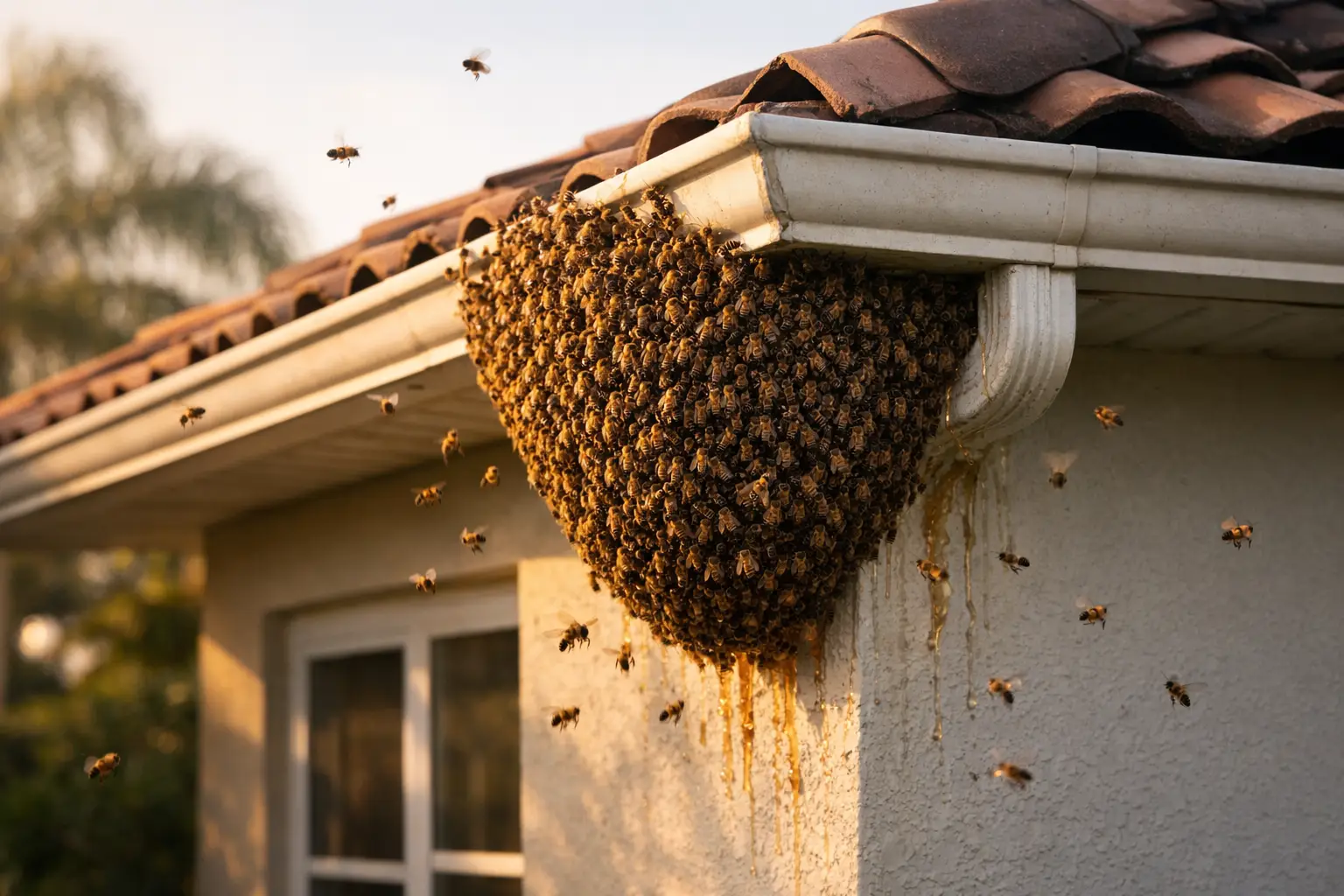

A sticky spot on a wall may look minor, but it can be the first visible sign of a hidden bee colony. Can honey damage house walls? Yes. Honey itself does not eat through wood or drywall like a harsh chemical, but stored honey, melting wax, moisture, and the insects attracted to them can create expensive damage when a colony lives inside a wall, soffit, ceiling, or roofline.
The risk is greatest when bees have occupied a cavity for months or years. A mature colony can build large sheets of comb and store substantial amounts of honey. If the colony dies, is poisoned, or is removed without taking out the comb, that material remains inside the structure. In Southwest Florida’s heat, it can soften, leak, ferment, and attract a new round of problems.
How Honey Can Damage House Walls
Honey damage is usually indirect. The concern is not that honey weakens a wall overnight. It is that a hidden food source and damp organic material can compromise finishes, invite pests, and make a small access problem much harder to repair.
Honey can seep through drywall and ceilings
Warm temperatures soften beeswax and make stored honey more fluid. Honey may run down framing members, collect on insulation, or soak into drywall. Homeowners often first notice a brown or amber stain, a sticky patch, bubbling paint, or a sweet, sour odor.
Ceilings are particularly vulnerable when bees are established in an attic, roof void, or second-story wall. Gravity carries leaking honey downward, and saturated drywall can sag or lose strength. The amount of leakage depends on colony size, how long the hive has been present, the time of year, and the temperature inside the cavity.
Wax and honey can stain porous building materials
Drywall paper, insulation, unfinished wood, ceiling texture, and some paint finishes absorb liquids readily. Once honey has penetrated those materials, cleaning the visible surface may not solve the issue. Stains can reappear because residue remains behind the wall.
Wax also leaves an oily film that can interfere with paint adhesion. Repairs may require removing affected drywall or insulation, cleaning framing, sealing the surface with an appropriate stain-blocking primer, and then restoring the finish.
Moisture creates conditions for mold and wood deterioration
Honey has natural antimicrobial properties in a sealed container, but inside a wall it is not a clean or controlled environment. Honey can absorb moisture from humid air, especially in Florida. Combined with rain intrusion, condensation, damaged insulation, or an existing roof leak, the moisture can support mold growth on nearby paper-faced drywall and wood.
Honey alone is not always enough to rot framing. Prolonged dampness is the real structural concern. That distinction matters because a professional inspection should identify both the bee-related residue and any water pathway that allowed the area to stay wet.
Left-behind comb attracts other pests
An abandoned hive cavity is a food source. Ants are common visitors, but roaches, beetles, wax moths, rodents, and other insects may also be drawn to the honey and comb. In some cases, pests travel through wall gaps and emerge inside the home.
This is why killing bees without removing their comb often fails as a property-protection strategy. The bees may be gone, but the honey, wax, brood residue, and scent remain. Another swarm may even locate the same cavity later and move in.
What Makes a Wall Colony More Likely to Leak?
Not every bee colony causes visible honey damage. A small, recently established colony may have limited comb and little stored honey. A large established colony, however, can contain multiple comb sections filled with honey, pollen, and brood.
Heat is a major factor. In hot weather, wax can soften and heavy comb can detach from the surface where bees built it. Honey then spills into the wall cavity. This can happen after a colony is disturbed, after bees are exterminated, or when a structure has poor ventilation and intense sun exposure.
A sudden change in the colony also raises the risk. If bees are killed, there is no workforce left to maintain the hive, regulate airflow, consume stored honey, or protect the entrance. The comb becomes unmanaged organic material inside a closed building space. For this reason, a wall colony should be addressed before a DIY spray or general pest-control treatment turns a live-bee issue into a leaking-honey issue.
Signs Bees or Honey Are Inside Your Walls
A few bees around flowers are normal. Repeated bee traffic to one crack, vent, roofline, or exterior wall opening is different. Watch for bees flying in and out of the same spot throughout the day, especially on warm afternoons.
Inside the home, warning signs include a sweet or fermented smell, sticky residue near a wall or ceiling, dark stains that expand after hot weather, paint that blisters, unusual ant activity, or a faint buzzing sound behind drywall. Some colonies are quiet enough that homeowners do not hear them, so exterior activity is often the clearest clue.
Do not assume every stain is honey. Roof leaks, plumbing leaks, and HVAC condensation can look similar. But if a stain appears near regular bee activity, it deserves prompt evaluation. The sooner a colony is located, the less comb and honey there is to manage.
Why Poisoning Bees Can Make Wall Damage Worse
When bees are inside a structure, pesticide treatment may appear to be the quick solution. The problem is what happens after the bees die. Their comb remains in place, along with honey and larvae. In a warm wall cavity, that material can leak, decay, and attract pests.
There is also no guarantee that a treated colony is fully eliminated. Bees can access hidden voids, and surviving bees may relocate deeper into the structure. If the entrance is sealed before the colony and comb are removed, trapped bees may look for another way out – sometimes into living spaces.
Professional live removal takes more work because it addresses the source. The goal is to locate the colony, carefully remove the bees and comb, clean the cavity, and close it in a way that helps prevent another colony from using the same opening. This approach protects both the building and the bees that pollinate our local environment.
The Right Way to Protect the Wall and the Colony
A proper structural bee removal is not simply about getting bees out. It is about leaving the cavity clean enough that honey does not continue to cause trouble after the job is complete.
The removal process normally begins by identifying where bees are entering and estimating the location of the comb. Depending on the structure, access may be made through siding, soffit, roofing material, or a limited interior opening. The best access point depends on the construction and should balance complete comb removal with minimizing repair work.
Once the bees and comb are removed, the cavity should be cleared of honey residue, wax, and debris as thoroughly as practical. Any compromised insulation may need replacement. If honey has stained drywall or ceiling materials, those finishes may need repair after the source has been removed and the area has dried.
The final step is exclusion: sealing entry gaps, damaged vents, unprotected utility penetrations, or other openings that allowed bees to enter. Sealing matters, but timing matters too. Closing an opening before removal can trap bees and make the situation worse.
At Beeswild, live bee removal and relocation are designed around this complete approach: save the colony when possible, remove the comb that can damage the structure, and help homeowners avoid the repeat problem of bees returning to the same cavity.
When to Act Quickly
Treat a suspected wall colony as urgent if you see honey dripping from a ceiling or wall, notice rapidly spreading stains, have bees entering the home, or find heavy bee activity near an area used by children, pets, customers, or employees. Commercial properties and HOA-managed buildings should also act promptly, since unmanaged colonies can create public-safety and liability concerns.
Avoid opening the wall yourself, spraying insecticide into an entry hole, or sealing the opening while bees are active. Disturbing a colony can make bees defensive, and incomplete work often leaves the honey and comb behind.
A wall should not have to become a graveyard for a bee colony or a hiding place for fermenting honey. Early, humane removal gives the bees a chance to be relocated and gives the structure the best chance of staying clean, dry, and pest-free.

No responses yet