
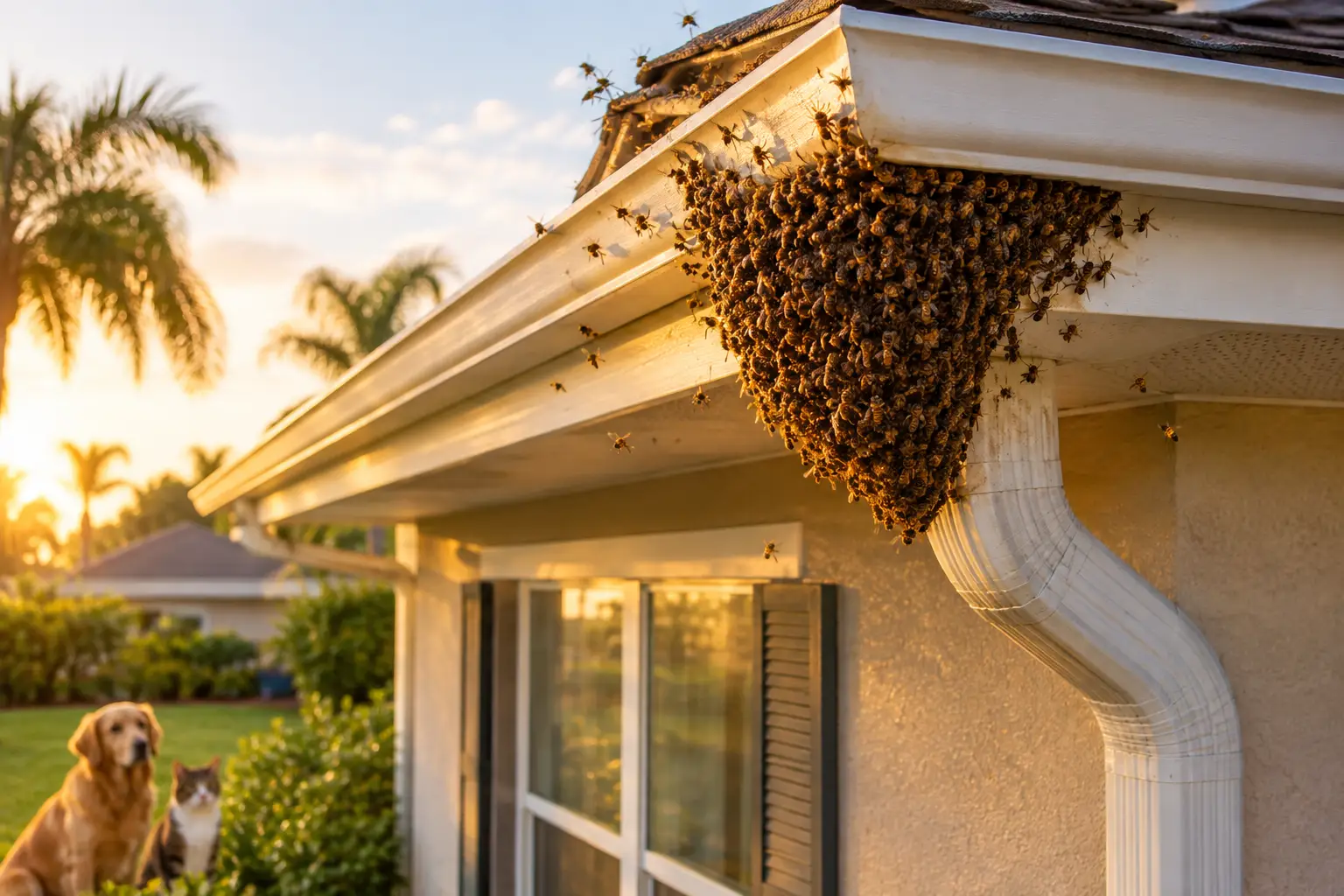

A dog barking at a buzzing soffit or a curious cat pawing at a cluster of bees can turn a manageable colony removal into an urgent safety problem. To protect pets during removal, the priority is simple: keep animals completely away from the work zone before the colony is disturbed, and keep them away until the area has been cleaned, repaired, and checked for remaining bee activity.
Honey bees are not looking for conflict. But a colony defending its brood, honey stores, and queen can respond quickly to vibration, noise, exhaust, or a pet that gets too close. In Southwest Florida, where colonies may establish themselves in walls, roofs, sheds, pool equipment, and trees, planning for pets is part of a responsible live-removal process.
Why bee removal can be stressful for pets
Pets do not understand that a removal crew is solving a problem. They notice unfamiliar people, equipment, changed routines, and increased bee movement. Dogs may bark, lunge, or investigate. Cats may hide, then slip outside when a door is opened. Horses and other livestock can become unsettled by activity and may be difficult to move once bees are agitated.
The greatest concern is not usually a bee simply flying through the yard. It is a pet approaching an active entrance or a disturbed colony. Honey bees use alarm pheromones to signal a defense response. Swatting at bees, barking beside an entry point, or getting stung can intensify an animal’s reaction and put it closer to more bees.
Removal also creates a second period of risk. Foraging bees may return to the former entrance for a short time after the colony has been relocated. This is normal behavior, but it is why containment should continue until the technician confirms the site is clear and any openings have been sealed.
Protect pets during removal with a containment plan
The most reliable protection is physical separation, not verbal commands or close supervision. Even a well-trained dog can break a stay when it hears drilling or sees bees near a fence line.
Before the appointment, choose a secure indoor room away from the work area. Close windows, exterior doors, pet doors, and blinds if visual activity may trigger barking. Set up water, bedding, a favorite toy, and a calming activity such as a food puzzle. For a removal near an attached garage or exterior wall, choose a room on the opposite side of the house when possible.
If your pet must remain outdoors, use an enclosed, covered area far from the colony and the crew’s access route. This is less ideal than keeping the pet inside. A screened lanai may be appropriate only if it is well away from bee flight paths and the removal professional agrees it is safe. Do not tie a dog outside, place a crate near a window, or leave a pet in a vehicle during removal.
Tell the removal team about every animal on the property before work begins. Mention dogs that may bolt, cats that use a pet door, birds in outdoor cages, backyard chickens, and any livestock. This information helps the crew plan where to park, which gates to use, and how to prevent an accidental escape.
Make the work zone easy to secure
A clear work area improves safety for people, pets, and bees. Move pet bowls, toys, leashes, and outdoor beds away from the access route. Check gates and fence latches, particularly if technicians will need to carry equipment through the yard. If a dog can reach the colony through a window, porch, or fence, create an additional barrier or relocate the dog farther inside.
Children and visitors should follow the same boundary. A pet owner may be focused on a nervous animal, while a delivery driver or neighbor unknowingly opens a gate. A simple notice on the door that pets are contained and bee removal is underway can prevent confusion.
What to do when the colony is in a wall, roof, or soffit
Structural removals require more preparation than removing a visible swarm from a branch. The colony may be accessed through an exterior opening, but bees can also emerge from small gaps around vents, windows, fascia, or utility penetrations. The team may need to use specialized tools and temporarily open part of a wall or soffit to remove comb, bees, honey, and brood correctly.
Keep pets away from both the exterior work area and the interior side of the structure. If bees are in a bedroom wall, do not allow a cat to sit at that window or a dog to scratch at the baseboard. Close interior doors that lead toward the area. If access is from a garage, remove pets from the garage well before the crew arrives and do not return them there just because the visible bee activity appears to have stopped.
Proper removal matters because leaving comb and honey behind can create new problems. Residual honey may attract ants, wax moths, beetles, rodents, or another bee colony. It can also ferment, leak, and damage building materials. Humane live removal is designed to relocate the colony while addressing the material that made the cavity attractive in the first place.
During the removal, resist the urge to check outside
Owners naturally want to see what is happening. For pet safety, avoid repeatedly going in and out of the house. Every opened door creates an escape opportunity for a startled animal and may bring a few disoriented bees inside.
Keep dogs from barking at the crew if you can. White noise, a fan, low music, or a television in the pet’s room can reduce exposure to unfamiliar sounds. Do not use strong air fresheners, essential-oil diffusers, or insect sprays as a substitute for containment. These products can irritate animals, interfere with the work environment, and do not safely manage an active colony.
If your pet shows signs of distress, such as frantic pacing, heavy panting unrelated to heat, persistent vocalizing, or attempts to escape, move them to a quieter secured room. For highly anxious pets, consider arranging for them to stay with a trusted person away from the property for the day. That option can be especially useful for a lengthy structural removal.
After removal: wait for the all-clear
Do not let pets resume normal yard access based only on the appearance of an empty hole or a quiet wall. Ask the removal professional when it is safe to reopen the area. The answer depends on colony location, weather, the number of returning foragers, and whether sealing or repair work is complete.
A responsible process includes removing or managing the comb, addressing the entrance, and monitoring for activity. At Beeswild, live bee removal is paired with relocation to managed farm areas, rather than treating the colony as disposable. Still, pets need the same sensible precaution around a completed job: avoid the former entrance until the site has been evaluated and secured.
Watch your pet closely on the first few outdoor trips. Keep dogs on a leash near the former nest location, and do not let cats roam around a repaired soffit, wall opening, or tree cavity. If you see a small number of bees investigating the old entrance, keep pets away and report the activity to the removal provider. Returning foragers often disperse, but a persistent cluster or steady traffic deserves attention.
If a pet is stung
One sting may cause only localized pain, redness, or swelling, but reactions vary. Move your pet indoors and away from the bees first. If a honey-bee stinger is visible, gently scrape it sideways with a card edge rather than squeezing it with tweezers, which can push more venom into the skin. A cool compress may help with mild swelling if your pet tolerates it.
Call a veterinarian promptly for multiple stings, stings near the mouth or throat, facial swelling, hives, vomiting, weakness, labored breathing, collapse, or any known history of allergic reaction. Do not give human medication unless your veterinarian has specifically instructed you to do so for your pet and its weight. With a swarm of stings or breathing difficulty, treat it as an emergency.
A calm, secured pet gives a live-removal crew room to work accurately, protects your household from an avoidable scare, and gives the bees their best chance of being relocated safely. The few hours spent planning separation are far easier than managing a frightened animal in the middle of an active colony response.

No responses yet