
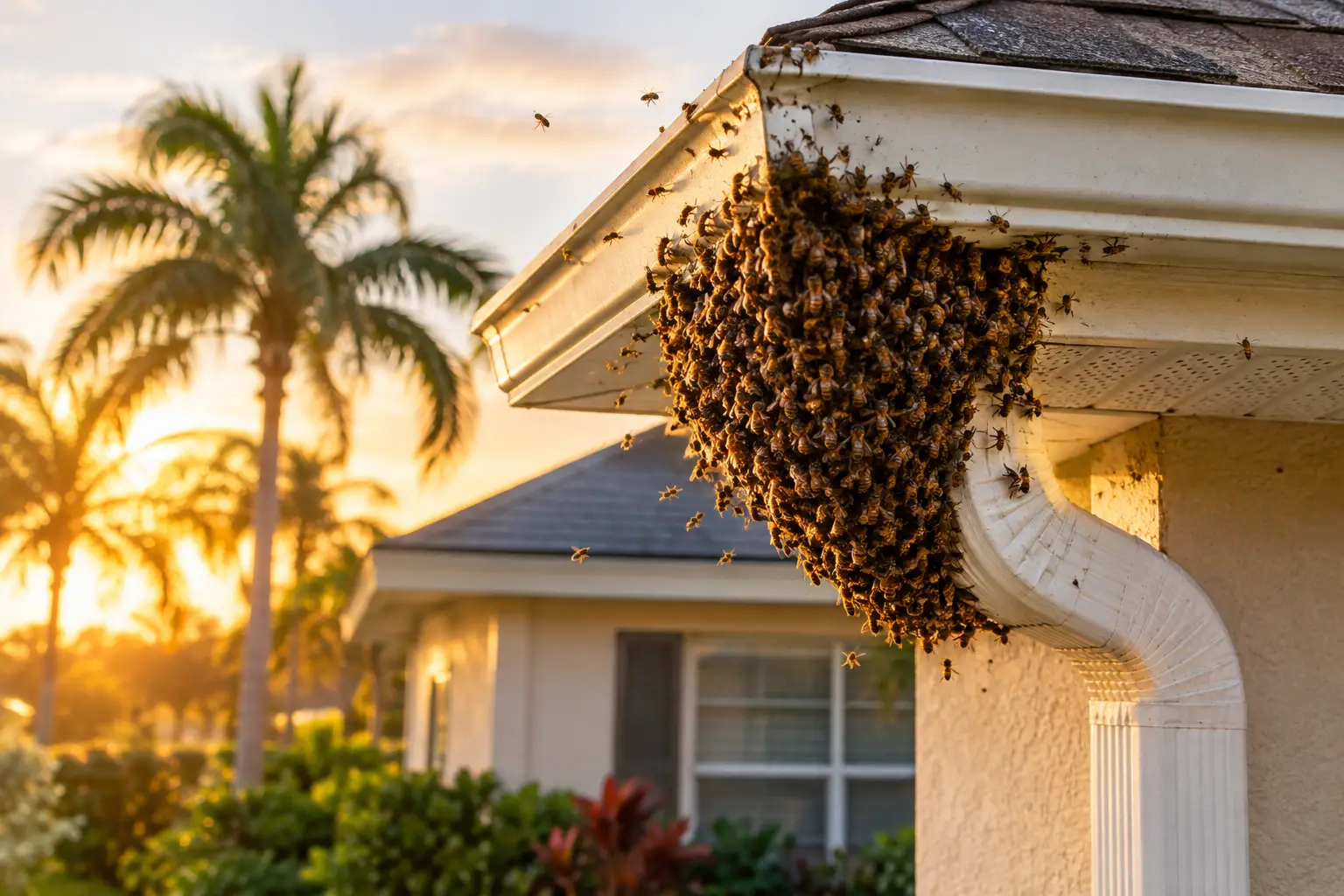

A bee colony under a soffit or inside a block wall can feel like an immediate emergency, especially when residents hear that Africanized bees may be present. Africanized bee trends matter in Southwest Florida because they affect how professionals assess risk, plan removals, protect nearby people, and preserve colonies that can be safely relocated.
The most useful starting point is also the least dramatic: Africanized bees are not a separate species that can be identified by looking at a few insects near a porch light. They are honey bees with Africanized genetics, often called Africanized honey bees. Their behavior can vary widely by colony, weather, disturbance level, nesting site, and local genetics. That variation is why a calm, methodical response is safer than assumptions.
What Africanized Bee Trends Actually Measure
When people discuss Africanized bee trends, they may be referring to several different things: reports of defensive colonies, increased swarm calls, confirmed genetic samples, or more frequent honey bee removals from structures. Those measures are related, but they are not interchangeable.
A swarm on a tree branch is usually a temporary cluster of honey bees looking for a permanent home. A colony established in a wall, water meter box, shed, roofline, or hollow tree has brood, stored honey, and a stronger reason to defend its location. A report of many swarms during spring does not automatically mean aggression is increasing. It may simply mean more colonies are reproducing and relocating.
Confirmation of Africanized genetics requires laboratory testing. In the field, experienced bee professionals evaluate behavior and conditions rather than making visual claims. Factors such as rapid defensive response, the number of bees engaging with a disturbance, colony location, and public exposure help determine how urgently a site should be managed.
Why Southwest Florida Needs a Practical View
Florida’s warm climate allows honey bee activity for much of the year. Long foraging seasons, abundant landscaping, water access, and an extensive mix of residential and commercial structures create plenty of nesting opportunities. Soffits, utility enclosures, irrigation boxes, sheds, attic voids, and stucco wall cavities can all become attractive shelter.
In a fast-growing region, more construction and renovations also mean more human contact with colonies that may have gone unnoticed. A homeowner pressure-washing a roof, a landscaper trimming a hedge, or a contractor opening siding can disturb bees suddenly. The question is not whether every colony is Africanized. The question is whether the colony’s location and behavior create an unacceptable safety risk.
The Trends Property Owners Are Most Likely to Notice
The clearest pattern for residents is seasonal movement. Honey bee colonies commonly swarm when conditions support growth, often during warmer periods with strong forage availability. A swarm may rest briefly on a fence, palm frond, vehicle, or tree limb before moving on. Giving it space is usually the right first step.
Structural colonies are a different concern. Once bees begin entering and exiting through a consistent opening, particularly over several days, they may be building comb inside. The longer a colony remains in a structure, the more difficult and costly the problem can become. Honey, wax, brood, and scent can attract ants, roaches, wax moths, rodents, and future bee colonies after a simple spray treatment or sealed entrance.
Defensive incidents can also rise when colonies are disturbed by vibration, equipment, pets, or attempts to block their flight path. Lawn mowing, hedge trimming, drilling, and knocking on a wall are common triggers. This does not prove a colony is Africanized, but it is a reason to increase distance and bring in qualified help.
For HOAs, facilities teams, and municipalities, the trend is less about a single nest and more about exposure. A colony near a playground, pool gate, outdoor dining area, school entrance, utility corridor, or shared walkway deserves quicker attention because more people may pass through its flight path. Risk is shaped by location as much as by temperament.
Why Visual Identification Is Not Enough
Honey bees vary in color, size, and appearance. Africanized honey bees and European honey bees cannot be reliably separated by casual observation, photographs, or the color of a bee’s abdomen. A colony that seems calm can still become defensive if its nest is opened. A colony that responds strongly may be protecting itself from repeated disturbance.
This is one reason fear-based advice can create worse outcomes. Spraying a visible cluster, sealing an opening while bees are active, or striking a nest may force bees into living spaces or provoke a larger defensive response. It can also leave honey and comb inside a building, creating a secondary property problem after the bees are gone.
A professional evaluation begins with the site: where the bees are entering, how long they have been present, whether there are people or animals nearby, and whether comb has likely been built. That information determines whether a live removal, a carefully timed relocation, exclusion after removal, or another safety measure is appropriate.
How to Respond Without Escalating the Risk
If you encounter a swarm or established colony, keep children, pets, visitors, and workers away from the area. Avoid loud equipment, water hoses, pesticides, smoke, and attempts to cover or seal the entrance. Do not stand directly in the flight path to take close-up photos.
If bees begin following, stinging, or clustering around a person, move quickly indoors or into a vehicle and close the door. Cover your face as you move, but do not swat at bees. Once safe, call for medical help if there are multiple stings, breathing difficulty, dizziness, widespread hives, facial swelling, or any concern about an allergic reaction.
For an established colony in a structure, the right solution generally includes access to the comb, removal of bees and hive material, cleanup where possible, and repair or exclusion of the entry point. Skipping the comb removal is the trade-off that often causes recurring trouble. It can appear cheaper at first, but decomposing material and residual honey may lead to stains, odors, pests, and a new colony moving in later.
What Humane Removal Changes
Live removal is not the same as simply moving a box of bees. Structural removals require knowledge of bee behavior, building materials, safe access, and colony recovery. The goal is to remove the colony while minimizing harm to occupants, workers, the structure, and the bees themselves.
At Beeswild, rescued colonies can be rehomed in managed apiary settings rather than treated as disposable pests. That approach recognizes a practical reality: honey bees are essential agricultural pollinators, yet a colony in the wrong place can still be dangerous. Protecting people and preserving viable bees are not competing goals when the removal is properly planned.
There are limits. A highly defensive colony in a high-traffic location may require stricter safety controls, restricted access, and timing that reduces public exposure. Weather, height, roof design, wall construction, and the amount of comb inside also affect the method. Responsible bee removal is not one-size-fits-all, and anyone promising a simple fix without assessing the site should be treated cautiously.
Looking Ahead at Africanized Bee Trends
The most meaningful trend is not a headline about “killer bees.” It is the growing need for informed, fast response as people and honey bee colonies share more of the same spaces. Warmer conditions, dense development, and year-round landscaping mean property owners should expect occasional bee activity and know the difference between a temporary swarm and a colony settling into a structure.
For homeowners and property managers, preparation is straightforward: teach staff and family members not to disturb bees, inspect recurring entry points around buildings, and address established colonies before construction, mowing, or repair work turns a manageable issue into an urgent one. A calm call for an on-site assessment is often the safest first move – for the people near the colony and for the bees that can still be given a secure place to live.

No responses yet