
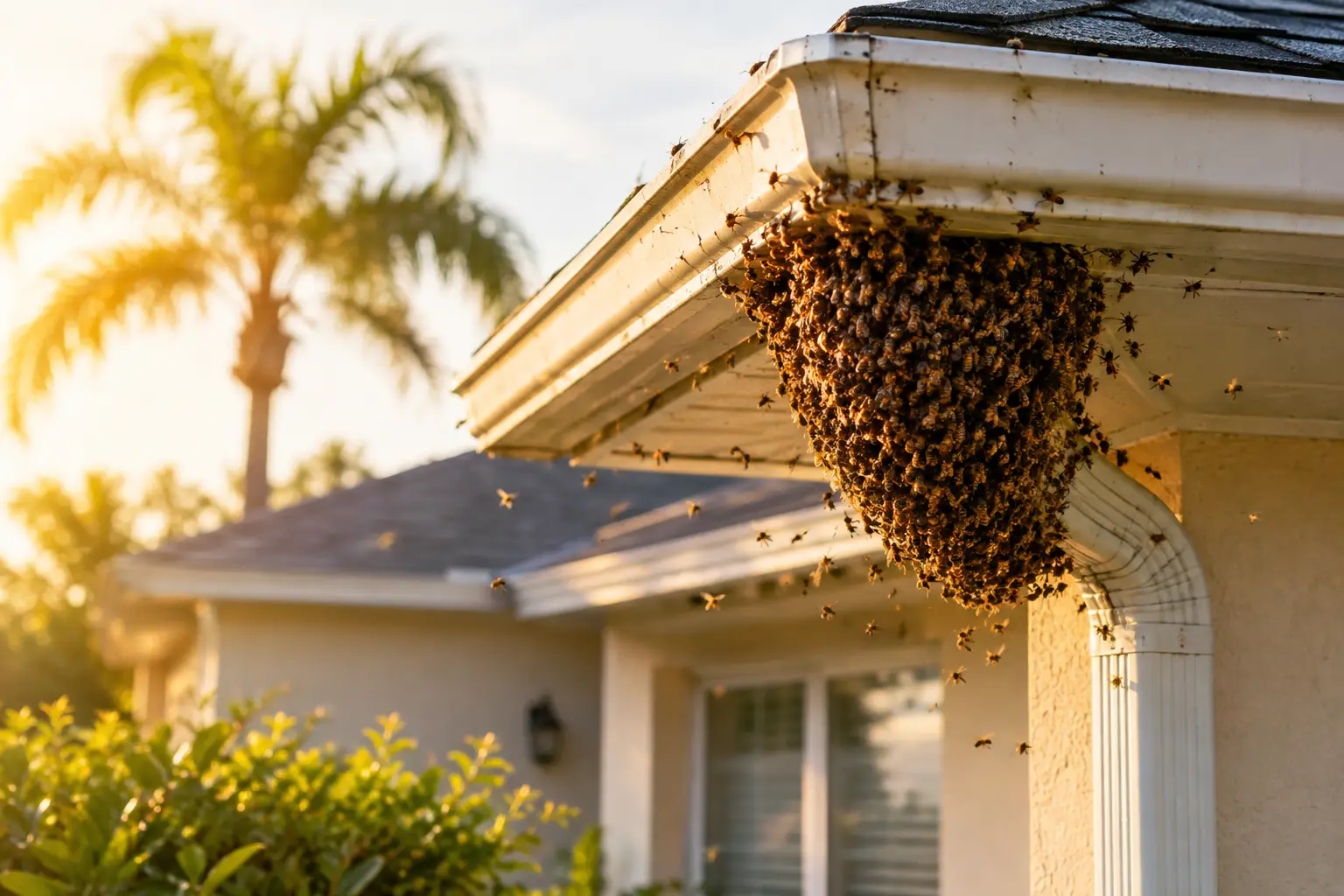

A bee colony may be gone, but the problem is not necessarily over. The top risks of abandoned honeycomb begin after bees have been killed, sprayed, or removed without taking out the wax comb, stored honey, pollen, and brood material left inside a wall, soffit, attic, or roofline. What looks like an empty bee nest can become a food source for pests and a source of expensive damage behind finished surfaces.
For Southwest Florida homeowners, this is especially relevant because heat and humidity speed up many of the problems that follow an incomplete removal. The right response is not simply to wait and hope the material dries out. It is to determine whether comb remains, where it is located, and how it can be removed without creating a larger opening or a larger infestation.
Why abandoned honeycomb is not harmless
Honey bees build comb from wax and use it to store honey, pollen, developing brood, and other colony resources. Even when adult bees leave or die, those materials stay in place. In a hollow tree, nature can eventually break them down. Inside a structure, however, the comb is sealed into a warm, protected cavity with drywall, insulation, wood framing, stucco, or roofing materials around it.
A colony that appears inactive may also not be truly gone. Bees can be clustered deeper in the structure, temporarily quiet because of weather, smoke, pesticide exposure, or a recent disturbance. Before anyone closes an opening, a trained removal professional should confirm the colony’s status and inspect for remaining comb.
The top risks of abandoned honeycomb
Honey can leak into walls, ceilings, and insulation
Honey is heavy, sticky, and highly affected by temperature. In Florida heat, honey stored in comb can soften and run. It may travel down framing members, soak insulation, stain drywall, drip through ceiling fixtures, or emerge from seams far below the original hive location.
The visible stain is often only the final symptom. By the time honey reaches a ceiling or interior wall, it may have already spread through a concealed cavity. Cleanup can require opening and replacing affected materials, especially if insulation has absorbed honey or if repeated moisture exposure has damaged drywall.
Not every abandoned hive leaks. A small, dry colony in a cool, accessible area may cause limited damage. But a mature colony can hold many pounds of honey, and no one can reliably judge the amount from a few bees entering a crack outside.
Wax moths and beetles can take over the comb
Old comb is attractive to pests that feed on wax, pollen, brood remnants, and debris. Wax moth larvae can tunnel through comb and leave webbing, frass, and a strong unpleasant odor. Small hive beetles may also use stored hive material as a food source, particularly in warm climates.
These insects are not always visible from outside the wall. Homeowners may first notice a sour or musty smell, small larvae near an opening, or staining around a vent, soffit, or ceiling. While wax moths do not eat the structure itself, the contaminated comb and pest activity can complicate restoration and attract additional nuisance insects.
Ants, cockroaches, and other scavengers follow the food
Honey and pollen are powerful attractants. Once bees are gone, ants often find the honey first. Roaches, flies, beetles, and other scavenging insects can follow, using cracks around electrical boxes, plumbing penetrations, windows, and trim to move between the hive cavity and living spaces.
This is why a pesticide-only approach frequently creates a second problem. Killing bees may reduce immediate bee activity, but it leaves the food source behind. The result can be less buzzing outside and more pest pressure inside the home.
Larger animals can also be drawn to the odor. Rodents and other wildlife may investigate weakened soffits, attic openings, or wall voids where comb remains. Their damage is separate from the bee problem, but the abandoned hive can make the location more attractive.
New bee colonies may move into the same cavity
Honey bees are drawn to spaces that already smell like beeswax, honey, and propolis. A cavity that housed a colony has effectively been proven suitable: it is sheltered, has a workable entrance, and may still contain comb ready for immediate use.
That does not mean a new swarm will always arrive, but the odds are much higher when old comb remains. In areas with active bee populations, scout bees can locate the cavity and recruit a swarm surprisingly quickly. Closing the exterior entry without removing the internal comb may force returning bees into other gaps, including gaps that lead toward the interior of the building.
A proper exclusion repair matters after removal. The goal is to remove the attractant, address all viable entrance points, and preserve needed ventilation and drainage. Sealing a structure blindly can trap moisture or create a new building issue, so repairs should be matched to the specific location.
Odors and contamination can worsen over time
Abandoned comb does not stay clean. Honey can ferment, pollen can spoil, and brood material can decay. In a humid wall or attic, those odors may become noticeable long after the original colony disappears.
The concern is not that honeycomb automatically creates mold. Mold needs moisture and suitable conditions, and each structure is different. However, honey leaks, condensation, roof leaks, or wet insulation can combine with organic hive material to create conditions that call for further inspection and cleanup.
Odor also has a practical consequence: it can signal the location to insects and wildlife. Treating the smell at the surface without removing the source rarely solves the underlying issue.
Incomplete removal can leave a safety problem
A disturbed colony can be defensive, especially when it is inside a structure and has limited exits. In Southwest Florida, homeowners should not assume that a quiet hive is safe to approach or that every colony will react the same way. Temperament varies, and bees protecting brood and honey may respond quickly to vibration, cutting, drilling, or pesticide application.
The danger is not limited to the person doing the work. Bees may exit near walkways, pool areas, doors, playgrounds, outdoor seating, or service entrances. For homeowners with children, pets, frequent visitors, or family members with sting allergies, that uncertainty deserves a cautious response.
Commercial properties and HOAs face an added liability concern. A colony in a sign, roofline, dumpster enclosure, utility structure, or shared wall can put employees, residents, and visitors near an active flight path. Waiting for the colony to leave on its own may not be a reasonable risk-management plan.
What complete removal should address
The best long-term outcome usually involves more than taking away visible bees. A complete structural removal evaluates the colony, opens only the area necessary to access it, and removes bees, comb, honey, and hive debris. The cavity can then be cleaned, assessed for affected insulation or building materials, and closed with an appropriate repair.
Live removal and relocation can protect a valuable pollinator colony while still protecting the structure. It is not always possible in every situation, and access, colony condition, height, and public safety all matter. But when feasible, relocating the bees and removing the comb is more durable than treating the symptom alone.
Ask a removal provider direct questions: Will the comb and honey be removed? How will the opening be repaired? Is the work covered if bee activity returns at the same location? Clear answers help distinguish a complete service from a quick treatment that may leave the most damaging material behind.
Do not seal, spray, or open the cavity yourself
Caulk, expanding foam, and insecticide can seem like fast solutions, particularly when bees are entering through a small gap. They can also make professional removal harder. Sealing an active colony may redirect bees indoors. Spraying can leave dead bees and honeycomb in the wall while increasing defensive behavior. Cutting into a wall without knowing the hive’s size can expose you to bees and spread honey into the work area.
If you see steady bee traffic entering one crack, hear buzzing in a wall, notice sticky staining, or find ants gathering near a ceiling or soffit, treat it as a structural issue rather than a routine pest problem. Photograph activity from a safe distance and keep people and pets away from the immediate area.
Abandoned honeycomb is easiest to manage before it becomes a leak, odor, or repeat infestation. Removing the colony responsibly is only half the job. Removing what the colony leaves behind gives your property, and the relocated bees, a cleaner chance to move forward.

No responses yet