
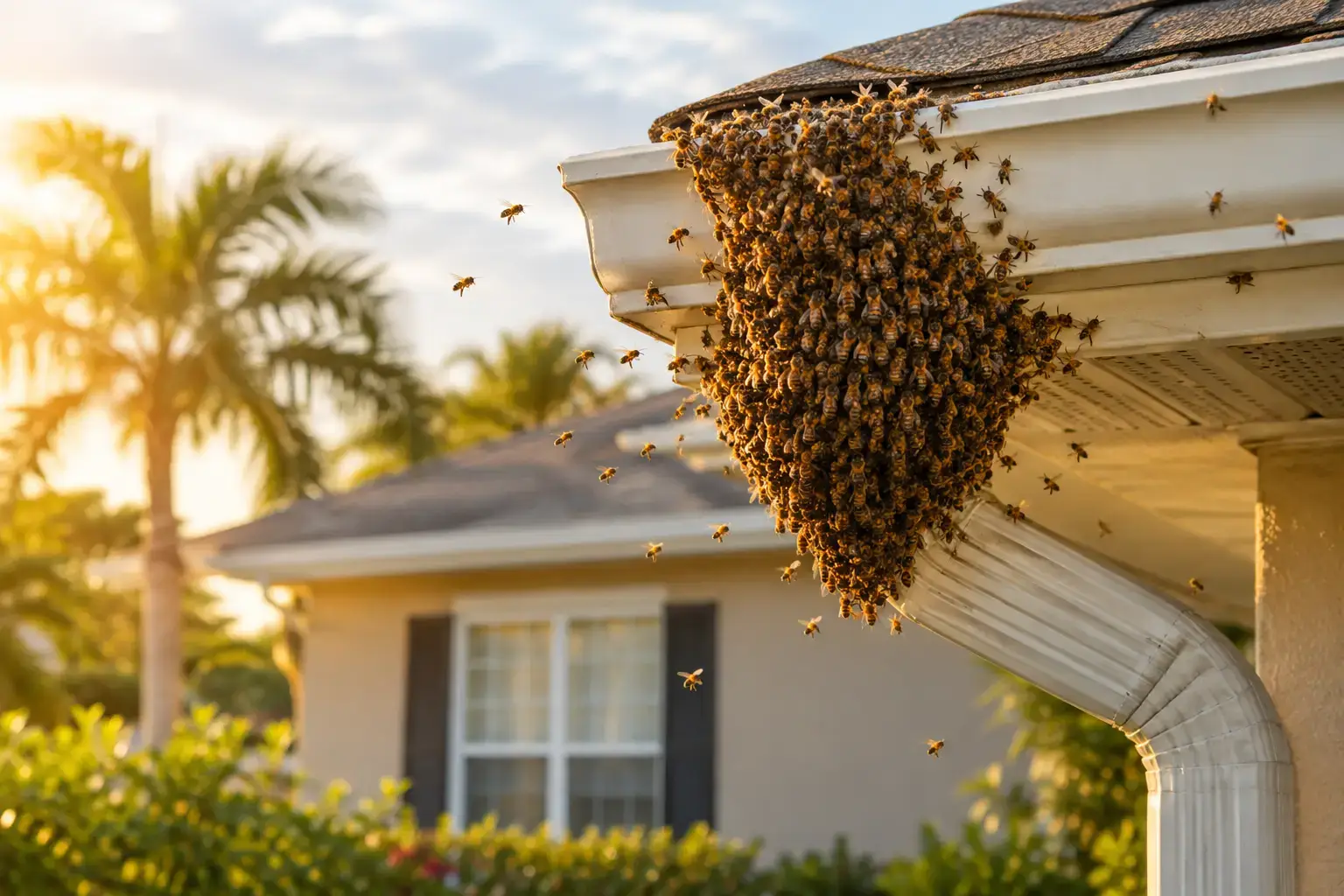

A honey bee colony behind a soffit can look quiet from the ground. For a homeowner, property manager, or HOA board, that does not mean the bee liability risks are quiet too. A colony near a doorway, pool deck, playground, outdoor dining area, or maintenance access point can create safety concerns, property damage, and difficult questions about who knew about the bees and what was done to address them.
The goal is not to treat every bee sighting as an emergency. Honey bees matter, and a passing swarm may simply be looking for a new home. The greater concern is an established colony in or on a structure, especially when people and pets regularly use the area. A prompt, humane response protects occupants while giving the colony a chance to be relocated to a managed apiary.
Why Bee Liability Risks Depend on the Situation
Liability is rarely about the mere presence of bees. It usually turns on notice, foreseeable harm, reasonable action, and documentation. A property owner who discovers bees in a wall and ignores repeated reports faces a different situation from someone who identifies the issue, restricts access where needed, and schedules qualified live removal.
Risk also changes with location. Bees in a remote tree may require monitoring rather than immediate intervention. Bees entering a wall beside a school pickup area, restaurant patio, condominium entrance, or commercial loading zone deserve faster assessment. In Southwest Florida, warm weather and frequent outdoor activity can make that distinction especially practical: people are often close to the structure where colonies establish themselves.
Not every sting leads to a claim, and not every colony is defensive. Still, an allergic reaction can be serious, and a startled person can be injured in ways unrelated to the sting itself, such as falling near a pool or stepping into traffic. Responsible property care considers the whole setting, not only the insect.
The duty to respond changes after notice
Once a tenant, visitor, employee, contractor, or neighbor reports bee activity, the property owner or manager should treat the report as a maintenance and safety issue. That does not automatically mean ordering extermination. It means evaluating the colony, communicating clearly, and selecting a response that matches the conditions.
For an HOA, that may involve determining whether the bees are on a common element, a limited common element, or an individual owner’s structure. For a commercial site, it may mean clarifying whether the landlord or tenant controls the affected exterior area. Written leases, association documents, and local rules can affect responsibility, so legal questions should be directed to qualified counsel.
The Main Exposure Areas for Property Owners
Bee-related liability can overlap with several ordinary property-management responsibilities. The facts matter, but four exposure areas appear repeatedly:
- Personal injury: A guest, resident, customer, employee, or contractor may be stung or may be hurt while reacting to bee activity.
- Premises safety: Known bee traffic near walkways, doors, mailboxes, equipment, or recreation areas can become a hazard if access is not managed while removal is arranged.
- Property damage: Colonies inside walls, roofs, chimneys, or soffits can leave wax, honey, brood, and moisture-sensitive material behind if the comb is not removed.
- Vendor and insurance issues: An unqualified provider, unclear scope of work, or missing proof of insurance can leave a property owner exposed to disputes after damage or injury.
The damage inside a structure is often underestimated. Killing or poisoning a colony without removing the comb may leave honey and wax in place. In Florida heat, honey can soften or leak through drywall, stain ceilings, attract ants and other pests, and create odors. Rodents may also be drawn to the remaining comb. What began as a concern about stings can become a more expensive restoration issue.
Why humane removal can reduce downstream risk
Live removal is not simply a feel-good alternative. When performed correctly, it addresses the colony and the materials that support it. A structural removal generally involves locating the colony, carefully opening only what is necessary, removing bees and comb, securing the bees for relocation, and closing or advising on exclusion points so another swarm is less likely to move into the same void.
The trade-off is that proper removal can take more time than a quick chemical treatment, particularly when bees are deep in a roofline or wall. It may also require carpentry coordination for repairs. Yet a cheaper short-term approach can create larger costs if honey-filled comb is abandoned in the building. The best method depends on access, colony location, structural conditions, and the level of public exposure.
How HOAs and Businesses Can Manage Bee Liability Risks
For organizations, the strongest approach is a simple, repeatable response process. Board members and facilities managers do not need to become bee experts. They need a clear way to document reports, protect people from an active hazard, and bring in the right professional.
Start by recording the date, exact location, photos from a safe distance, and any reports of stings or aggressive behavior. Do not send staff onto ladders, roofs, or near an active colony to investigate. Bee behavior can change quickly when a nest is disturbed, and a structural access hazard can be as serious as the bees themselves.
Next, decide whether temporary precautions are appropriate. A cone, caution sign, alternate entrance, or short-term closure of an outdoor seating area may be reasonable when bee flight paths cross an occupied space. The response should be proportionate. Closing an entire property because of a small swarm in a distant tree may not be necessary; leaving a known colony beside a busy entrance without warnings may be difficult to justify.
Then obtain a documented assessment and scope of work. Ask whether the provider performs live removal, removes comb from structures, carries appropriate insurance, and explains what repair or exclusion work is included. A proposal should distinguish bee removal from drywall, roofing, soffit, or paint repairs when those services are separate.
For recurring concerns, keep one file with reports, estimates, approvals, photographs, invoices, and completion notes. This is useful for insurance discussions, reserve planning, vendor accountability, and future maintenance. It also shows that the organization acted deliberately rather than ignoring a known condition.
Warranties should be understood precisely
A removal warranty can be reassuring, but it is not the same as a guarantee that bees will never appear on a property again. Swarms naturally travel, and a new colony can choose a different opening nearby. The useful question is whether the warranty covers bee activity in the same removal location and for how long.
Beeswild provides a three-month same-place-removal warranty, which reflects an important distinction: work should be evaluated at the specific site that was treated. Property owners should also address gaps, openings, and damaged exterior materials that could invite future nesting.
What Homeowners Should Do When Bees Move In
Homeowners often feel pressure to act immediately, especially when children, pets, or allergies are involved. Fast action is appropriate when there is active bee traffic near daily living spaces, but panic usually makes the situation harder. Do not spray, seal an active opening, knock down exposed comb, or use a hose. Those actions can provoke bees and trap honey inside the structure.
Keep people and pets away from the immediate area, especially during the warmest and busiest parts of the day. If bees are near a front door, use another entrance when possible. Photograph the activity from a safe distance and note whether bees are entering a crack, vent, soffit, tree cavity, or utility box. That information helps a removal professional assess the job before arriving.
It also helps to know the difference between a swarm and a colony. A swarm is often a temporary cluster of bees gathered on a branch, fence, or structure while scout bees search for a permanent location. A colony has established comb and usually shows steady traffic into and out of one opening. Both deserve respectful handling, but an established colony in a building is more likely to create long-term property consequences.
Prevention Is a Property Maintenance Task
Bee prevention starts with maintaining the building envelope. Open soffits, loose fascia, uncapped utility penetrations, damaged vents, and gaps around pipes provide sheltered cavities that can attract colonies. Regular exterior inspections are especially valuable before peak activity periods and after storms or roof work.
Exclusion should happen after the colony and comb have been properly removed, not while bees are still actively using an opening. Sealing them inside can force bees into another part of the structure or leave honey and comb where they can cause damage. A good plan connects removal, repair, and prevention in the correct order.
Bee liability risks are best managed with calm decisions, documented action, and respect for the colony. When people are protected and bees are relocated rather than abandoned inside a structure, the result is safer property care with a better outcome for both the community and the pollinators it depends on.

No responses yet