

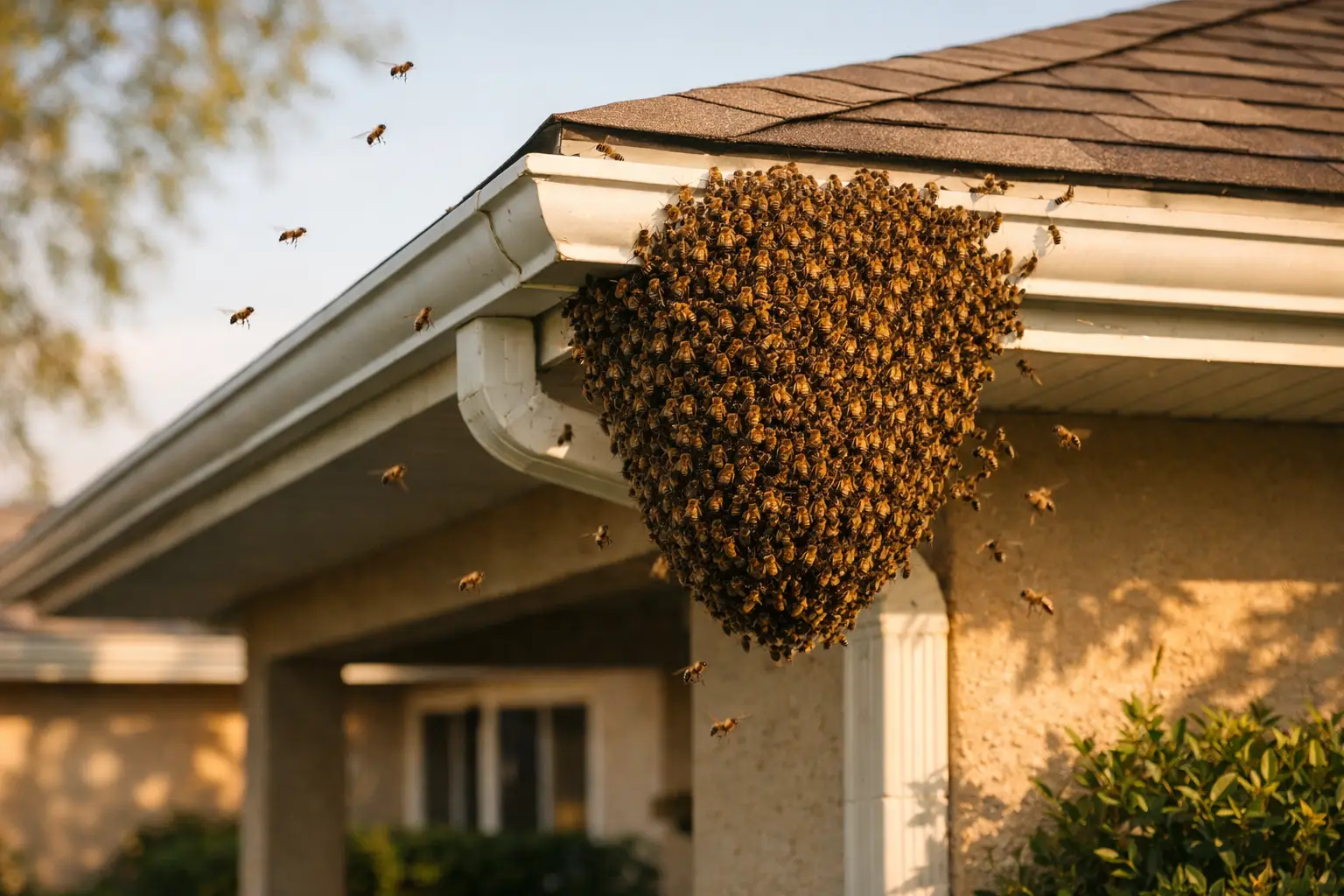

At 8:15 on a humid Florida morning, a property manager for a neighborhood shopping plaza noticed a steady ribbon of bees moving in and out of a stucco column near the main walkway. By noon, tenants were calling, customers were avoiding the entrance, and the liability question had replaced the maintenance question. That is where a commercial bee removal case study becomes useful – not as marketing language, but as a real look at what happens when bees move into an active business property and the wrong decision can create a bigger problem.
This kind of job is different from a simple swarm hanging from a tree branch. A commercial setting adds foot traffic, insurance concerns, tenant pressure, and stricter expectations for cleanliness and speed. The goal is not just to get bees away from people. The real goal is to remove the colony, protect the structure, reduce the chance of re-infestation, and relocate viable bees without using methods that leave honey, brood, and dead bees hidden inside the building.
The site conditions in this commercial bee removal case study
The property was a small retail plaza with outdoor seating, shared parking, and a covered front corridor. The bees had not settled on the outside surface. They had established a colony inside a hollow architectural column connected to a soffit cavity. That detail mattered immediately. External bee activity often looks smaller than the actual problem because the visible entrance may be only a narrow crack, while the nest behind it can extend several feet.
In this case, tenant reports suggested the bees had been present for weeks, maybe longer. Flight traffic was heaviest during late morning and early afternoon, which usually points to an established colony rather than a fresh swarm. There were also small spots of staining near the seam line. That raised concern for comb expansion and stored honey inside the wall void.
For a commercial manager, the first trade-off appears right here. A quick spray may seem cheaper at the moment, but if bees die inside the structure, the wax and honey remain. In Florida heat, that can mean melting honey, fermenting odor, ant pressure, roaches, and the very real possibility that a new swarm later moves into the same cavity. Removal without opening the structure is sometimes possible, but only when the colony is truly accessible. In a built-in void, it depends on where the comb is anchored and how far it extends.
Why the first inspection matters more than the first quote
A serious structural colony cannot be priced responsibly from a single phone photo. The inspection in this case focused on four things: exact entry point, likely comb direction, public safety risk, and construction access. The team also assessed whether the colony was defensive or simply active. That distinction matters in commercial spaces because not every colony showing heavy flight traffic is aggressive. Still, high traffic around customers and staff means even calm bees create unacceptable risk.
The inspection found that the bees were entering through a gap less than half an inch wide, but sound and thermal indicators suggested a larger nest area above eye level. The exterior finish was intact enough to allow controlled opening and restoration planning. That was good news. It meant the colony could likely be removed by targeted cut-out work rather than broad demolition.
For commercial clients, this is where transparency matters. The honest answer is not always the answer people want. If the colony is deep in a masonry void or behind utilities, labor goes up. If access requires lifts, after-hours work, or tenant coordination, cost and timing change. But hidden bee work is exactly where shortcuts create the biggest property damage later.
The removal plan and why live relocation was chosen
The plaza needed the entrance area safe as fast as possible, but not at the expense of leaving comb behind. The agreed plan was a same-day containment setup, controlled structural opening after business hours, full comb removal, bee vacuum capture, and cavity cleanup before closure.
Live relocation was chosen for practical reasons as much as ecological ones. Honey bees are livestock. If a healthy colony can be preserved, it can continue pollinating and producing value in a managed apiary rather than dying in a wall. Just as important for the property owner, live removal requires taking the colony out, not just killing visible bees at the entrance.
That distinction is often missed. In structural bee work, the problem is not the flying bees alone. The problem is the colony system – workers, queen, brood, wax, pollen stores, and honey. If that system stays in the wall, the structure keeps paying for it.
What happened during the cut-out
Once tenant traffic dropped, the work zone was isolated and the removal began at the column face nearest the entry line. The first section confirmed active comb attached to the interior surface and extending upward into the connected soffit cavity. The colony was larger than the exterior activity suggested, with multiple comb sheets containing brood, capped honey, and pollen.
That changed the work pace but not the plan. Brood comb had to be handled carefully so viable sections could be secured into relocation frames. Worker bees were captured as comb came out, and the queen was located before final closure work began. That step matters because bees are far more likely to settle into a transfer box when the queen is retained with the colony.
Cleanup is where experienced removal work separates itself from appearance-only work. Every accessible section of comb was removed. Wax residue was scraped. Honey contamination was cleaned from interior surfaces. The cavity was then treated as a construction issue, not a pesticide issue. Openings and scent-heavy residue are what attract future scout bees. If those conditions remain, the address stays on the map.
Results for the property manager
By the next morning, flight activity at the storefront had dropped to near zero. A few returning foragers circled the former entrance area, which is normal for a short period, but there was no active reoccupation. The walkway reopened without the visible bee traffic that had been alarming tenants and customers.
The property manager avoided the two outcomes that usually become expensive later: hidden honey rot and recurring bee occupation in the same void. The business tenants also got a clearer explanation of what happened and why access had to be restricted temporarily. That communication matters. Commercial bee incidents often become tenant relations issues as much as maintenance issues.
For the relocated colony, the result was also strong. Because the queen, brood, and a large percentage of workers were preserved, the colony had a reasonable chance to re-establish in a managed apiary setting. That does not happen every time. Some removals involve overheated cavities, damaged comb, inaccessible queens, or colonies too compromised to transfer well. But when conditions allow, relocation is the most responsible outcome for both the bees and the building.
What this commercial bee removal case study shows
The main lesson from this commercial bee removal case study is simple: commercial bee problems are rarely solved well by treating only what is visible. The visible part is usually the entrance, not the colony. For plazas, restaurants, office parks, HOAs, and public facilities, that difference is the whole job.
It also shows why timing matters. A small colony in week two is a different project than a mature colony in month three. Comb expands, honey weight increases, and cleanup becomes more involved. Waiting can make access harder and restoration more expensive, especially in soffits, monument signs, parapets, and decorative columns.
There is also a liability lesson here. If customers, delivery staff, or maintenance crews are moving through the area, even a non-aggressive colony can become a risk. Lawn equipment, vibrations, pressure washing, and accidental disturbance can trigger defensive behavior fast. In a commercial setting, that means bee issues should be handled as both a structural and public safety concern.
When a different approach might be needed
Not every job follows this exact path. Some commercial colonies are in ground utility boxes, rooflines, or masonry block walls where access is harder. Some sites need lift equipment or coordination with multiple tenants. Others require night work because daytime removal would disrupt operations too much. It depends on the structure, the colony size, and how close the bees are to the public.
In Southwest Florida, heat and humidity also change the stakes. Honey softens faster, odors build faster, and abandoned cavities can become attractive to pests quickly. That is one reason companies like Beeswild approach bee removal as both livestock rescue and building remediation. The bees need a proper next location, and the structure needs a proper reset.
If there is a useful closing thought for property managers, it is this: when bees move into a commercial structure, speed matters, but accuracy matters more. The best result is not the fastest visible silence. It is a safe property, a clean cavity, and a colony that does not have to die just because it chose the wrong address.

No responses yet