
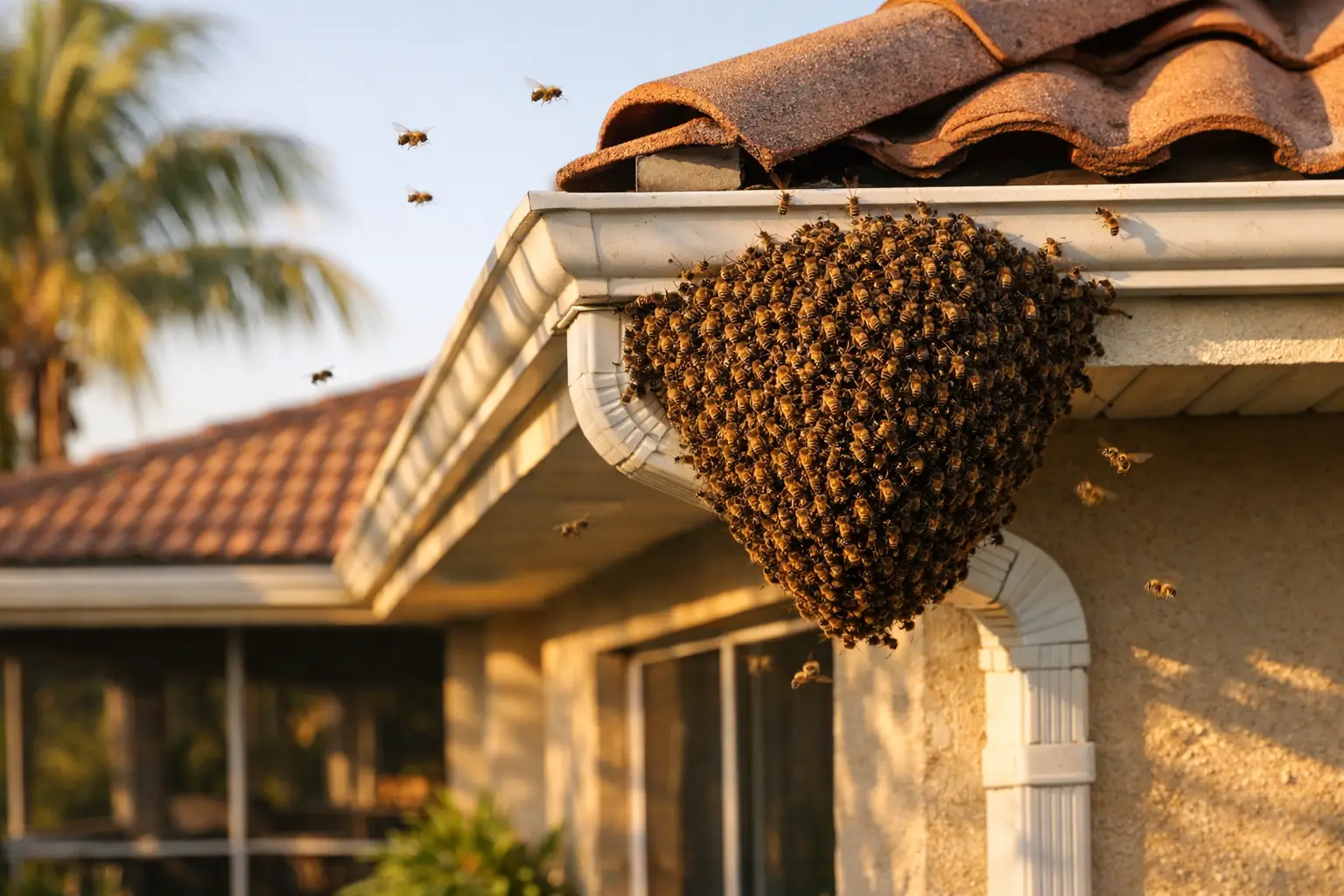

A cluster of honey bees under a Naples roofline is not always an emergency, but bees entering and leaving the same opening in a wall, soffit, chimney, or roof usually means a colony has moved in. That distinction matters. Naples honey bee removal should address the immediate safety concern while preventing the expensive problems that can remain after bees are gone: stored honey, melting wax, bee brood, odors, stains, and new pests.
Honey bees are essential agricultural pollinators, but a colony living inside a structure can create a real conflict between protecting the insects and protecting the property. The right response is not simply making the visible bees disappear. It is removing the colony, recovering the comb where practical, cleaning the cavity, and closing the entry point so another swarm does not occupy the same space.
Why Honey Bees Choose Naples Properties
Southwest Florida gives honey bees a long active season, abundant flowering plants, and warm, dry spaces in which to build. A small gap at a roof return, utility penetration, attic vent, shed wall, or pool-cage connection can be enough for scout bees to investigate. Once a swarm finds a protected cavity, it can build comb and establish a working colony surprisingly quickly.
A swarm and an established colony require different responses. A swarm is a temporary cluster of bees, often hanging from a branch, fence, palm frond, or exterior wall. It may move on within a day or two as scout bees search for a permanent home. Even so, it should be assessed by a trained bee professional, especially near doors, play areas, pets, or public walkways.
An established colony has a regular flight path. You may see bees carrying pollen into a gap throughout the day, hear buzzing inside a wall, or notice dark staining near an entry point. The colony may contain thousands of bees, multiple sheets of comb, honey stores, larvae, and a queen. This is a structural removal, not a simple pickup.
The Problem With Spraying Bees in a Wall
When homeowners feel threatened, insecticide can sound like the fastest solution. It may kill some or all of the bees, but it does not remove what they built. Honey, wax, brood, and dead bees can remain sealed inside the structure.
In Florida heat, honey can soften and leak through drywall, ceilings, insulation, or siding. The odor can attract ants, roaches, wax moths, beetles, and rodents. A vacant cavity can also attract another swarm, particularly if the old entrance remains accessible. Poison can turn an active bee issue into a hidden sanitation and repair issue.
There are situations where public safety demands an urgent response, particularly if bees are highly defensive or people cannot safely access the area. In those cases, a professional should explain the available options clearly. The goal remains the same: protect people first, then make sure the colony site is properly addressed rather than left behind as a future property problem.
What Live Naples Honey Bee Removal Involves
A responsible live removal begins with an inspection. The technician identifies the bee entry point, evaluates activity, determines whether bees are in a removable outdoor structure or inside a building cavity, and considers the safest access method. A colony in a free-standing birdhouse is very different from one behind stucco several feet above a driveway.
For structural colonies, removal often requires carefully opening a limited section of the affected area to reach the comb. The bees are collected, the queen is located when possible, and the comb is removed from the cavity. This step is essential. Leaving comb and honey behind creates the conditions for stains, pests, and a repeat infestation.
After the colony is removed, the area should be cleaned and the original access point sealed or prepared for repair. Exact restoration needs depend on the building material and the scope of access. A clear provider will explain what is included in removal, what repairs may be needed afterward, and who is responsible for final finishing work.
The rescued colony can then be transferred to a managed apiary or safe farm location. This approach treats honey bees as valuable livestock rather than disposable pests. It also creates a practical outcome for the homeowner: bees are no longer living in the structure, and the site is less likely to draw a replacement colony.
What to Do While You Wait for Help
Keep people, pets, and landscaping crews away from the bees’ flight path. Do not block the entrance with foam, tape, caulk, or fabric. Trapping a colony inside can push bees into living spaces or cause them to find another exit through vents, light fixtures, or wall gaps.
Avoid spraying water, smoke, household chemicals, or insecticide at the entrance. Sudden disturbance can make bees more defensive, and it complicates live relocation. If the bees are near a public entrance, keep the area clear and use temporary barriers or signage if it can be done without approaching the colony.
If anyone experiences difficulty breathing, facial or throat swelling, dizziness, widespread hives, or other signs of a serious allergic reaction after a sting, call emergency medical services immediately. For a typical sting, move away from the area, remove the stinger promptly by scraping it out, and monitor symptoms closely.
Choosing a Bee Removal Provider
Not every pest-control service performs live structural bee removal. Before scheduling, ask whether the company removes the comb and honey from inside the cavity, not merely the visible bees. Ask how the entry point will be handled, whether the colony is relocated when conditions allow, and what happens if bees return to the same area.
Insurance, experience working around roofs and electrical components, and a clear scope of work matter for homes, commercial properties, and HOA buildings. A property manager should also request documentation of the work performed and confirm how access and repair coordination will be managed. The lowest initial quote is not always the lowest total cost if it leaves honey and comb behind.
For homeowners in the broader Southwest Florida area, Beeswild.com LLC provides live bee removal and relocation backed by a three-month same-place-removal warranty. That type of warranty is most meaningful when paired with proper cavity cleanup and exclusion work, because it addresses the reason bees were able to enter in the first place.
Prevention Starts With the Small Gaps
After removal, inspect the exterior for openings around soffits, fascia boards, rooflines, vents, pipe penetrations, and utility boxes. Bees can use surprisingly narrow gaps, but sealing should be completed only after professionals confirm that no active colony remains inside. Closing an entrance prematurely can create a bigger problem indoors.
Routine maintenance helps. Repair loose screens, deteriorated wood, cracked stucco, and gaps created by aging caulk. Trim vegetation that presses against the roof or exterior walls, and watch for recurring bee traffic during warm months. For commercial sites, regular building-envelope inspections can prevent a small issue from becoming a customer-safety or liability concern.
A honey bee colony in the wrong location deserves a solution that is both careful and complete. Acting early gives a removal team more options, reduces structural damage, and gives the bees a chance to continue their work somewhere they belong.

No responses yet