
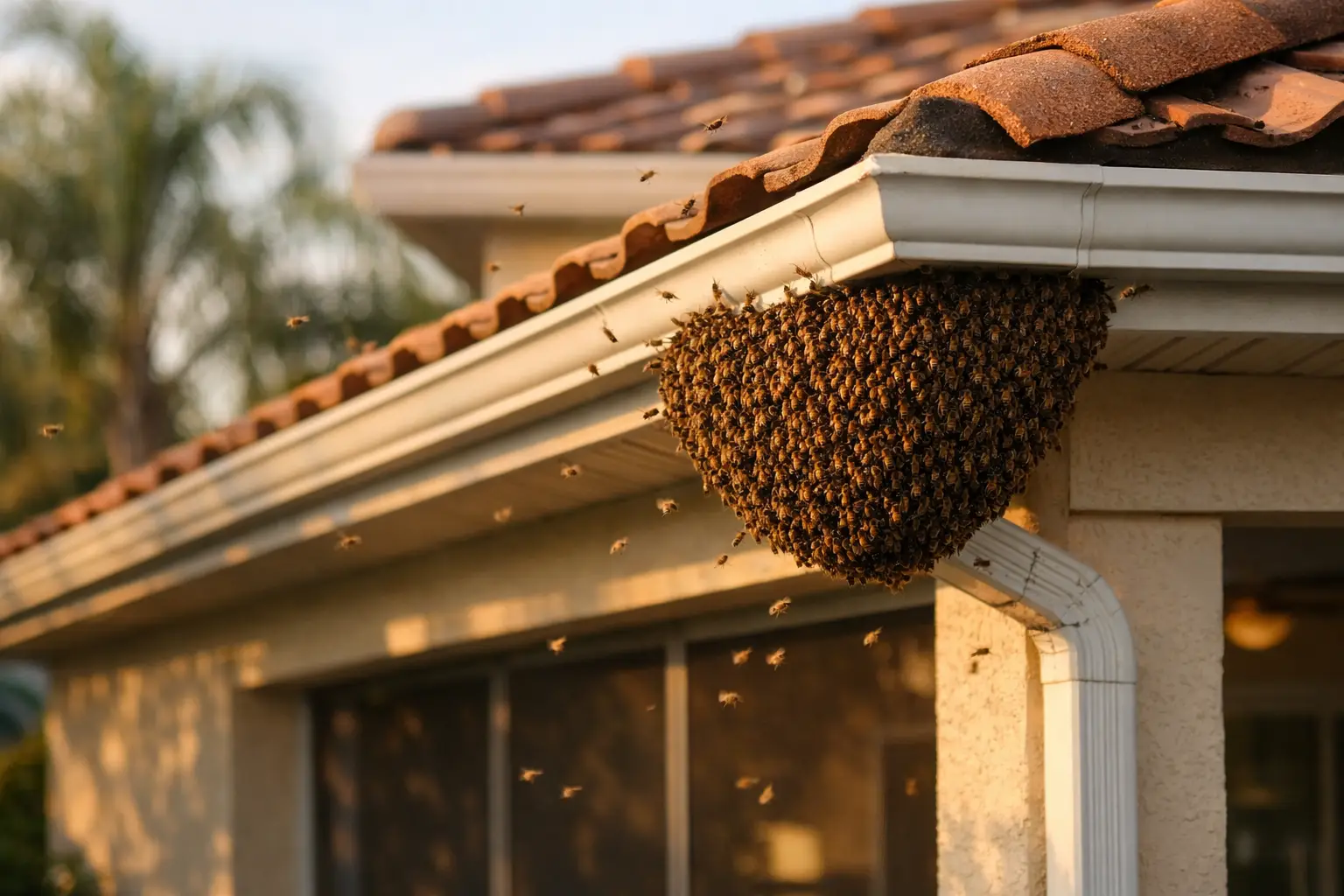

A colony buzzing behind a soffit or inside a wall is not a problem to solve with the first pest-control number that appears in a search. The wrong approach can leave honey, wax, dead bees, and new pests inside the structure. Knowing how to choose a bee removal company means finding a professional who can protect people, protect the building, and handle living bees responsibly.
For homeowners, HOAs, and property managers, the urgent question is usually, “Can someone get these bees out today?” That matters, especially when bees are near entryways, pools, playgrounds, or outdoor seating. But the more useful question is, “Will they remove the entire colony and prevent the same space from becoming a problem again?”
Start by Identifying What You Are Seeing
A swarm and an established colony require very different work. A swarm is a temporary cluster of bees, often hanging from a branch, fence, vehicle, or exterior wall. It may move on within a day or two, although it should still be evaluated when it is near people or pets.
An established colony has chosen a permanent cavity: a wall, attic, roofline, chimney, utility box, shed, or hollow tree. Bees entering and leaving through one small gap are a common sign. These colonies build comb, store honey, raise brood, and can grow quickly in Florida’s warm climate. Removing only the visible bees does not solve an established-colony problem.
Do not try to identify a colony’s temperament yourself or block its entrance. In Southwest Florida, some colonies can be highly defensive. Keep people and pets away, avoid vibration around the area, and let an experienced bee professional assess the situation.
Choose a Company That Removes the Whole Colony
The central standard is simple: a bee removal company should explain how it will address the bees, comb, honey, and entry point. If a company proposes spraying an occupied wall cavity without discussing what remains behind, ask more questions.
When a colony dies inside a structure, the stored honey and wax remain. In warm weather, honey can melt or seep through drywall and ceilings. The odor may attract ants, roaches, beetles, rodents, and other scavengers. A new swarm may also find the same scent-rich cavity and move in later.
A proper structural removal often involves carefully opening the affected area, taking out the colony and comb, cleaning the cavity, and sealing the former entrance after all bee activity has stopped. The exact method depends on the building material, colony location, height, and access. A colony in a removable soffit is not the same project as one behind tile, stucco, or a second-story wall.
Ask the company directly: “Will you remove the comb and honey?” and “Who handles repair or closure of the opening?” A clear answer is a sign that the company understands both bee biology and building consequences.
Why “No-Kill” Should Still Mean Effective
Humane relocation is valuable, but it should not be a vague promise. A capable live-removal provider has a practical plan for safely collecting the colony and moving it to a managed apiary or another suitable location. This protects an important pollinator while resolving the immediate safety and property concern.
There are situations where removal is more complex, especially with inaccessible colonies or aggressive behavior. A trustworthy provider will explain those limits honestly rather than guarantee a simple outcome before inspecting the site. The goal is not to take unnecessary risks with occupants, neighbors, or technicians. It is to use the most responsible effective method for the actual conditions.
How to Choose a Bee Removal Company: Questions That Matter
A short phone call can reveal a great deal. Describe where the bees are entering, how long you have noticed activity, whether anyone has been stung, and whether the colony is near children, pets, customers, or public access. Then ask how the company expects to approach that type of location.
Look for practical answers, not generic reassurances. The provider should be willing to discuss whether the bees appear to be a swarm or established colony, whether comb removal is likely necessary, and what access may be required. Photos from a safe distance can help them give a more informed initial assessment.
Before authorizing work, confirm these points in writing or in a detailed estimate:
- The scope of removal, including whether bees, comb, honey, and debris are included.
- Any expected opening of walls, soffits, roofing, or other building materials.
- Whether closure, exclusion work, or cosmetic repair is included, excluded, or available separately.
- The price structure, including possible charges for difficult access, height, after-hours response, or hidden colony size.
- Insurance coverage and any applicable licensing or credentials for the method being used.
- The warranty terms, especially whether the company covers renewed bee activity from the same removal location.
A low price may be appropriate for an easy-to-reach swarm. It is not automatically a good value for a colony inside a wall. Compare the scope, not just the number at the bottom of the estimate.
Verify Experience With Structures, Not Just Swarms
Beekeeping experience is useful, but structural removal requires another layer of skill. The technician must understand how bees travel through voids, where comb may be located, how to work around electrical lines or plumbing, and how to avoid creating unnecessary damage.
Ask whether the company regularly works on homes, condominium buildings, retail properties, and HOA common areas. A commercial property manager may also need certificates of insurance, clear scheduling, documentation, and a plan to keep customers away from the work zone. Those needs are different from a backyard swarm call.
For homes, experience with local construction matters. In Cape Coral and throughout Southwest Florida, bees commonly occupy soffits, roof overhangs, block walls, sheds, and pool-cage-adjacent structures. A provider should not assume every colony can be handled from the exterior without inspection.
Pay Attention to Safety and Communication
Professional bee removal is calm, controlled work. The company should explain how it will secure the area, when residents need to stay indoors, and whether pets should be moved. If the colony is near a busy entrance or public space, the plan should account for pedestrian traffic and timing.
Be cautious with anyone who encourages you to spray, smoke, seal, or knock down the colony before they arrive. Those actions can provoke bees, force them deeper into a structure, or make removal more difficult. Likewise, do not rely on online videos for a colony in a wall, roof, or utility area.
Communication after the removal matters too. Bees may return briefly as foragers come back to the former entrance. A professional should tell you what activity is normal in the first day or two and what would warrant a follow-up visit. Beeswild, for example, provides a three-month same-place-removal warranty, which gives homeowners a defined point of protection rather than an unclear verbal promise.
Watch for Red Flags Before You Hire
The clearest warning sign is a company that promises to “get rid of” bees without asking where they are located. Colony location determines the work, risk, equipment, and cost. Another concern is an estimate that does not distinguish between a swarm pickup and a structural colony removal.
Be wary of providers that refuse to discuss insurance, cannot explain what happens to comb and honey, or pressure you to approve work without a written scope. Also be cautious of anyone claiming every bee situation can be solved with no opening, no follow-up, and no chance of recurrence. Buildings and bee colonies are more complicated than that.
A good company does not need to use fear to earn the job. It should take stings, allergies, and public safety seriously while giving you understandable information about the options.
Make the Right Call for the Property and the Bees
The best bee removal company is not simply the fastest or cheapest one. It is the one that evaluates the colony accurately, protects the people nearby, removes the conditions that cause costly repeat problems, and treats live bees as valuable animals rather than disposable pests.
If bees are active near a door, wall, roofline, or shared community space, keep your distance and gather a few safe observations for the professional. A careful decision now can spare your property from honey damage later and give a healthy colony a chance to continue its work somewhere it belongs.

No responses yet