
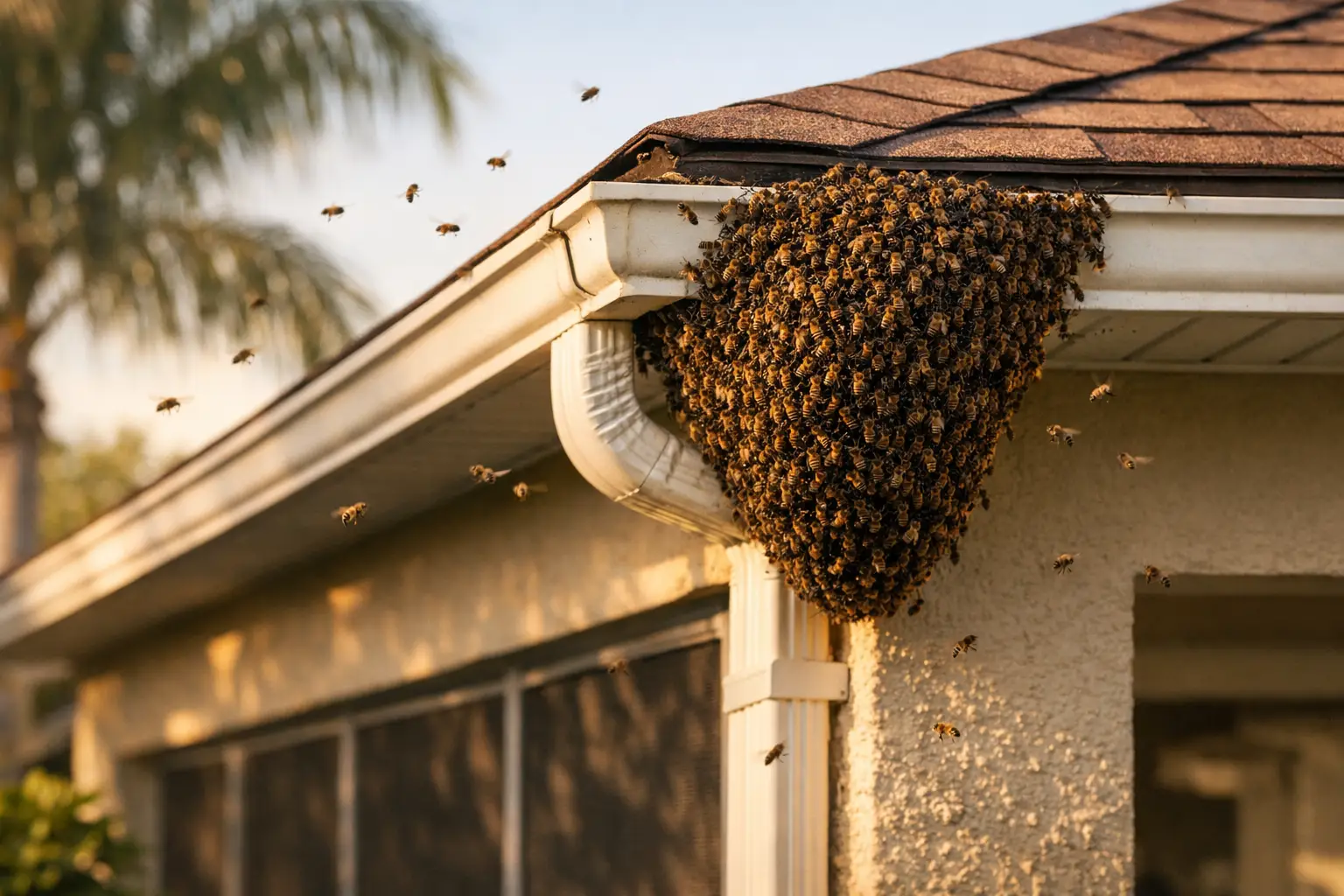

The first sign is usually small and easy to dismiss – a few bees looping around a soffit, a mailbox, or the gap near a roofline. Then the traffic gets steady. If you are trying to prevent that problem before it turns into a colony inside a wall, the best bee proofing methods focus on one thing: making your structure a bad nesting choice without harming the bees that belong outside.
Bee proofing is not the same as spraying insects away. Honey bees are valuable pollinators and, in many cases, they are already under pressure from habitat loss, disease, and chemical exposure. At the same time, a colony inside a home, clubhouse, shed, or commercial building can become a real safety and property issue. Good prevention protects both people and bees by stopping the move-in before removal becomes necessary.
Why bees choose buildings in the first place
Most structural bee problems begin with a cavity. Honey bees are looking for a protected, dry, enclosed space with a small entrance and enough room to build comb. Wall voids, chimneys, eaves, soffits, utility penetrations, irrigation boxes, and hollow block spaces can all look ideal to a swarm.
In Southwest Florida, warm weather stretches the season and gives bees more opportunities to scout. Once a colony starts building comb inside a structure, the problem changes from a nuisance to a construction issue. Honey, brood, wax, and heat can stain drywall, attract ants and roaches, and create odor problems if the colony dies in place. That is why prevention matters more than most property owners realize.
The best bee proofing methods start with exclusion
The most reliable way to prevent nesting is to deny access. Exclusion sounds simple, but it works only when it is done thoroughly. Bees do not need a large opening. A surprisingly small gap around fascia boards, roof returns, vents, conduits, or siding joints can be enough.
Start with a full exterior inspection. Look closely at rooflines, attic vents, gable vents, soffits, chimney caps, water meter boxes, and areas where different materials meet. Aging caulk, warped trim, and cracked stucco are common weak points. If you can see daylight into a cavity, scout bees may find it too.
For many homes, the best fix is a combination of sealant and durable screening. Caulk alone helps on narrow seams, but larger openings need materials that hold up to weather and sun. Hardware cloth or fine metal screening is often better than plastic mesh in exposed areas because it resists chewing, warping, and heat damage. The goal is not just to close the hole today. It is to keep it closed through storm season and summer heat.
1. Seal gaps before swarm season
Timing matters. The best bee proofing methods are preventive, not reactive. Once scout bees are actively investigating a cavity, waiting another week can be the difference between a simple repair and a live removal from inside a wall.
Focus on recurring entry zones: under roof tiles, behind loose fascia, around attic louvers, where plumbing or electrical lines enter the structure, and at construction joints. If your building has decorative voids or hollow architectural features, inspect those too. They are common nesting sites because they are quiet and sheltered.
2. Screen vents and weep areas correctly
Vents need airflow, so this step requires balance. Blocking ventilation completely can create moisture problems, which is its own building headache. The better approach is to use properly sized metal screening that allows function while preventing entry.
The same goes for weep holes and drainage features. You do not want to trap water in the wall system just to block insects. In these cases, product choice matters. A bee-proofing plan has to respect how the building is designed to breathe and drain.
Remove the features that attract settling
Bees do not usually nest in a structure because they are chasing food scraps the way yellowjackets might. They move in because the cavity itself is attractive. Still, there are site conditions that make a property more appealing during swarm season.
Water sources are one. Leaking hose bibs, birdbaths left unmanaged, irrigation overspray, and condensate drips can increase bee activity around a building. That does not mean water causes a colony in the wall, but it can keep bees comfortable nearby. Fixing chronic moisture issues is a smart part of prevention.
Old comb odors are another. If a colony was removed in the past but all wax, honey, and scent trails were not fully cleaned out, new bees may investigate the same location. This is one reason poisoning a colony is such a poor long-term solution. Dead bees and abandoned comb remain inside, and the cavity is still open for the next swarm.
3. Repair and sanitize former nest sites
A previous bee problem raises the odds of a repeat problem if the void was not restored correctly. After any removal, the comb should be fully taken out, contaminated materials addressed if necessary, and the entry point permanently sealed. If repairs are cosmetic only, the structure may still be vulnerable.
This is also where a same-place warranty has real value. It shows that the company understands bee behavior and the construction details that prevent reinfestation, not just the removal itself.
4. Manage utility boxes, sheds, and hollow structures
Not every colony starts in the main home. Meter boxes, pump houses, fences with hollow posts, detached sheds, and decorative landscape features can all become nesting sites. Commercial properties and HOAs often miss these because maintenance teams focus on roofs and walls first.
A practical bee proofing plan includes the whole property, especially low-traffic areas. If a structure provides shade, dryness, and a cavity, it deserves inspection.
What does not count as real bee proofing
A lot of property owners get bad advice when bees first show up. Surface spraying foraging bees, fogging an opening, or stuffing a visible hole without checking the full void may look like action, but it often makes the problem worse.
If a colony is already inside, poison can leave honey and brood behind. That can melt, ferment, stain finishes, and attract other pests. It can also push surviving bees deeper into the structure or into adjacent rooms. Quick fixes are appealing when people are nervous, but they rarely solve the construction side of the problem.
Repellents are another mixed bag. Some products may temporarily reduce activity, but they do not change the fact that a protected cavity exists. If the structure remains suitable, another swarm may test it again later.
Best bee proofing methods for homes vs. commercial buildings
The basics stay the same, but priorities change with the property type. Homeowners usually worry most about children, pets, pools, lanais, and hidden damage inside walls or attics. Commercial managers and HOAs tend to focus on liability, public walkways, outdoor seating, and shared structures where repeated bee activity can generate complaints fast.
For houses, detail work around roof transitions, attic access points, and ornamental trim is often the most important investment. For commercial sites, routine inspection schedules matter more because a single overlooked utility enclosure or façade void can become a public safety issue.
Municipal and community properties add another layer. Parks, signage structures, athletic facilities, and maintenance buildings often have many small cavities spread across a large area. In those settings, prevention depends on regular inspection and consistent repair standards, not just one-time sealing.
When to call a professional instead of doing it yourself
Some bee proofing is basic property maintenance. Re-caulking minor seams, replacing damaged screens, and repairing trim are reasonable tasks if no bees are present. But active bee traffic changes the situation.
If you see bees entering and exiting one spot repeatedly, hear buzzing in a wall or soffit, or notice a cluster forming on the structure, do not seal the opening yourself. You could trap a colony inside, force bees into the interior, or turn a manageable removal into a larger repair. The right next step is an inspection by someone who understands both bee behavior and building cavities.
That distinction matters. Bee prevention is part wildlife management and part construction science. The best outcomes come from identifying whether you are dealing with scout bees, a temporary swarm, or an established colony, then matching the repair to that stage.
A practical inspection routine that actually helps
Most properties do not need daily monitoring. They do need consistency. Walk the perimeter every few weeks during active season and after major storms. Look for new gaps, loose trim, fresh cracks, or unusual bee traffic. Pay special attention to high, shaded, and quiet areas because those are easy to ignore until activity is well established.
Photographs help more than people expect. If you document a small gap or suspicious traffic, you can compare changes over time instead of relying on memory. For HOAs and commercial sites, that record also helps maintenance teams act before a tenant or resident reports an emergency.
In Southwest Florida, where heat, moisture, and storms can age exterior materials quickly, prevention is not a one-time project. It is maintenance with a purpose. The structures that stay bee-free are usually the ones that are inspected often, repaired promptly, and treated as if small openings matter – because they do.
The most effective bee proofing respects two facts at once: bees are worth saving, and buildings are not good places for them to live. If you keep your property sealed, dry, and free of old nesting cues, you are far less likely to face a colony in the wall when the next swarm starts looking for a home.

No responses yet