

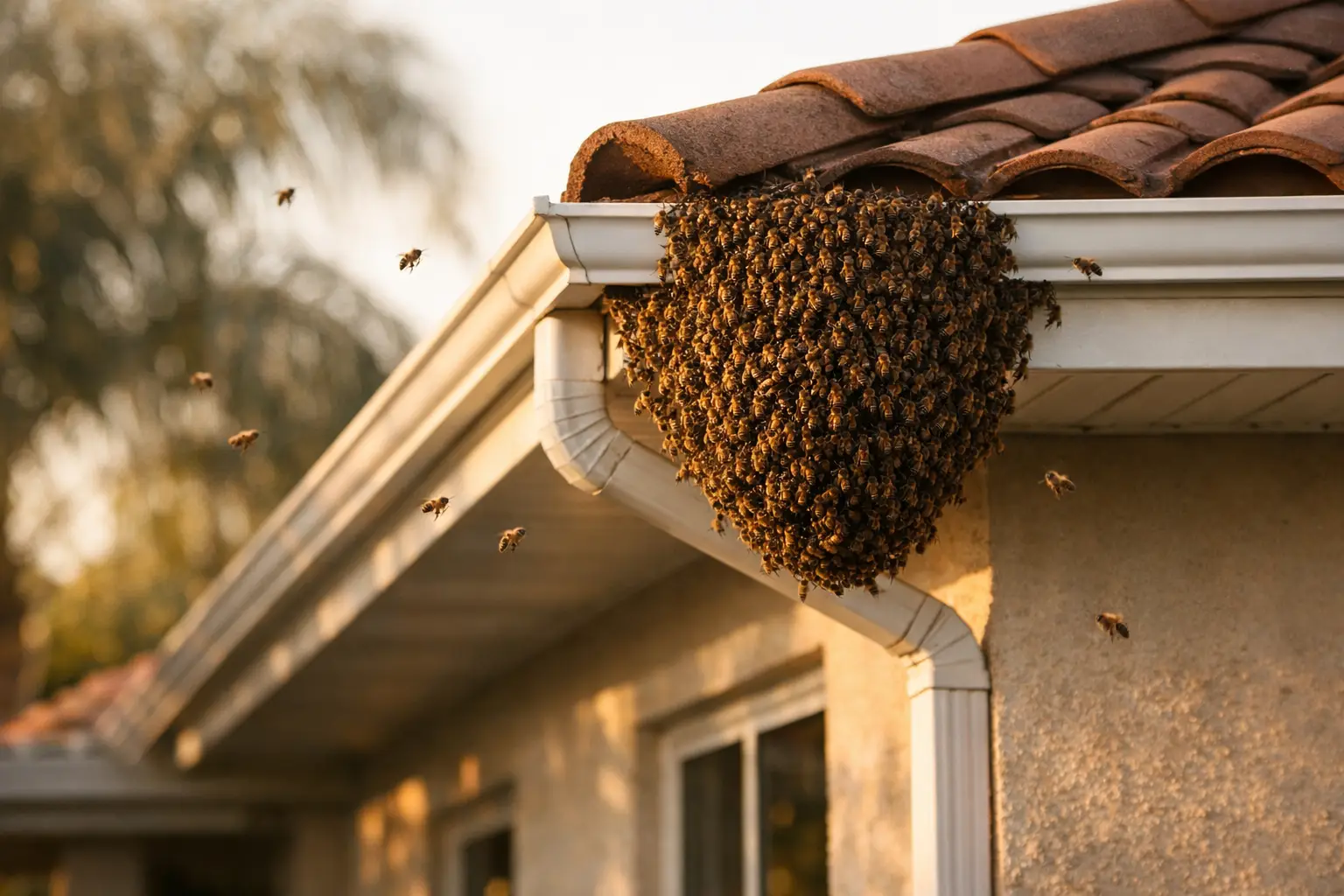

A bee colony can be gone from a wall, soffit, or roofline and still leave behind everything another colony needs: wax comb, honey scent, a sheltered cavity, and a familiar entrance. To prevent bees returning after removal, the job must address the structure as carefully as it addresses the bees. Relocating a colony is the humane first step. Removing its attractants and closing access is what makes the result last.
For Southwest Florida homeowners and property managers, this distinction matters. Warm weather gives scout bees a long season to search for nesting sites, and voids around roofs, utility penetrations, and exterior trim can be especially attractive. A proper removal protects people and property without treating valuable pollinators as disposable pests.
Why bees return to a previously occupied space
Honey bees do not usually return because they remember an address in the way people do. The original colony has been relocated. The risk comes from other scout bees finding a cavity that still smells like a successful hive.
Wax comb contains scent compounds that can remain attractive long after the bees are gone. Residual honey adds another problem. It can draw ants, roaches, wax moths, rodents, and other insects, while heat can cause honey to soften and stain ceilings or walls. If the original entrance remains open, a new swarm may inspect the same protected void and establish itself quickly.
That is why simply spraying visible bees or removing a cluster from an exterior wall is not reliable prevention. It may reduce activity for the moment while leaving the colony’s food stores, comb, and access point inside the building.
The removal process that actually prevents reinfestation
The most dependable approach has three connected parts: remove the live colony, remove the hive materials, then restore the structure so bees cannot enter again. Skipping any one of those steps creates a weak point.
Remove bees and comb, not just the bees you can see
When bees are living inside a wall, soffit, roof, chimney chase, or other enclosed space, the comb must be located and removed whenever construction and safety allow. A live removal specialist typically accesses the colony carefully, transfers the bees and brood for relocation, and removes comb, honey, and debris from the cavity.
This work should be deliberate rather than destructive. Cutting into a structure may be necessary, but the access opening should be limited to what is needed to reach the colony. Leaving large quantities of comb behind can create odors, pests, stains, and a strong invitation to future swarms.
A recently arrived swarm is different. If bees are clustered temporarily on a tree branch, fence, mailbox, or exterior surface, they may be resting while searching for a permanent home. Once safely collected, there may be no comb or honey to clean up. Still, inspect nearby cracks and cavities. The swarm may have been investigating the structure before it settled outside.
Clean the cavity before it is closed
After comb removal, the empty void should be cleared of wax fragments, honey residue, dead bees, and loose material. The goal is not to make the cavity sterile. It is to remove the food and scent signals that make it resemble a productive hive.
Cleaning requirements depend on the location and how long the colony occupied it. A small, new colony may leave limited residue. An established colony inside a hot roofline may contain heavy comb, stored honey, and absorbed staining. In the latter case, cleaning is particularly important because Florida heat can turn a neglected hive cavity into a property-damage problem.
If honey has contacted insulation, drywall, or wood surfaces, the material may need further treatment or replacement. A qualified professional should explain what was found and what repairs are appropriate rather than sealing the area and hoping for the best.
Seal every practical entrance after bee activity ends
Exclusion is the structural step that keeps new bees out. Once all bee traffic has stopped and the colony has been fully removed, seal the entrance used by the bees and inspect the surrounding area for alternate gaps.
Common entry points include separations around soffits and fascia, gaps where pipes or cables enter a building, loose siding, roof returns, vents without proper screening, cracks around masonry, and damaged trim. A gap that seems too small to matter can be enough for bees to investigate.
Use repair materials that match the structure and hold up to weather. Depending on the opening, this may involve caulk, flashing, wood repair, masonry repair, or properly fitted screening. Foam alone is often not a durable exterior repair. Bees and other pests can exploit weak materials, and an unprotected patch may fail in sun, rain, and wind.
Do not seal an active colony inside a wall. Trapped bees may seek another way into the building, and the comb and honey will remain. The correct sequence is removal, cleanup, confirmation that activity has ended, and then exclusion.
Inspect the areas bees favor most
A one-point repair is not always enough. If a colony entered through a deteriorated soffit, the nearby roofline may have several similar gaps. Property managers should treat a removal as a useful inspection opportunity, particularly on buildings with repeated exterior maintenance issues.
Pay close attention to the transition points where materials meet: roof edges, eaves, attic vents, chimneys, utility boxes, stucco cracks, and additions attached to an older structure. These places offer shade, warmth, and protected cavities. Trees and dense landscaping near the building can also make inspection harder, although they are not the reason bees enter a structure.
For commercial properties and HOAs, documentation helps. Record the colony location, access point, repairs completed, and any adjacent conditions that need attention. This creates a clearer maintenance plan and reduces the chance that the next report of bee activity becomes an emergency.
Avoid shortcuts that create bigger problems
Poisoning bees inside a structure often fails to solve the underlying issue. Even if the colony dies, comb and honey remain. The odor and residue can attract pests, while surviving bees may move deeper into the void or emerge indoors. Chemical treatment can also harm pollinators that were never living in the building.
Blocking the entrance before removal has similar drawbacks. It may make outdoor activity appear to stop, but it can trap bees and hive materials where they can cause more damage. It also makes later removal more difficult.
Home repairs have their place, especially after a professional confirms the colony and comb are gone. But homeowners should not climb roofs, open energized utility areas, or disturb an active colony. Defensive behavior can increase rapidly, and in Southwest Florida, it is not possible to judge a colony’s temperament safely from a distance.
Know when a follow-up visit is warranted
After removal and exclusion, occasional bees may appear around the former location for a short time. Foragers that were away when the colony was removed can return and circle the area before dispersing. This is different from steady traffic entering a crack or opening.
Watch for repeated bee movement into the same spot, a growing number of bees over several days, buzzing from inside a wall, or fresh wax visible near an opening. Those signs deserve a prompt inspection. Early action is easier than dealing with a fully established colony.
Beeswild approaches live removal as both a property-protection service and a rescue effort, relocating healthy colonies to managed farm areas rather than leaving them to die in a structure. Its three-month same-place removal warranty also provides reassurance when activity reappears at the original location.
The best long-term defense is simple, even if the work is specialized: remove the entire hive, clean what the colony left behind, and repair the route that allowed bees inside. That gives the relocated bees a safer future and gives your home or property a much better chance of staying colony-free.

No responses yet