
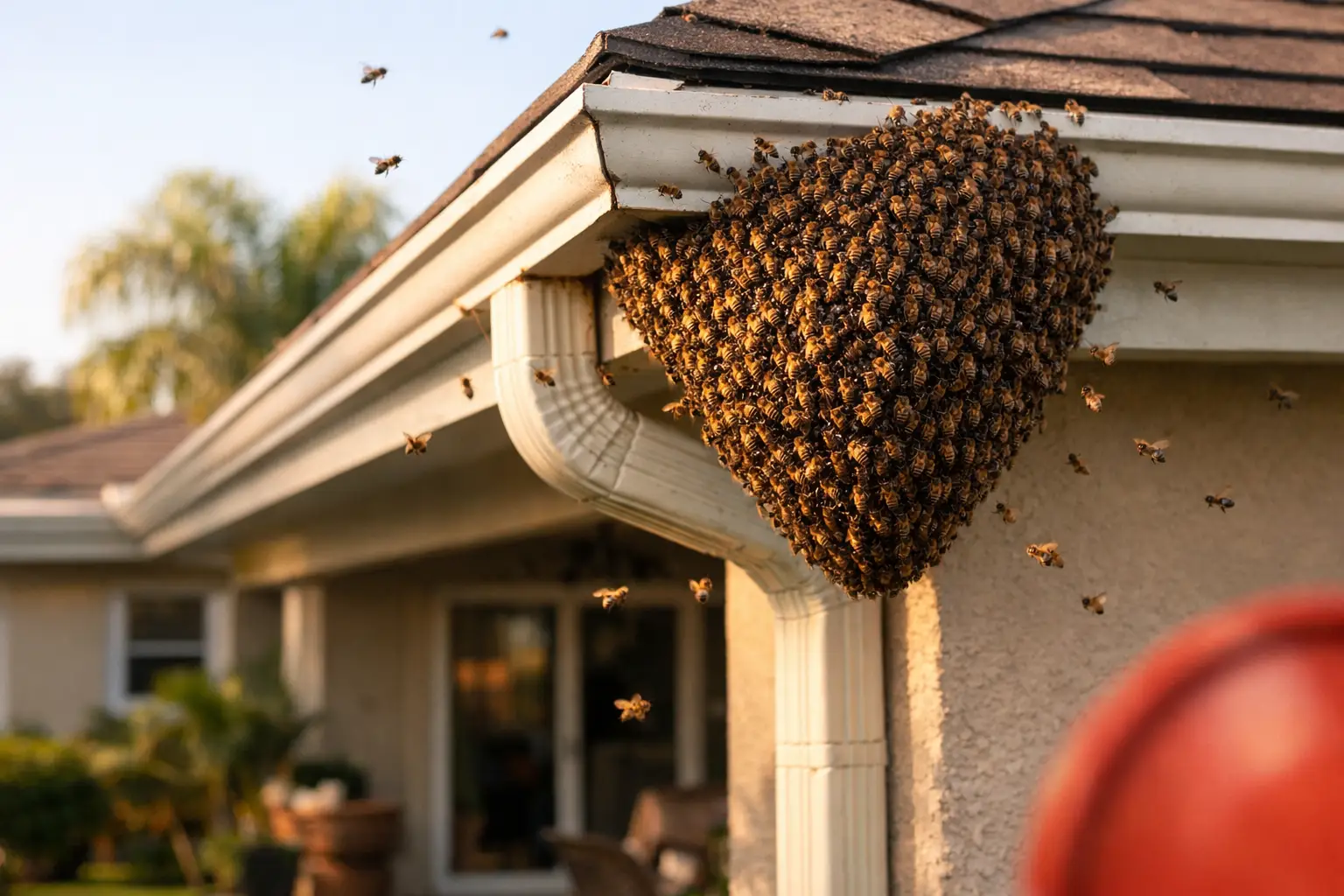

A few honey bees visiting your flowers are usually doing exactly what you want them to do. A growing cluster under the eaves, bees entering a gap in the wall, or insects gathering around a pool are different situations entirely. The best ways to keep bees away protect your family and property while recognizing that honey bees are vital pollinators, not disposable pests.
The key is to identify what is attracting them, make your structure less accessible, and act quickly when bees have already moved in. Spraying a visible cluster or blocking a hole before a colony is removed can turn a manageable issue into a costly structural problem.
First, Tell a Swarm From an Established Colony
A swarm looks dramatic: thousands of bees may gather in a temporary, football-shaped cluster on a branch, fence, mailbox, or exterior wall. This is a group of bees searching for a permanent home. Swarms often move on within a day or two, although no homeowner should assume they will leave on schedule.
An established colony behaves differently. You may see a steady stream of bees flying in and out of one opening in a soffit, roofline, wall, chimney, shed, or utility box. Activity is usually strongest during warm daylight hours. A colony inside a structure may contain comb, honey, brood, and a large bee population. It needs professional removal, not a quick deterrent.
Keep children, pets, ladders, lawn equipment, and curious neighbors away from either situation. Do not knock down a swarm, seal the entrance to an active colony, or spray water, soap, insecticide, or household chemicals at bees. Disturbance can make bees defensive, and poisoned bees or a dead colony left in a wall create a separate set of problems.
Best Ways to Keep Bees Away Before They Settle
Prevention is most effective when it removes the food, water, and sheltered openings that make a property appealing. In Southwest Florida, where warmth extends bee activity through much of the year, routine exterior maintenance matters more than a one-time seasonal fix.
Close structural entry points
Honey bees can use surprisingly small gaps, especially where trim, vents, pipes, rooflines, and siding meet. Inspect the exterior of your home, garage, shed, and commercial buildings for cracked caulk, loose soffits, damaged screens, unsealed utility penetrations, and gaps around vents.
Seal openings with appropriate exterior materials only after confirming bees are not using them. If bees are entering a gap, sealing it traps the colony inside. The trapped bees may find another route into the building, while honey and wax remain behind to melt, stain drywall, attract ants, roaches, and rodents, or cause odors.
After a professional live removal, repair the access point promptly. This step is as important as the removal itself. Old comb carries a strong scent that can attract another swarm, so complete comb removal and solid exclusion work are the best defense against repeat nesting.
Manage outdoor food and sweet odors
Bees are drawn to accessible sugar. Keep garbage cans clean and fitted with tight lids, especially around outdoor kitchens, pool decks, restaurant patios, and common areas. Rinse drink containers before placing them in recycling, and do not leave open soda cans, juice boxes, fruit, syrup, or pet food outdoors.
Fallen fruit is another overlooked attractant. Pick it up regularly and harvest ripe citrus or other fruit before it splits and ferments on the ground. During outdoor events, covered beverage dispensers and closed trash containers make a meaningful difference.
Remove easy water sources
Bees need water, and they may return to the same reliable source every day. Dripping hose connections, leaking irrigation heads, birdbaths, pet bowls, pool edges, and standing water near air-conditioning equipment can all become bee stops.
Fix leaks and empty unnecessary standing water. For pools, keeping the skimmer and surrounding area clean can reduce the residue that attracts insects. If you maintain a birdbath or water feature for wildlife, place it well away from doors, patios, play areas, and outdoor dining spaces. A shallow water source with stones for footing can give pollinators a safer place to drink without inviting them to your busiest space.
Use landscaping wisely, not aggressively
Flowering plants support bees, and removing every bloom from a yard is neither necessary nor desirable. Instead, consider placement. Keep heavily flowering shrubs, citrus blossoms, and dense flowering beds away from entry doors, pool gates, playgrounds, and seating areas when possible.
If you are planning a new landscape, place pollinator-friendly plants toward the edge of the property and reserve areas close to frequently used doors for low-blooming greenery. This is a practical compromise: your landscape can support pollinators without concentrating bee activity where people walk, eat, and play.
What Usually Does Not Work
Many online bee-repellent suggestions sound simple because they address the bees you can see, not the reason bees are there. Strong essential oils, vinegar, mothballs, dryer sheets, cinnamon, and ultrasonic devices are unreliable for an established honey bee colony. Some can harm other wildlife, create unpleasant odors, or expose children and pets to substances that do not solve the underlying issue.
Bug bombs and over-the-counter insecticides are especially risky around structural colonies. Even if they kill some bees, they do not remove honey-filled comb, wax, larvae, or the scent trail that draws future bees. Surviving bees can become more defensive, and a colony dying inside a wall can lead to leaks, pests, and expensive repairs.
A professional should also be cautious with exclusion devices. One-way exits can have a role in certain wildlife situations, but they are generally not a complete answer for honey bees in a structure. If comb remains inside, the property is still vulnerable to damage and reinfestation.
When Bee Activity Requires Immediate Help
Call for trained assistance when bees are clustered near a doorway, playground, pool, public walkway, or outdoor business area. Act quickly if bees are entering a wall, roof, soffit, chimney, or another enclosed cavity. The longer a colony remains, the more comb and honey it can build.
Urgent assessment is also appropriate when bees seem unusually defensive, repeatedly bump into people, chase someone away from an area, or are located near a person with a known severe sting allergy. Do not attempt to inspect the nest up close. Keep your distance, reduce vibration around the area, and let a trained bee removal specialist assess the colony.
For commercial properties and HOAs, document the location, time of day, and activity level, then restrict access to the immediate area while help is arranged. This protects visitors and employees without provoking the bees.
Why Live Removal Is Different From Extermination
Live bee removal focuses on taking out the colony, comb, and honey, then relocating viable bees to a managed apiary. The goal is to address the safety and property concern while preserving pollinators whenever conditions allow.
This approach is particularly valuable for colonies in walls and roofs. A proper structural removal opens only the area needed to access the comb, removes the material that attracts future colonies, and allows the entry point to be repaired afterward. It is more involved than spraying an opening, but it addresses the actual source of the problem.
In Cape Coral and across Southwest Florida, Beeswild provides live removal and relocation for residential and commercial bee issues, including structural colonies. A same-place removal warranty can also offer reassurance that the work includes more than simply making visible bees disappear.
A Safer Property and a Healthier Bee Population
Keeping bees away does not have to mean treating every bee as a threat. Maintain your exterior, control food and water sources, and keep flowering plants thoughtfully placed. When a swarm or colony appears, give it space and choose removal that protects both people and pollinators.
That response safeguards the home you live in while giving a valuable colony the chance to do its work somewhere it belongs.

No responses yet