

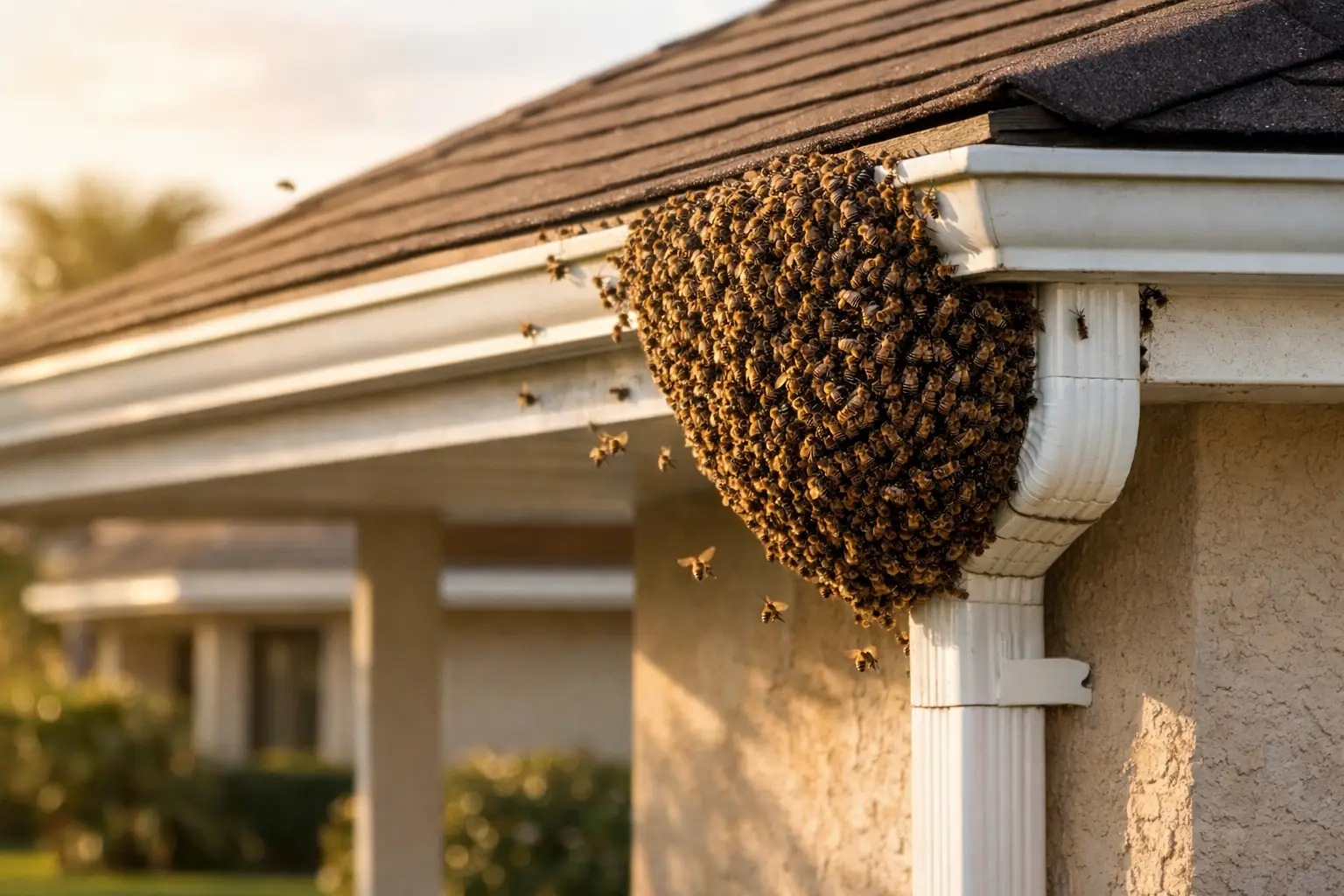

A bee colony in a wall is not a problem that becomes cheaper with time. Honey, wax, and brood can draw ants, roaches, rodents, and moisture damage long after the bees are gone. So, who pays bee removal? Usually, the person or organization responsible for the property where the colony is located pays – but leases, HOA documents, insurance policies, and the colony’s exact location can change the answer.
The practical goal is to remove the living colony, recover comb and honey where needed, and seal the entry point so another swarm cannot move into the same cavity. That work protects people and structures while giving healthy bees a chance to be relocated rather than destroyed.
Who Pays Bee Removal on a Home You Own?
For a single-family home, the homeowner is generally responsible for the cost of bee removal. This includes colonies in walls, attics, soffits, rooflines, sheds, pool cages, trees, and other parts of the property.
A visible swarm may be less expensive to handle than an established colony inside a structure. A swarm is a temporary cluster of bees looking for a new home. A colony has moved in, built comb, stored honey, and may have occupied the space for months or years. Structural removals require more labor because the beekeeper must safely access the hive, remove comb and bees, clean out honey residues, and help prevent reinfestation.
Homeowners sometimes delay service because the bees appear calm or are entering through a small gap. That is a risky calculation in Southwest Florida’s heat and humidity. Honey can soften, leak, and stain ceilings or walls. A colony can also expand quickly, especially when it has access to a protected cavity. Early live removal is often the more economical choice because there is less comb, less honey, and less building material to open and restore.
Does Homeowners Insurance Cover Bee Removal?
Most standard homeowners insurance policies do not cover bee removal simply because bees are present. Insurers commonly classify insects and pests as maintenance-related issues, and routine removal is often excluded.
There can be exceptions, but they are policy-specific. If a covered event damages a roof or wall and bees enter through that new opening, some resulting repairs may be treated differently than the bee removal itself. Similarly, a policy may address certain sudden, accidental physical damage while excluding the cost of removing an insect colony. Never assume coverage based on a neighbor’s policy or a general online answer.
Before filing a claim, review the declarations page and exclusions or call the insurer. Ask separate questions: Is live bee removal covered? Is access and repair to drywall, siding, or roofing covered? Is damage from honey or insects excluded? Getting the answer in writing can prevent an unpleasant surprise.
Who Pays Bee Removal in a Rental Property?
For tenants, the answer usually begins with the lease and the location of the bees. A colony inside a wall, attic, roof, exterior soffit, or other building component is typically the landlord’s responsibility because it affects the structure and may create a habitability or safety concern.
Tenants should report suspected bees promptly and in writing. Include where bees are entering, when activity is highest, whether anyone has been stung, and whether children, pets, or people with sting allergies use the area. Photos or short videos taken from a safe distance can help document the issue. Do not spray an opening, block it with foam, or try to force bees out of a wall. Those actions can leave honey and comb behind, drive bees into living spaces, and make a humane removal more difficult.
A tenant may be responsible when the lease clearly assigns a particular outdoor maintenance duty or when their actions caused the problem. For example, an unapproved structure or neglected item on a patio could create a nesting location. Even then, responsibility depends on the lease language and local law. A landlord cannot simply ignore a colony in a shared wall by calling it a tenant problem.
Property managers should treat reports with urgency, particularly around entrances, playgrounds, outdoor dining areas, and common walkways. The cost of a professional removal is often small compared with the liability and property damage that can follow an unmanaged colony.
HOA and Condo Bee Removal Responsibilities
In an HOA or condominium community, responsibility follows ownership boundaries. The association normally pays for bee removal in common areas and association-maintained structures, such as clubhouses, perimeter walls, mail stations, gates, community roofs, and shared landscaping.
A homeowner may pay when the colony is inside a privately owned unit or a feature the owner is required to maintain. Yet condo documents can be more complicated. Exterior walls, roofs, attic spaces, and building envelopes may be common elements even when the bees are entering near one resident’s unit.
The board or property manager should review the declaration, bylaws, maintenance chart, and insurance provisions before assigning a bill. Speed still matters. A manager can authorize emergency service to address an immediate public safety issue, then determine final cost responsibility under the governing documents. Waiting for a board meeting while bees occupy a heavily used common area is rarely a sound risk-management decision.
When a Business or Commercial Landlord Pays
Businesses are generally responsible for colonies on property they own or control. That includes retail centers, restaurants, warehouses, offices, apartment communities, and construction sites. If a commercial tenant has exclusive control of a space, the lease may shift some pest-control responsibilities to that tenant, but structural bee colonies often remain the building owner’s concern.
The key issue is not whether customers can see the hive. Bees entering behind signage, through a roof penetration, or into a wall cavity can still create a safety and property risk. Commercial managers should document the condition, restrict access if needed, and use a qualified live-removal provider that can address the colony and the entry point.
For restaurants and properties with outdoor seating, a few foraging bees near flowers are not the same as an established hive. Removing every bee from the landscape is neither realistic nor environmentally responsible. The concern is concentrated activity, defensive behavior, or a colony nesting in a structure or high-traffic area.
Can a City, County, or Utility Company Pay?
A city or county may pay for removal when bees are nesting on public property, such as a park structure, public building, right-of-way feature, or municipal facility. Some agencies have their own maintenance crews or contracted vendors. Others may only respond when there is an immediate public-safety threat.
If the colony is on a utility pole, meter box, transformer area, or other utility-owned equipment, contact the utility company rather than attempting to approach it. Utility infrastructure presents electrical risks that change how removal must be planned.
Public agencies generally do not pay to remove bees from private homes, yards, or businesses. If bees are coming from a neighboring property, start with a calm conversation and clear documentation. The owner of the property containing the colony is usually the party expected to arrange service. Escalation through code enforcement may be appropriate only when the owner will not act and the situation creates a documented safety concern.
What a Bee Removal Quote Should Actually Cover
The lowest price is not always the lowest total cost. Ask whether the quote covers live extraction of the colony, comb and honey removal, cleanup of the cavity, closing or screening the bee entry point, and the expected repair scope. A removal that only kills or drives out bees can leave comb and honey inside the structure, creating a second problem after the first one appears solved.
For a colony in a wall or roof, access and restoration are often separate parts of the job. The beekeeper may carefully open a limited section to reach the hive, while a roofer, handyman, or contractor completes final cosmetic repairs. Clear responsibility for each step avoids confusion.
Beeswild provides live bee removal and relocation, with colonies moved to safe apiary areas rather than treated as disposable pests. The company also offers a three-month same-place-removal warranty, which matters because a properly addressed entry point is central to preventing a new colony from using the same site.
Take the Safer Next Step
If you are unsure who should pay, do not let the billing question become a reason to leave a colony in place. Identify who controls the property, notify the owner or manager promptly, document the bee activity, and request a professional assessment. Protecting the building and relocating the bees can be handled in the same decision – and acting early gives both the property and the colony the best chance of a good outcome.

No responses yet