
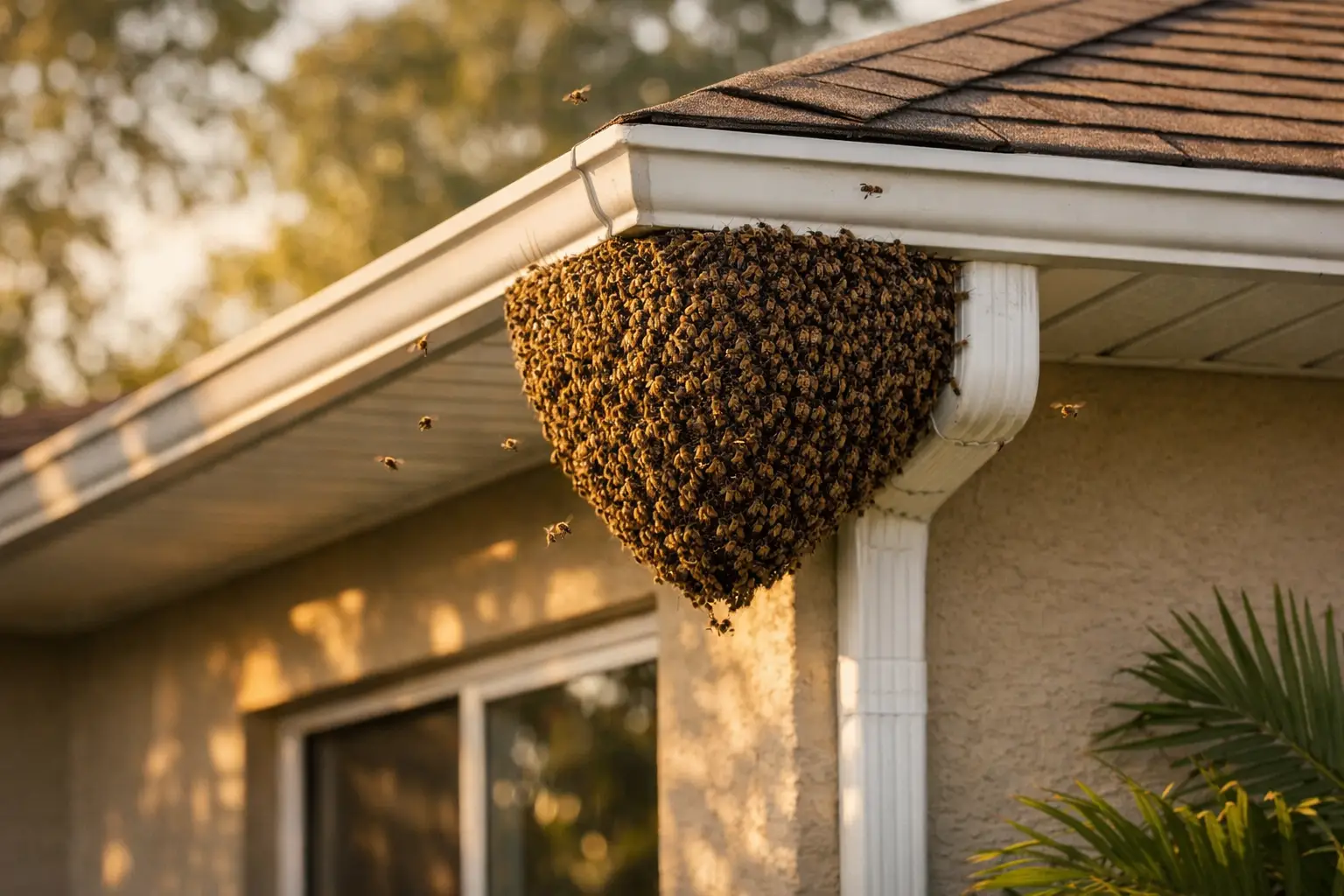

A bee colony in a soffit, wall, attic, or roofline creates two separate concerns: safely relocating the bees and protecting the structure they occupied. In honeycomb removal versus repairs, the order matters. Repairing an opening before the colony, comb, honey, and scent trails are fully removed can trap bees inside, leave food behind for pests, and turn a small exterior repair into a recurring problem.
For Southwest Florida homeowners, this is more than a cosmetic decision. Heat and humidity can quickly worsen the effects of leaked honey, damp insulation, wax moth activity, ants, roaches, and other insects attracted to an abandoned hive. The reliable approach is to address the colony and its materials first, then make repairs that restore the structure and prevent a new swarm from moving in.
Honeycomb Removal Versus Repairs: The Proper Sequence
A complete live bee removal generally begins with an assessment of where the colony is located, how long it may have been established, and what building materials are involved. Bees nesting in a removable soffit panel require a different approach than bees established behind stucco, inside a block wall, or under a tile roof.
The removal process should focus on relocating the live colony whenever conditions allow. That means finding and securing the queen, gathering as many worker bees as possible, and moving them to a managed apiary or safe relocation area. But removing visible bees is only one part of the work.
The comb, stored honey, brood, wax residue, and access routes need attention as well. A wall can look quiet after a treatment or a temporary bee departure, while still holding pounds of honeycomb inside. Leaving that material behind creates an invitation for pests and can attract another swarm that detects the remaining hive scent.
Only after the cavity is cleared, cleaned as appropriate, and inspected should permanent repairs begin. This sequence protects both the home and the relocated bees.
Why Sealing First Can Make the Problem Worse
When bees are entering through a small gap near a roofline or wall, it is understandable to want that opening closed immediately. However, sealing an active colony inside a structure can force bees into living spaces, create new exit holes, or leave trapped bees to die behind the wall.
It also does nothing to remove honey and wax. In Florida’s warm climate, stored honey may soften, ferment, or seep through drywall and ceiling materials. Even if there is no visible leak, the odor can draw ants, beetles, cockroaches, rodents, and wax moths to the cavity. Those secondary issues may continue long after the bees are gone.
The same concern applies to using poison alone. Chemical treatment may kill bees near an entrance without removing the colony materials inside. It can also make live relocation impossible and may leave a compromised colony in the structure. A professional removal is designed to solve the full nesting issue rather than simply stop activity at the exterior opening.
What Complete Honeycomb Removal Usually Includes
The exact scope depends on the colony’s location and the construction of the building. A responsible structural removal is not automatically a large demolition project, but it does require enough access to remove the hive materials rather than leave them concealed.
Technicians may carefully open a section of soffit, siding, fascia, ceiling, or wall finish to reach the colony. The goal is controlled access with the least practical disruption to the structure. Once the bees and comb are removed, the cavity can be checked for remaining honey, damaged insulation, moisture concerns, and gaps that allowed the bees to enter.
Some repairs are minor, such as reinstalling a soffit panel or sealing a small construction gap. Other cases require more involved restoration, particularly if the colony has been present for months or years. A large, established colony can hold significant amounts of comb and honey, and the repair plan should reflect what is actually found rather than rely on assumptions from the exterior.
For a homeowner or property manager, clear communication is essential. You should understand which work is included in removal, what material needs to be replaced, and whether a separate contractor is needed for finishes such as drywall texture, paint, stucco matching, or roofing work.
When Repairs Can Happen During the Same Visit
In many cases, removal and initial exclusion work happen together. Once the colony is out and the cavity has been cleared, the immediate entry point can be secured so other bees cannot reuse it. This is especially useful for accessible soffits, vents, fascia gaps, utility penetrations, and exterior trim openings.
Permanent finish repairs may occur at the same time when the affected materials are straightforward and dry. If honey has stained drywall, insulation is wet, wood shows deterioration, or the opening involves specialized roofing or stucco work, it may be wiser to let the area dry and evaluate the damage before final restoration.
There is no single answer for every property. Fast closure is valuable, but it should not cover a cavity that has not been thoroughly cleared. The right balance is to secure the structure against reinfestation while allowing the necessary access, cleanup, and repair work to be done correctly.
Repairing the Cause, Not Just the Access Hole
Bees do not chew through sound construction. They use gaps that already exist: an unsealed soffit joint, a lifted roof edge, a void around a pipe, a damaged vent screen, or a separation in trim. Repair work should address that route, along with nearby vulnerabilities that may become the next point of entry.
A good exclusion repair is durable and compatible with the building. Foam alone, for example, is rarely a long-term exterior solution when it is exposed to weather or can be pulled apart. The repair may require proper screening, flashing, sealant, replacement trim, or secured panels depending on the location.
This is particularly relevant for commercial properties and HOAs. A recurring bee issue at a clubhouse, shopping center, or multi-unit building can create tenant concerns and liability exposure. Documenting the removal, repair scope, and future maintenance needs helps property managers make a practical decision for the full structure, not just the immediate complaint.
How to Tell Whether You Need Removal, Repairs, or Both
A newly arrived swarm clustered on a tree branch, fence, or exterior wall may not require structural repairs at all. If the bees have not entered a void or begun building comb, live swarm removal is often a straightforward relocation job.
Bees flying consistently into the same hole in a wall, roofline, or utility box are different. Regular traffic in and out of one point usually indicates an established colony, and there may be comb inside. In that situation, plan for removal first and likely exclusion repairs afterward.
Warning signs that make a full inspection more urgent include honey staining, a sweet odor indoors, buzzing behind walls, soft or discolored drywall, bee activity around vents, or insects gathering near a former bee entrance. Do not block the opening or spray into it while bees are active. Keeping people and pets away from the area is the safer short-term step until a bee removal specialist can assess it.
Questions to Ask Before Approving the Work
The estimate should distinguish between bee removal and structural restoration. Ask whether the crew will remove the comb and honey, not just the bees. Ask how the entry point will be sealed, whether there are other accessible gaps nearby, and what happens if bee activity returns at the same location.
It is also reasonable to ask how much of the structure must be opened and how the area will be protected during the process. Beeswild provides a three-month same-place-removal warranty, which gives homeowners useful reassurance that the work is focused on resolving the nesting site rather than offering a temporary fix.
If an area needs specialty repair after removal, obtain a clear description of the remaining work. This avoids the common misunderstanding that a bee removal company will automatically perform every paint, drywall, stucco, or roof finish repair associated with a colony.
A bee colony does not have to become a choice between protecting your home and protecting pollinators. When removal comes before repairs, the colony has the best chance of responsible relocation, and your property has the best chance of staying clean, sealed, and free from another unwelcome hive.

No responses yet