
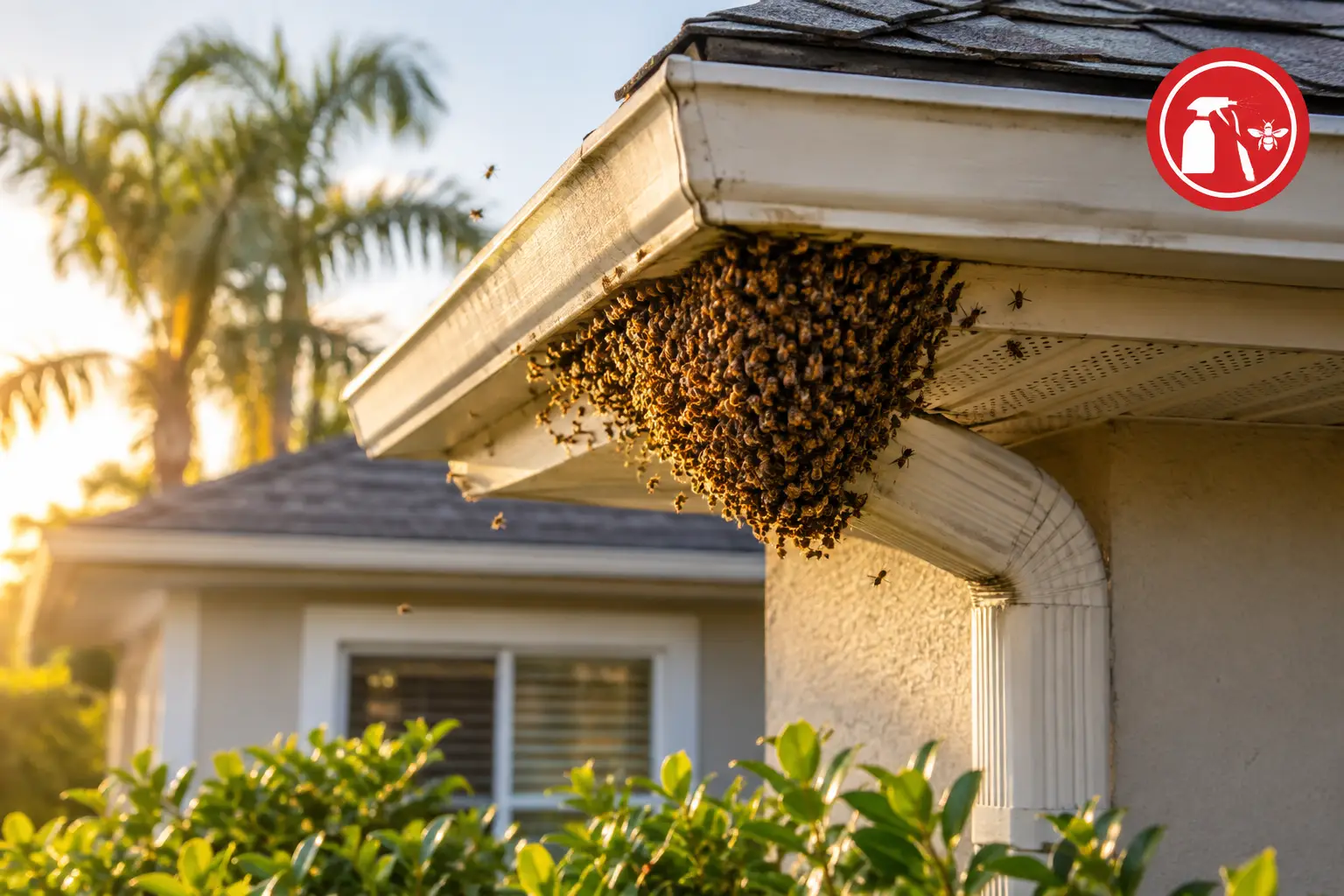

A bee colony in a wall is rarely a problem that begins the day you notice bees flying in and out. By then, the bees may have been using a small gap near a soffit, roofline, plumbing penetration, or utility box for weeks or months. Effective bee proofing addresses that entry point – but timing matters. Sealing an active colony inside a structure can trap bees, honey, brood, and moisture where they create a far more expensive problem.
For Southwest Florida homeowners, bee proofing should be the final stage of a thoughtful removal process: identify the colony, safely remove and relocate it, clean out the comb and honey, then close the access points that made the structure appealing in the first place. That approach protects your household and your property while giving a valuable pollinator colony a chance to continue living.
What Bee Proofing Actually Means
Bee proofing is the process of reducing the gaps, cavities, and exposed structural features that allow honey bees to establish a colony in or around a building. It is not the same as spraying insects around the exterior of a home. In fact, broad pesticide treatments can harm non-target pollinators without solving the underlying construction issue.
Honey bees do not need a large opening. A gap around 1/4 inch can be enough for workers to enter, inspect a protected void, and begin building comb. Once scout bees find a dry, sheltered cavity with a small, defensible entrance, a soffit, wall, chimney chase, roof void, or equipment enclosure can become a long-term nesting site.
The goal is not to make a property hostile to bees. It is to keep bees from settling inside places where their honey, wax, activity, and defensive behavior can affect people or damage a structure. A well-maintained home can coexist with pollinators outdoors while preventing colonies from moving indoors.
Never Seal a Suspected Active Colony
The most common bee-proofing mistake is closing a visible entrance before confirming that the colony has been removed. When bees are sealed inside, they often find another way out. That new route may lead into a living area, attic, garage, or adjacent wall cavity.
Even if the colony dies, the issue is not necessarily over. Stored honey can melt in Florida heat and leak through drywall or ceilings. Abandoned comb can attract wax moths, ants, roaches, rodents, and other pests. The scent of old wax and honey can also draw a new swarm back to the same location.
A professional live removal should include more than taking away the visible bees. The comb, brood, honey, and queen must be addressed, and the void should be inspected before repairs are completed. If bees are entering and exiting consistently from one area, treat it as an active colony until a qualified bee removal professional confirms otherwise.
Where Bees Commonly Enter Homes
A property inspection should focus on the transition points where separate building materials meet. These areas shift over time with heat, storms, settling, and repairs, leaving openings that are easy to miss from the ground.
Soffits, Fascia, and Rooflines
Soffits are one of the most frequent bee entry points because they offer shade, height, and access to enclosed attic or roof spaces. Look for loose panels, open corners, gaps behind fascia boards, damaged vent screens, and separations near gutters. Roof repairs should include careful edge sealing, especially where flashing meets siding or masonry.
Wall Penetrations and Utility Lines
Air-conditioning lines, plumbing pipes, electrical conduits, cable lines, and outdoor fixtures all create penetrations through exterior walls. The surrounding sealant can crack or pull away over time. These openings should be closed with durable, exterior-rated materials that account for expansion and contraction.
Avoid simply filling a large cavity with spray foam. Foam can be useful in limited situations, but it is not a substitute for a proper repair. It may deteriorate under ultraviolet exposure, leave hidden voids, or make future inspection more difficult. A solid backing material, appropriate flashing, and high-quality exterior sealant often provide a longer-lasting result.
Vents, Louvers, and Open Cavities
Attic vents, gable vents, roof vents, chimney chases, and decorative architectural openings can provide direct access to protected spaces. These areas need screening that permits ventilation but prevents bee entry. The screen must be securely fastened and suited to the specific opening. If it is too weak, loose, or corroded, it can become another entry point after the next storm season.
Sheds, Fences, and Outdoor Structures
Bee proofing is not only for the main house. Colonies can establish themselves in sheds, pergolas, pool cages, irrigation boxes, hollow fence posts, play structures, and commercial signage. These structures are often checked less frequently, which gives a small colony time to grow before anyone notices it.
A Practical Bee-Proofing Process
Start with observation, not repair. Watch from a safe distance during warm daylight hours and note where bees are entering. Honey bees tend to fly with purpose in a steady path to one opening. A swarm, on the other hand, is usually a temporary cluster of bees gathered around a queen while scouts search for a permanent home.
Next, determine whether you are dealing with honey bees, wasps, hornets, or another insect. The right response differs by species. Honey bee colonies are valuable livestock and can often be removed alive and relocated. In Southwest Florida, where colonies can be defensive and conditions can change quickly, homeowners should not attempt structural removal themselves.
After live removal, the opening and surrounding cavity should be cleaned and repaired promptly. The repair should be inspected from both the exterior and, when possible, the interior side. A patch that looks complete from outside may still leave a path through a wall void or roof assembly.
For buildings with a previous bee issue, schedule a seasonal inspection before swarm activity increases. Check roof edges, vents, service penetrations, eaves, and any location that has been repaired after storms. Property managers and HOA boards should also include bee entry points in routine exterior maintenance, particularly around shared roofs, clubhouse structures, mail stations, and pool areas.
Materials Matter, but Fit Matters More
There is no single bee-proofing material that works everywhere. Caulk works well for narrow, stable cracks. Metal flashing is better for larger construction joints. Hardware cloth or corrosion-resistant screening may be appropriate for vents and larger openings. Wood repairs, fascia replacement, and soffit restoration may be necessary when water damage has created broad access points.
The key is using the right material for the location and ensuring the repair does not create a new moisture or ventilation issue. For example, blocking an attic vent completely may discourage bees, but it can also restrict airflow and contribute to heat or moisture problems. Bee proofing should support the building’s intended function, not work against it.
When to Call for Help
Call for professional assistance when bees are entering a wall, roof, chimney, soffit, or other enclosed structural area; when activity is near doors, pools, outdoor seating, children, or pets; or when the colony appears unusually defensive. Do not climb ladders, block entrances, use fire, or spray unknown products into an active colony.
A swarm resting in a tree or on a fence may look alarming, but it is often less urgent than a colony established inside a structure. Still, it should be assessed promptly, especially in public-facing areas. The safest solution depends on location, colony behavior, building construction, and whether the bees have already built comb.
Beeswild serves Cape Coral and the broader Southwest Florida area with live bee removal and relocation, followed by guidance on preventing the same access point from becoming a future home. The goal is to solve the structural risk without treating healthy bees as disposable.
A home does not need to be sealed shut to be bee-proofed. It needs careful maintenance, the right repairs in the right places, and patience enough to remove an active colony before closing the door behind it.

No responses yet