
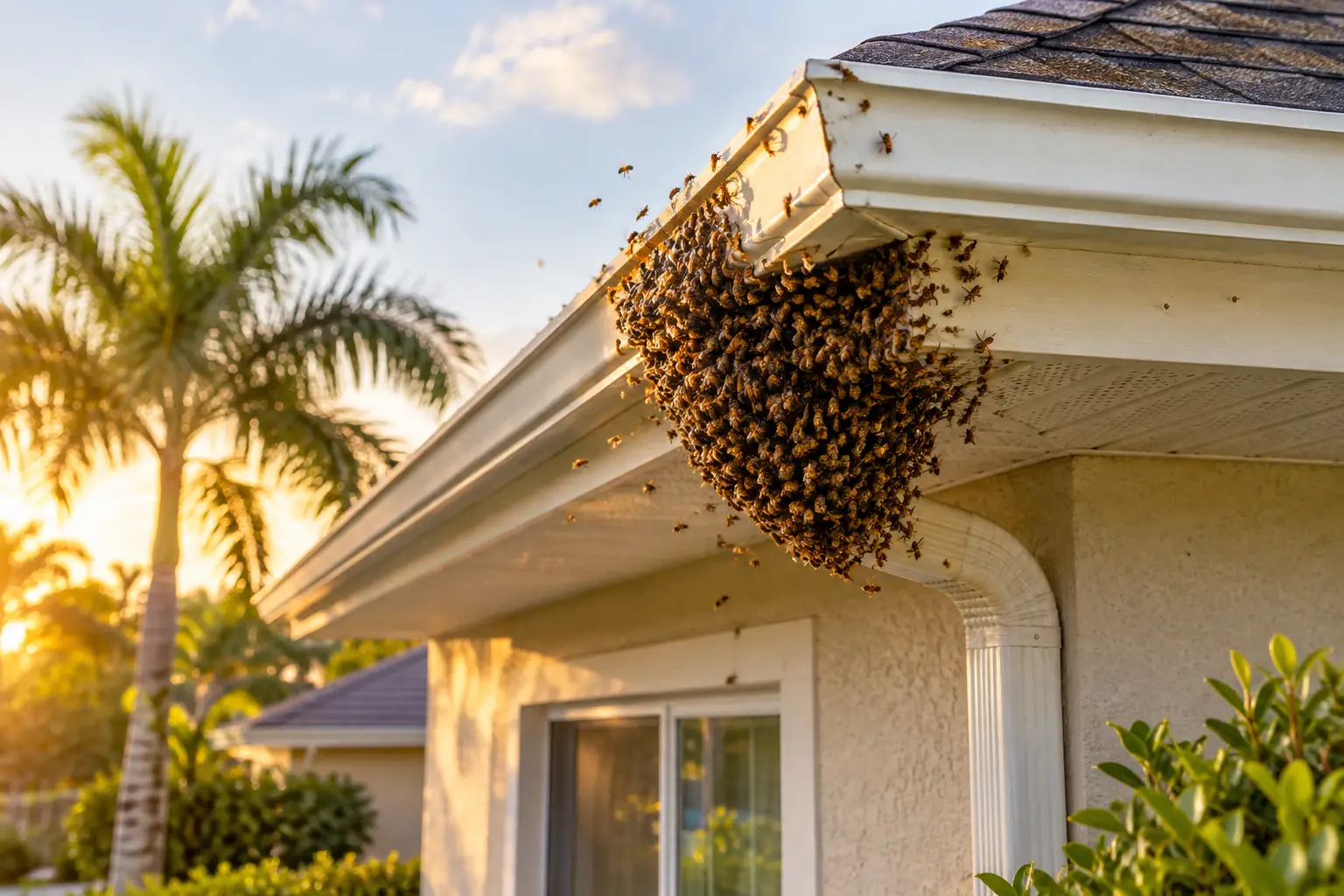

A clubhouse colony is not a routine landscaping issue. It may be above a busy entrance, behind a pool-area wall, or inside a soffit near children, guests, and maintenance staff. This HOA clubhouse bee rescue example shows why a live structural removal must address both immediate safety and the colony’s nest inside the building.
When an HOA responds by simply spraying visible bees, the problem can become more expensive. Bees may die inside the structure, but honey, wax, brood, and scent remain. That material can melt into walls or ceilings, attract ants and roaches, draw new swarms, and create a repeat issue long after the first call.
The HOA clubhouse bee rescue example
Consider a Southwest Florida clubhouse where staff noticed steady bee traffic entering a small gap along a second-story fascia board. The activity increased during morning pool hours. Residents were concerned, and the board had a reasonable liability question: How can the association reduce risk without causing damage to a shared building?
A professional live-removal response begins with an on-site assessment, not a guess from across the parking lot. The technician watches the flight path, identifies the entry point, listens for colony activity within the structure, and determines whether the bees are a temporary swarm or an established colony.
That distinction changes the plan. A swarm is a cluster of bees looking for a home and may be collected without opening a building. A colony that has occupied a wall, roofline, chimney, or soffit has already built comb and stored food. Removing only the adult bees is not a complete solution when comb remains behind.
In this example, the bees had built a substantial colony behind the fascia. The safest option was a scheduled structural cutout during a lower-traffic period, with the pool deck and immediate work zone temporarily closed. The association notified residents in advance, posted clear access guidance, and gave the contractor a point of contact for building access.
What a complete clubhouse removal looks like
The crew first establishes a controlled work area. Residents, guests, pets, and nonessential staff should remain away from the entrance or exterior section being serviced. If the colony appears unusually defensive, the work plan may require a larger safety perimeter. No one should attempt to test a colony’s temperament by spraying, knocking on the wall, or blocking its entrance.
Next, the removal team accesses the colony as precisely as possible. This may mean carefully opening a section of fascia, soffit, siding, or interior drywall. The goal is not to make the smallest opening at any cost. The goal is to reach the entire nest with the least practical disruption, then restore the area correctly.
The bees are collected alive and placed in a transport hive with their queen, workers, brood, and usable comb. Keeping the colony together gives it the best chance of surviving relocation. For a company that operates apiaries, this work does not end at pickup. The rescued colony can be rehomed in a managed farm environment rather than destroyed as a nuisance.
The most critical phase follows bee collection: removing the comb, honey stores, wax residue, and debris. This is the step that separates a true structural bee removal from a short-term treatment. If honey-filled comb stays inside the clubhouse wall, Florida heat can soften wax and cause honey to leak. Even when no leak occurs, the odor can attract other insects and encourage future bee activity.
Once the cavity is clean, the crew inspects for gaps and recommends or completes exclusion work. Openings around fascia returns, utility penetrations, vents, and roof transitions should be sealed only after all bees and comb have been removed. Sealing an active colony inside can force bees into other parts of the building or leave the same sanitation problem trapped in the wall.
Why poison is a poor fit for shared buildings
Chemical treatment can appear cheaper because it seems fast. For an exposed temporary swarm, circumstances vary, and a qualified professional should decide the appropriate response. But for an established clubhouse colony inside a structure, poisoning bees often solves only the visible portion of the problem.
Dead bees do not remove honey. They do not remove wax, larvae, or the colony’s scent trail. They also do not repair the entry gap that allowed the colony to settle in the first place. An HOA may then pay for pest treatment, cleanup, repairs, and a second bee response when another swarm finds the same cavity.
There is also a resident-relations issue. Many homeowners want a practical solution that protects people while respecting pollinators. Live removal is not about treating bee safety casually. It is about using a method that controls the hazard at the clubhouse and preserves a valuable colony when conditions allow.
What HOA boards should document before approving work
The board or property manager should request a clear scope of work. It should state whether the bees are in a structural void, what building materials may need to be opened, whether comb and honey will be removed, and who is responsible for sealing the access point afterward.
It also helps to confirm the safety plan for residents and staff, the timing of the work, insurance requirements, and any restoration limitations. A small opening in an accessible soffit is different from a colony behind decorative masonry or a steep roof section. The best method depends on the colony’s location, the building construction, and the level of public exposure.
For associations, a same-location warranty can also matter. A three-month same-place-removal warranty, for example, provides reassurance that the removal addresses the original colony location rather than treating the job as finished when bee activity first slows down. Boards should read the terms carefully, particularly when a building has multiple unsealed gaps or separate colonies.
Communication keeps a bee rescue from becoming a resident panic event
Residents do not need a lengthy technical memo, but they do need accurate information. A short notice can explain that professionals will perform a live bee removal, identify the temporary restricted area, and ask residents not to approach or interfere with the work.
Avoid promising that the property will never see another bee. Clubhouse landscaping, flowering plants, water sources, and warm building cavities can all attract pollinators. The realistic promise is that the known colony will be removed, nesting material will be addressed, and the identified entry point will be secured.
Maintenance teams should also know what to report in the future: repeated bee flight to one crack or vent, staining near a wall or ceiling, honey odor, insect activity around a former nest location, or bees appearing indoors. Early reporting can turn a large structural removal into a simpler intervention.
A practical standard for clubhouse bee decisions
An HOA has two jobs when bees establish themselves at a clubhouse: protect the people using the property and protect the building from avoidable damage. Those goals work together when the response includes safe access control, full colony and comb removal, cleanup, and exclusion.
For Cape Coral and Southwest Florida associations, where warm weather supports long bee activity periods, waiting rarely makes a structural colony easier to manage. A prompt, humane assessment gives the board a clearer choice, protects the clubhouse’s shared spaces, and gives a healthy colony the opportunity to continue its work somewhere it belongs.

No responses yet