
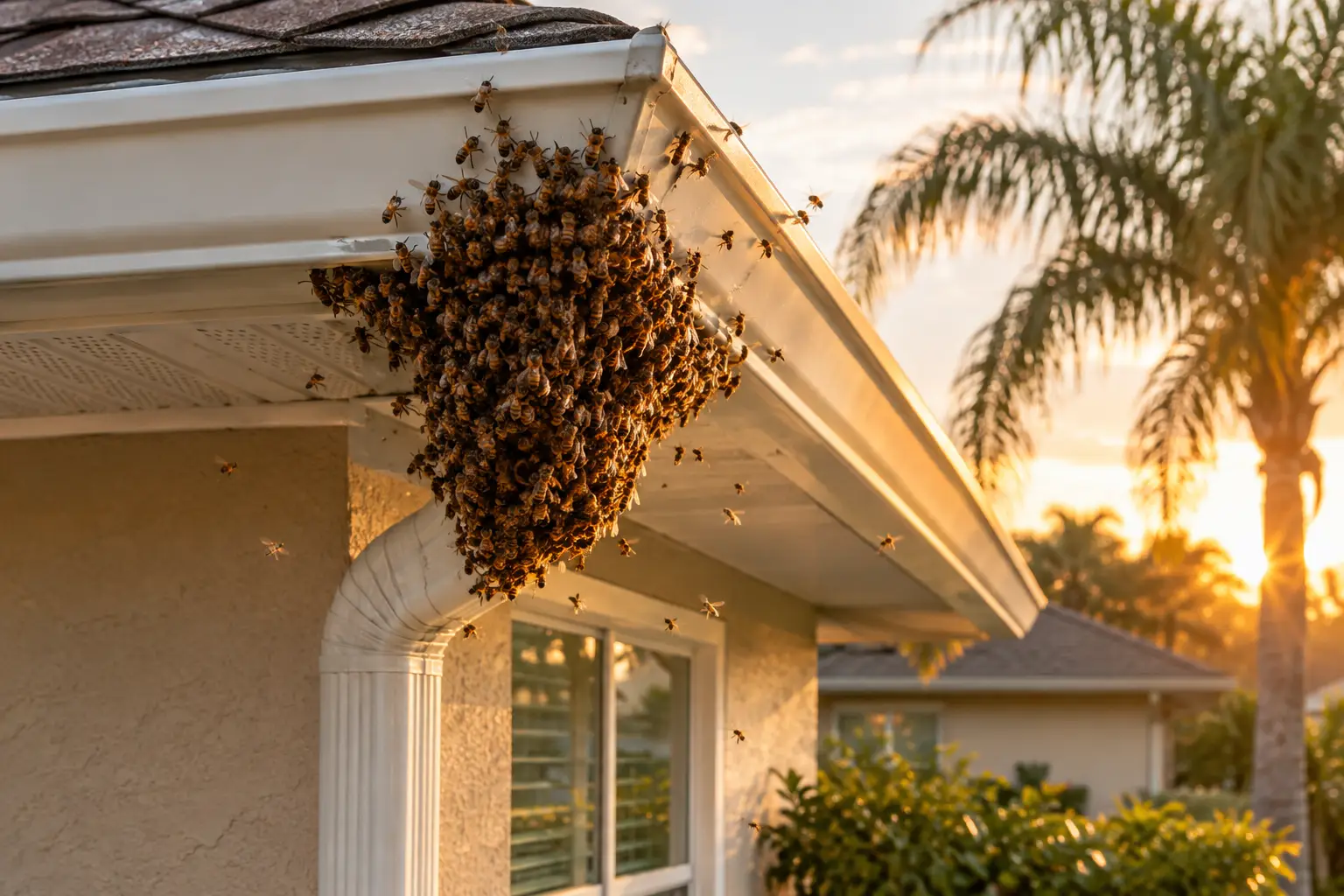

A small line of bees disappearing beneath a soffit or through a gap near a utility pipe is rarely random. The reasons colonies enter walls usually come down to shelter, space, and a location that feels secure enough to support thousands of bees. For a homeowner, that activity can be unsettling. For the colony, however, the wall cavity may look remarkably similar to a protected tree hollow.
A colony in a wall needs prompt, thoughtful attention. Honey bees are valuable pollinators, but their comb, honey, and population can create structural and safety concerns when they establish inside a building. The goal is not simply to make the bees disappear. It is to remove the colony, comb, honey, and access points in a way that protects people, prevents repeat activity, and gives the bees a chance to continue living elsewhere.
Why Honey Bee Colonies Choose Wall Cavities
Honey bees naturally seek enclosed spaces that protect them from rain, predators, wind, and temperature swings. In the wild, they often occupy hollow trees, rock openings, or other dry cavities. A home can offer the same basic features, sometimes with better protection than a natural nest site.
Walls, soffits, attics, roof voids, chimney chases, and block cavities are especially attractive because they are dark, dry, and difficult for most animals to enter. Once scout bees find an opening leading to a suitable void, they communicate the location to a swarm. If the site meets the colony’s needs, the swarm can move in quickly.
A Tiny Opening Can Lead to a Large Space
Bees do not need a large hole to enter a structure. Gaps around plumbing lines, loose fascia boards, attic vents, roof intersections, siding seams, and openings in soffits can all provide access. A crack that appears insignificant from the ground may open into a sizeable protected cavity behind the exterior surface.
This is one reason a homeowner may see bees near a wall but have trouble locating the nest. The entrance can be several feet away from the comb itself. Bees may travel through framing voids or around insulation before building their comb in the most favorable section of the cavity.
Florida Weather Makes Protected Spaces Valuable
Southwest Florida’s long warm season allows honey bee activity for much of the year. That does not mean bees are unaffected by weather. Heavy rain, intense heat, tropical storms, and sudden cold periods still make dry, insulated spaces attractive.
A wall can buffer the colony from direct sun and wind while keeping comb relatively dry. Shaded sides of a home, covered entries, and protected rooflines can be especially appealing. In some cases, an existing cavity that has housed bees before may retain traces of wax or scent that make it more attractive to future scout bees.
The Main Reasons Colonies Enter Walls
The immediate trigger is usually a swarm searching for a permanent home. A swarm is a reproductive event: part of an established colony leaves with a queen to form a new colony elsewhere. During the search, scout bees inspect potential nesting sites. They are not targeting your home because it is dirty or poorly maintained. They are responding to a sheltered cavity they can access.
Several conditions make one structure more appealing than another.
First, the cavity offers enough room for comb growth. A small void may house a young colony, while a larger wall or soffit cavity can support substantial comb over time. Second, the entrance is defensible. Bees prefer an opening they can guard without exposing the entire nest. Third, the interior is dry and stable. Water intrusion, excessive vibration, or persistent disturbance can make a location less desirable, while a quiet protected void encourages the colony to stay.
Nearby food and water also matter. Flowering landscapes, native plants, gardens, canals, pools, dripping irrigation, and other water sources can help support a colony. Still, abundant flowers alone do not cause bees to enter walls. Suitable cavities are often the limiting factor. A neighborhood with plenty of forage and many structures with unsealed gaps gives scout bees more options.
A Swarm Outside Is Different From an Established Wall Colony
A swarm may gather temporarily on a branch, fence, vehicle, or exterior wall while scouts search for a permanent nesting site. It often looks like a dense, quiet cluster of bees. A swarm can move on within hours or days, but it should be evaluated carefully rather than sprayed or disturbed.
An established wall colony behaves differently. You may see a consistent stream of bees entering and leaving the same opening, often from morning through late afternoon. Activity may increase on warm days. Inside, the colony begins producing wax comb, storing honey and pollen, and raising brood.
The distinction matters because removing visible bees at the entrance does not remove an established colony. If comb and honey remain in the wall, the building can still face odors, staining, melting honey, ants, wax moths, beetles, or rodents. Surviving bees or a new swarm may also return to the same cavity if the opening is left unsealed.
Why Spraying the Entrance Usually Creates Bigger Problems
It is understandable to want an immediate solution when bees are entering a wall near children, pets, customers, or outdoor work areas. But spraying an entrance rarely addresses the structure of the problem. It may agitate the colony, cause bees to find another exit into the home, or leave dead bees, comb, brood, and honey inside the wall.
Honey does not disappear when bees are killed. In Florida heat, it can soften and leak through drywall, ceilings, or exterior finishes. The remaining material can attract insects and other pests long after the original bee activity stops. A chemical treatment can also eliminate an opportunity to relocate a healthy colony.
Humane live removal is more involved because it addresses the colony as a whole. A trained bee removal specialist locates the comb, safely opens only the necessary area, removes bees and comb, collects honey residue, and then closes and seals the access point. The exact method depends on the construction, colony location, height, and condition of the building.
What Homeowners Should Do When Bees Enter a Wall
Avoid blocking the entrance immediately. Sealing bees inside can force them to seek an indoor exit, and it can trap honey and comb where they are difficult to remove. Do not use foam, caulk, insecticide, or water on an active entrance before the colony has been assessed.
Keep people and pets away from the flight path, especially near doors, patios, play areas, and pool decks. If bees are behaving defensively, stay indoors when possible and avoid lawn equipment, ladders, or vibrations near the entry point. Sudden disturbance can increase stinging risk.
Observe from a safe distance. Note where bees enter, when activity is strongest, whether bees are getting indoors, and whether you see a temporary exterior cluster. A photo or short video taken without approaching the entrance can help a removal professional assess the situation.
For a colony established in a structural cavity, request a live bee removal evaluation rather than a general pest treatment. In Southwest Florida, Beeswild removes and relocates viable colonies to safe farm areas, while addressing the comb and entry conditions that make repeat occupation more likely.
Preventing Another Colony From Moving In
Prevention works best after complete removal. Once the bees, comb, and honey residues have been taken out, all access points should be sealed with appropriate building materials. Caulk alone may be suitable for small cracks, but damaged soffits, loose trim, failing screens, or open utility penetrations may need a more durable repair.
Walk the exterior of the home periodically, especially before the spring swarm season and after storms. Look closely at rooflines, vents, fascia, siding transitions, block walls, and places where pipes or cables enter the structure. Repairing a gap early is far easier than opening a wall after a colony has built months of comb inside it.
A wall colony is not a sign of homeowner failure. It is a predictable result of honey bees finding a protected cavity that meets their natural needs. Addressing it promptly and completely protects the building while giving a valuable pollinator colony a safer place to thrive.

No responses yet