
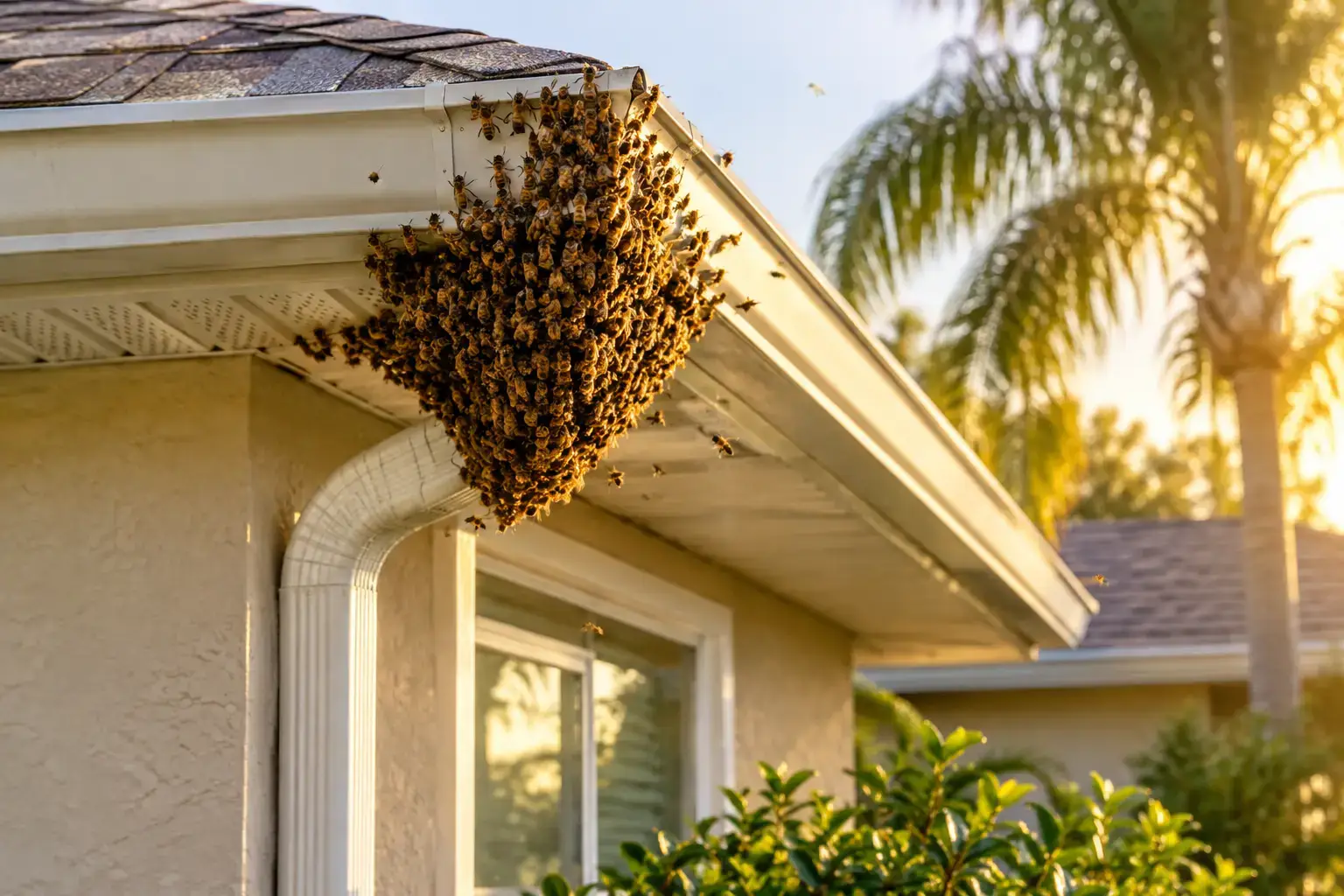

A few bees disappearing into a soffit can become a colony of thousands behind a wall. The visible entrance may be no wider than a pencil, but the cavity behind it can hold comb, honey, brood, and a population that continues growing. Bee exclusion is the work of preventing bees from entering or re-entering that space after the colony has been safely removed.
For homeowners and property managers, exclusion is not an optional finishing touch. It is the step that protects the structure from a repeat colony, leaked honey, pests attracted to abandoned comb, and another urgent removal call months later. Done at the wrong time, however, sealing an opening can make a manageable problem much worse.
What Bee Exclusion Actually Means
Bee exclusion is the physical closure of the gaps bees use to access a building. Common entry points include rooflines, wall voids, eaves, vents, chimneys, utility penetrations, hollow columns, sheds, and gaps around siding. In Southwest Florida, heat, storms, aging caulk, and shifting building materials can create small openings that are ideal for a scouting swarm.
The key distinction is timing. Exclusion should happen after a live colony and its comb have been removed from the structure, not while bees, honey, and developing brood remain inside. A professional removal addresses the source of the activity. Exclusion then closes the route that allowed it.
This is why simply spraying bees at an entrance or covering the hole with foam is rarely a real solution. It may stop bees from using one opening, but it does not remove comb, honey, or bees already inside the void. Surviving bees may find another path into the structure. Honey can melt and stain drywall. Wax moths, ants, roaches, rodents, and other pests may be drawn to the remaining material.
Why Sealing an Active Colony Can Backfire
A colony does not disappear because its exterior entrance has been blocked. Worker bees returning from foraging may gather outside, search for alternate access, or enter through another construction gap. Bees trapped indoors can move toward light and emerge through interior fixtures, vents, or wall openings.
The bigger concern is what remains behind the wall. Honey stores and brood comb are organic material. Florida heat can soften wax, causing honey to seep through ceilings, insulation, or wall finishes. Even if the colony dies, the structure may still require opening and cleanup later.
There is also a safety issue. In areas where defensive or Africanized honey bees may occur, disturbing or improperly sealing a colony can provoke defensive behavior. Homeowners should keep children, pets, and bystanders away from the flight path and avoid knocking on the wall, spraying water, or attempting to smoke the bees out. A calm approach and a proper inspection are safer than a rushed repair.
The Right Order: Removal, Repair, and Monitoring
Effective bee exclusion follows a sequence because each part depends on the one before it. First, the technician identifies where bees are entering and estimates where the colony is established. This can involve observing flight patterns, inspecting exterior gaps, and evaluating the construction of the wall, roof, or feature involved.
Next comes live removal whenever conditions allow. The goal is to remove the bees along with the comb, honey, and brood rather than treating the colony as disposable. Relocation protects a valuable pollinator while also solving the property problem at its source. A colony removed from a wall can be transferred to an appropriate apiary setting instead of left to perish inside a building.
After removal, the cavity should be cleaned of accessible comb and residue. The opening can then be repaired with materials suited to the surface and location. Finally, the repair should be observed for signs of returning bees. A few bees may revisit the old location briefly because they remember it as home. That is different from sustained traffic entering a new or reopened gap.
Where Bees Commonly Get Back In
Honey bees do not need a large opening. A narrow crack can lead to a generous protected cavity, especially in soffits, fascia boards, roof intersections, or behind siding. They favor spaces that are dry, sheltered from weather, and difficult for predators to reach.
On homes, watch for recurring activity around roof edges, attic vents, exterior light fixtures, water-meter boxes, decorative shutters, chimneys, and gaps where pipes or electrical conduits enter the wall. On commercial buildings, canopy roofs, loading areas, signage, stucco cracks, masonry joints, and equipment enclosures can create the same opportunity.
A property manager should also consider adjoining units and shared rooflines. Sealing one visible entrance may not be enough if a colony can reach the same wall void from another side of the building. The repair plan needs to account for the entire accessible pathway, not just the spot where bees were first noticed.
Materials Matter, but Inspection Matters More
Caulk, flashing, screening, mortar repair, wood replacement, and appropriate mesh can all be useful exclusion materials. The best choice depends on the building material, exposure to weather, ventilation needs, and the size of the gap. A roofline opening may need flashing and durable fastening, while a small siding gap may call for a carefully finished sealant repair.
Not every opening should be sealed indiscriminately. Attic and appliance vents may be necessary for ventilation, but they can often be protected with correctly sized, securely installed screening. Blocking a required vent can create moisture, heat, or equipment problems. Good exclusion protects against bee entry without compromising how the structure is supposed to function.
Temporary materials deserve caution. Expanding foam may look like a quick answer, but it can deteriorate under sun exposure, be chewed through by wildlife, and conceal an unresolved cavity problem. It is not a substitute for removing the colony and making a durable repair.
When a One-Way Exit May Be Appropriate
Some exclusion work uses a one-way device that allows foraging bees to leave but prevents them from returning. This approach can have a place in limited situations, particularly when immediate structural access is not possible. But it has trade-offs.
A one-way exit does not remove the honeycomb, stored honey, or brood left behind. The queen may remain in the cavity, and the remaining colony may not survive. It can also leave the property vulnerable to the same cleanup and pest issues that follow a colony death in the wall. For a healthy established colony inside a structure, live cut-out removal followed by repair is often the more complete and humane solution.
The right method depends on the colony location, building design, safety conditions, and access. A professional should explain what can be removed, what repairs are needed, and what risks remain if comb cannot be accessed.
How Homeowners Can Reduce Future Bee Activity
Between professional inspections, property owners can make their buildings less inviting to scout bees. The most useful habit is to address small exterior gaps before they become nesting sites. After major storms, roof work, or exterior renovations, inspect eaves, vents, fascia, screens, and penetrations for damage.
Do not confuse a temporary swarm with an established colony. A swarm often clusters visibly on a branch, fence, or exterior surface while it searches for a permanent home. A colony has regular traffic moving in and out of a fixed opening, usually over multiple days or weeks. Both deserve a calm response, but an established colony calls for inspection of the structure and a plan for removal plus exclusion.
For commercial sites and HOAs, documenting recurring bee locations can be especially helpful. Patterns around the same roof corner, mailbox kiosk, or clubhouse vent may reveal a maintenance issue that needs correction rather than repeated emergency response.
A Repair Is Only Complete When the Bees Cannot Return
The value of bee exclusion is not measured by how quickly an entrance disappears from view. It is measured by whether the colony was handled responsibly, the attractants were removed, and the building is protected from the next swarm looking for shelter.
If bees are entering a wall, roof, or soffit, treat the activity as both a living-colony issue and a building-maintenance issue. A careful removal and a durable repair give the bees a chance to continue elsewhere while giving your property the protection it needs.

No responses yet