
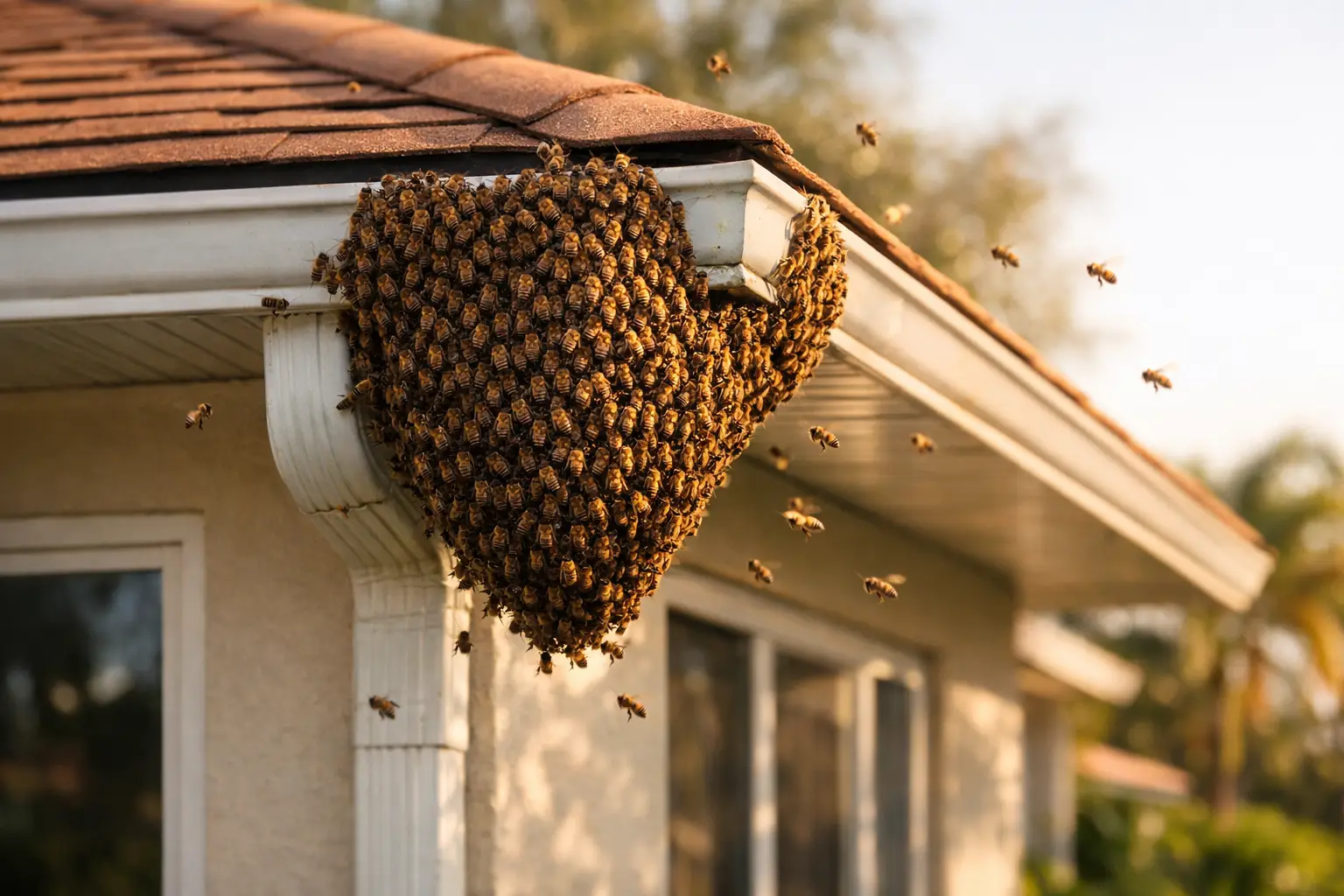

You hear buzzing in a wall, spot a steady line of bees near a soffit, and one question takes over fast: can bees damage house structure? The short answer is yes, but usually not because bees are chewing through framing like termites. The real damage comes from what a colony builds and leaves behind – comb, honey, moisture, heat, staining, and a mess that keeps getting worse if the colony is ignored or killed in place.
That distinction matters. Bees are not wood-destroying insects in the way carpenter ants or termites are. Honey bees do not eat wood. They look for existing voids in walls, rooflines, chimneys, and block structures, then turn that sheltered space into a working hive. Once established, the colony can become a structural problem because the building was never designed to hold many pounds of wax and honey inside hidden cavities.
How bees can damage house structure over time
Most structural issues begin with access, not destruction. Bees take advantage of gaps around soffits, fascia boards, roof returns, utility penetrations, or small openings in masonry. After they move in, they start building comb. In a small colony that may not amount to much. In a mature colony, especially in warm climates like Southwest Florida, the volume can become significant.
Honey and brood comb are heavy. On hot days, unsupported comb can sag or collapse inside a wall or ceiling cavity. When that happens, honey can seep into insulation, drywall, stucco backing, or trim. You may first notice it as a stain, a sweet smell, or sticky residue. In some cases, honey leaks through light fixtures, vents, or interior paint.
The second problem is moisture. Honey is hygroscopic, which means it attracts moisture from the air. Combined with the heat generated by a live colony, that can create damp conditions in enclosed building spaces. Wood trim, sheathing, and drywall do not respond well to repeated moisture exposure. Rot does not happen overnight, but prolonged saturation can weaken materials and create a much more expensive repair than the original removal.
There is also a pest chain reaction. Old comb and stored honey attract ants, roaches, wax moths, hive beetles, rodents, and sometimes other bee swarms looking for a ready-made home. So even after the original colony dies, the cavity can remain a problem area unless the comb is removed and the entry points are sealed.
What bees usually damage – and what they usually do not
Bees rarely damage core framing by actively boring through it. If your concern is whether honey bees are eating studs, joists, or rafters, that is generally not what happens. The more common damage involves finishes and adjacent materials: drywall, insulation, soffits, fascia, exterior trim, and ceiling surfaces below the nest.
It also depends on where the colony is located. Bees in a hollow block wall may cause staining and recurring infestations without causing the same kind of saturation you would see in a framed interior wall. Bees in a roofline or attic can become more serious because heat accelerates comb softening and honey movement. Colonies in chimney chases, porch columns, or decorative architectural voids can create hidden damage that stays unnoticed until repairs open the area.
If the colony has been there for years, the risk goes up. A fresh swarm hanging on a tree branch is not a structural issue. A long-established colony inside a wall almost always is.
Signs bees may already be affecting your home
Sometimes the bees are obvious. Sometimes the house tells the story first. A faint brown stain on a ceiling, a sticky patch on interior paint, or a fermenting odor near a wall can point to a hidden colony. You might hear buzzing that gets louder in the afternoon when temperatures rise. Exterior traffic in and out of one small opening is another strong sign.
If you see dead bees indoors around windows, that can mean a colony is behind the wall and some workers are drifting into the living space. In commercial buildings, tenants may report repeated bee activity in the same area year after year. That often means the original comb was never fully removed, and scouts keep finding the cavity again.
Aggression is a separate issue from structural damage, but it matters. A defensive colony near an entryway, playground, meter bank, or pool area creates a safety problem at the same time it creates a building problem. Waiting rarely makes that easier.
Why killing bees in the wall often makes the damage worse
This is the part many property owners do not hear soon enough. If a colony inside a structure is poisoned and left in place, the comb, honey, pollen, and dead bees remain inside the cavity. The workforce disappears, but the materials do not. In fact, once the bees are gone, there is no colony managing temperature, cleaning the hive, or defending it from scavengers.
That is when honey can melt, ferment, and leak. Ants and roaches move in. Wax moths break down the comb. The smell gets stronger. Another swarm may later move into the same void because the scent of old comb is highly attractive to bees.
So if you are asking, can bees damage house structure, the risk is not only the live colony. Improper treatment can turn a manageable removal into a longer cleanup and repair job.
Can bees damage house structure in Florida homes more quickly?
Often, yes. Heat speeds things up. In Florida, rooflines, block walls, and soffits can get extremely hot, and that makes heavy honeycomb less stable. The longer a colony remains in place, the more likely it is that wax softens and honey migrates into surrounding materials.
Florida homes also have plenty of attractive entry points for bees – tile roofs, eaves, louvered vents, utility gaps, and decorative cavities. Add a long warm season, and colonies can grow fast. That does not mean every bee issue turns into major damage. It means delays are more expensive here than many homeowners expect.
What proper structural bee removal should include
A real structural removal is more than taking away visible bees. The colony has to be located accurately, accessed carefully, removed completely, and followed by cleanup and exclusion. If comb is left behind, the job is incomplete.
That process usually includes opening the affected area, removing live bees and comb, cleaning honey residue, and sealing the original access points after the colony is out. Depending on the structure, repairs may involve drywall, stucco, trim, soffit panels, or masonry closure work. On some jobs, a thermal camera or other inspection method helps confirm the exact nest location before anything is opened.
For homeowners, the practical question is not just how fast the bees can be removed. It is whether the service prevents repeat occupation. That is why same-place warranties matter. Beeswild, for example, offers a 3-month same-place-removal warranty, which addresses one of the most common concerns after structural work: the bees coming right back to the same cavity.
When the answer is less serious
Not every bee sighting means the house is in danger. A swarm clustered temporarily on a branch, fence, or parked vehicle is usually resting while scouts look for a permanent cavity. That is urgent from a safety standpoint, but it is not structural damage. Likewise, occasional bees visiting flowers near the home are just foraging.
The concern becomes structural when bees are entering the building envelope and staying there. Repeated traffic into one crack or hole is the red flag. If you are seeing that pattern, it is better to act early than wait for visible staining or interior leaks.
What a homeowner should do next
If bees are entering a wall, roofline, or soffit, do not seal the hole yourself while the colony is active. That can force bees into living spaces or push them to find another exit deeper in the structure. Avoid spraying them with store-bought products for the same reason. And do not assume the issue will resolve on its own once activity slows down.
Take photos from a safe distance, note where bees are entering, keep people and pets away from the area, and have the structure evaluated by a professional who handles live removal and full hive extraction. Humane relocation protects the bees, but just as important for the property owner, it protects the building from the hidden damage that starts when a colony is left inside.
A bee colony in a structure is one of those problems that looks small from the outside and grows expensive in the dark. The sooner you deal with it correctly, the better chance you have of saving both the bees and the building.

One response
[…] However, removing the bees correctly is only part of the work. A structural colony may also contain comb, honey, brood, and wax that must be addressed to prevent additional […]