
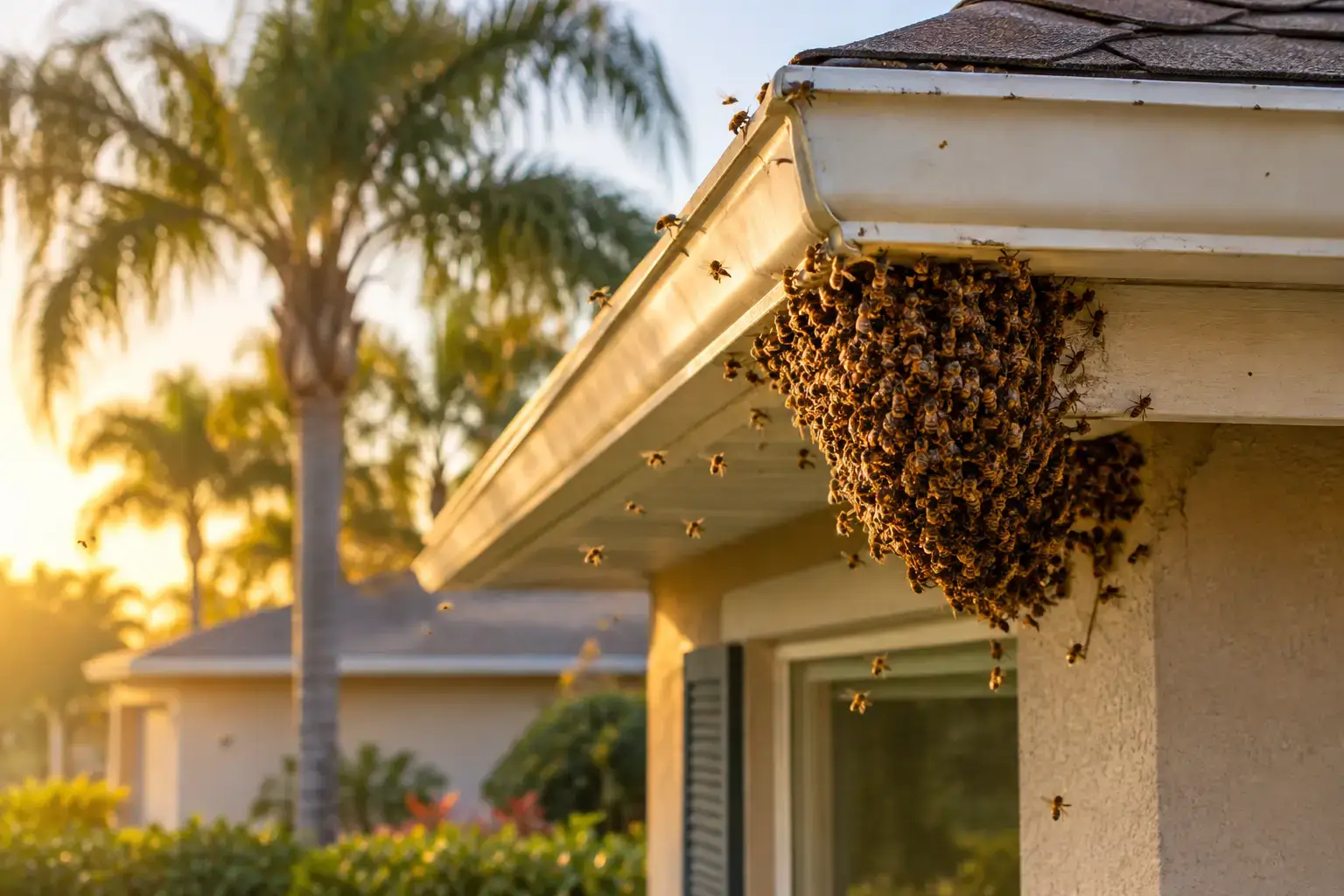

A bee removal cost review should answer more than, “What is the cheapest way to make these bees go away?” A colony living in a soffit, wall, roofline, or utility box can contain thousands of bees, pounds of honeycomb, stored honey, and developing brood. The price reflects not only getting bees out of sight, but preventing the sticky, expensive consequences of leaving their nest behind.
For Southwest Florida homeowners and property managers, the right removal is usually a live extraction that protects people, preserves a valuable pollinator colony when possible, and addresses the opening that allowed bees into the structure. The lowest quote can look appealing in an urgent moment. But if it does not include comb removal, cleanup, and exclusion, it may create a larger repair problem later.
Bee Removal Cost Review: What You Are Paying For
Most professional live bee removals fall into a broad range because no two colonies occupy a building in the same way. A newly arrived swarm hanging openly in a tree is often the simplest situation and may cost a few hundred dollars or less, depending on access and response time. An established colony inside a wall, soffit, chimney, roof, or second-story eave commonly costs several hundred to well over $1,000.
Large colonies, difficult roof access, extensive honeycomb, aggressive behavior, or significant restoration work can raise the price further. A legitimate estimate should be based on the colony’s location, size, accessibility, and the work required after the bees are removed. A photo may help with an initial assessment, but hidden colonies often need an on-site inspection for an accurate quote.
The job is not simply about collecting visible bees. A complete structural removal usually involves locating the colony, safely accessing the cavity, removing bees and comb, vacuuming or containing remaining bees as appropriate, cleaning residue, and sealing or recommending repair of the entry point. When a colony has been established for months or years, the comb and honey can be the most important part of the work.
Open swarm versus established colony
A swarm is a temporary cluster of bees looking for a new home. It may be on a branch, fence, mailbox, or exterior wall. Because it has not built substantial comb inside a structure, live collection is generally faster and less invasive.
An established colony has moved in, built comb, stored food, and raised brood. If it is inside a home or commercial building, the technician must reach the nest without causing unnecessary damage. That takes planning, specialized equipment, protective gear, and experience with construction details. The difference between these two situations is one of the biggest reasons removal prices vary.
The Cost Factors That Matter Most
Location and access. Bees behind a ground-level exterior panel are easier to reach than bees beneath a steep second-story roofline. Tall ladders, lifts, attic access, tight crawl spaces, tile roofs, and work near electrical equipment add time and safety requirements.
Colony size and age. A small, recent colony may have limited comb. A mature colony can fill a long wall cavity with multiple comb sheets. More colony material means more careful removal and more cleanup.
Building materials. Removing bees from siding, a soffit, stucco wall, chimney, or roof can require different access methods. The objective is to expose the colony precisely, rather than opening a much larger area than necessary. Repairs can be included, handled by another trade, or quoted separately. Homeowners should ask which arrangement applies before work begins.
Honey and comb removal. This is where a cheap treatment can become costly. Killing bees without removing their comb can leave honey, wax, pollen, and dead bees in the cavity. In Florida heat, honey can soften or leak through drywall and ceilings. The scent can also attract ants, cockroaches, wax moths, rodents, and a new swarm of bees.
Urgency and risk. A colony near a child’s play area, doorway, pool deck, restaurant patio, or shared HOA walkway may need rapid attention. Defensive bees near public areas create a different level of safety planning than a calm colony at the back of a large lot. Honey bees cannot be reliably identified as Africanized or European by sight, so behavior and safe work practices matter more than assumptions.
Why Live Removal Can Cost More Than Extermination
A pesticide application may appear less expensive because it can be quick. Yet it does not solve the underlying building problem when bees have nested inside a cavity. Dead bees and abandoned comb remain, and surviving bees may relocate deeper into the structure or find another opening.
Live removal involves more labor because the colony is carefully extracted and transported to an apiary or safe relocation area. That effort has real value: it gives the colony a chance to continue pollinating, avoids leaving a decaying nest behind, and reduces the odds of repeated activity in the same space when paired with proper exclusion.
This is not a promise that every bee can always be saved. Colonies may be compromised by disease, pesticide exposure, extreme aggression, inaccessible conditions, or other hazards. Still, a removal company focused on live relocation should explain its process honestly, including what it can do, what it cannot guarantee, and how it will protect the building after extraction.
What a Complete Estimate Should Say
A quote should be clear enough that a homeowner or property manager can compare services fairly. Ask whether the stated price includes removal of all accessible comb and honey, closure of the bee entry point, cleanup of the work area, and disposal or relocation of colony materials.
Also ask who handles any cosmetic repair. Accessing a colony may require removing a section of soffit, siding, trim, drywall, or roofing material. A careful provider can minimize disruption, but no one should promise zero impact when bees are buried behind finished construction. The better question is how the access area will be documented, protected, and restored or prepared for repair.
For commercial properties and HOAs, confirm the scope in writing. Work hours, pedestrian controls, tenant communication, lift access, roof restrictions, and proof of insurance can affect both scheduling and price. A professional plan protects residents, customers, employees, and the property itself.
Watch for incomplete “removal” offers
A low price is not automatically a bad price, especially for an accessible swarm. It becomes a concern when the provider cannot explain what happens to the comb, whether the entry point will be sealed, or what recourse exists if bees return to the same spot.
Be cautious with quotes that describe only spraying, dusting, or “getting rid of the bees” from a wall. Those methods may reduce visible activity temporarily while leaving the nest in place. Ask direct questions before authorizing work, particularly if you see bees entering and exiting a specific gap in the same location every day.
Does a Warranty Affect the Real Cost?
A same-place warranty can make a higher upfront price more practical because it addresses the risk of bees returning through an overlooked or reopened access point. Read the terms closely. A warranty may cover renewed bee activity at the original treated entry area, but it may not cover a completely different colony entering elsewhere on the property.
Beeswild provides a three-month same-place removal warranty, which is meaningful because successful removal is tied to both colony extraction and proper exclusion. It is still wise for property owners to maintain exterior gaps, damaged screens, loose soffits, and roof penetrations. Bees are skilled at finding openings that look insignificant from the ground.
How to Control the Cost Without Cutting Corners
If bees are outside and not posing an immediate danger, avoid spraying water, insecticide, foam, or household chemicals. Disturbing a colony can drive bees deeper into the structure and make a live removal more difficult. Keep children, pets, and visitors away from the area, and do not block the entrance with caulk before the colony has been removed.
Take clear photos from a safe distance and note where bees are entering, when activity is highest, and whether you see staining, dripping honey, or bees inside living spaces. This information helps a removal specialist plan the visit and can reduce guesswork during the estimate.
The fairest bee-removal price is not always the lowest number on the first phone call. It is the price for a solution that matches the colony’s location, protects people nearby, removes what will cause future damage, and gives the bees a responsible path out of your property.

No responses yet