
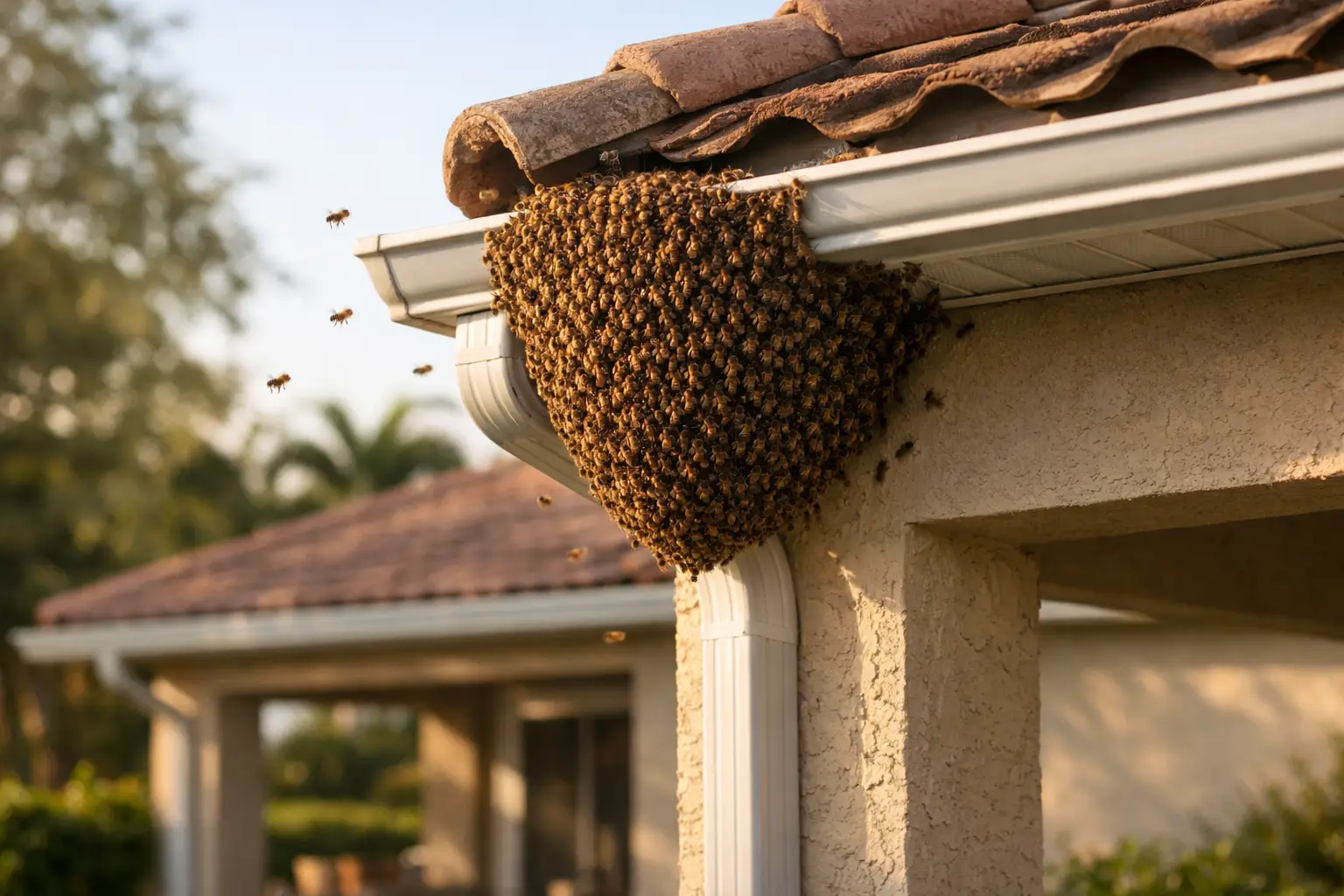

A softball-sized cluster of bees hanging from a tree branch can look dramatic. A steady stream of bees disappearing into your soffit or block wall is the one that should really get your attention. If you are wondering when should you call beekeeper support, the short answer is this: call as soon as you see bees settling, entering a structure, or acting unusually defensive near people or pets.
Timing matters because not every bee situation is the same. Some are temporary and low risk for a few hours. Others can turn into a structural repair problem, a sting hazard, or both. The goal is not just to get bees off your property. The goal is to protect people, prevent damage, and give a healthy colony the best chance of being safely relocated.
When should you call beekeeper help right away?
The most urgent calls usually fall into three categories: a swarm that has landed in a high-traffic area, a colony that has moved into a structure, or bees showing strong defensive behavior. Each one needs a different response, but all three are reasons to act quickly.
A swarm is often the least aggressive form of bee activity. Swarming bees are usually in transition, clustered around a queen while scout bees look for a permanent home. That said, low aggression does not mean no risk. If the swarm is on a front entry, near a school pickup area, over a pool gate, or close to outdoor dining or work spaces, it becomes a public safety issue. In those cases, calling a beekeeper early gives the best chance of a clean live removal before the bees choose your wall, roofline, or shed as their new address.
A colony inside a structure is more urgent than a visible swarm on a branch. If bees are repeatedly entering the same crack, vent, soffit, chimney gap, utility box, or wall cavity, they may already be building comb inside. Once comb, brood, pollen, and honey are established, the problem grows fast. The longer that colony remains, the larger the cut-out and repair job can become.
Defensive behavior is another reason not to wait. If bees are chasing people across the yard, stinging without obvious provocation, or guarding an area so aggressively that normal use of the property is affected, call immediately. In Southwest Florida, where warm weather allows colonies to stay active for long stretches, delaying a response can create more risk than many homeowners expect.
Signs the bees are not “just passing through”
A lot of property owners hesitate because they hope the bees will leave on their own. Sometimes that happens with a fresh swarm. Often it does not.
The first sign of a developing colony is traffic pattern. If you see a steady line of bees flying to and from one opening all day, especially during warm daylight hours, that usually means the colony is established or establishing. Scout bees wander. Resident bees commute.
The second sign is duration. A cluster that remains in place for more than a day or two deserves professional attention. The longer it sits, the greater the chance those bees are moving from temporary rest stop to permanent nesting site.
The third sign is location. Bees in a hollow tree may be less urgent than bees inside a house wall, roof eave, attic, mailbox pillar, or irrigation box. Structural spaces trap heat and moisture, hide growing comb, and make future removal more complicated.
You may also notice sound before sight. A faint buzzing behind drywall, especially near an exterior wall, can point to an internal colony. So can small stains on paint or ceiling material. Honey can soften drywall, attract ants and roaches, and in some cases seep through building materials. By the time honey is visible, the colony has usually been there a while.
When should you call beekeeper services for a swarm?
Call the same day if you see a swarm, even if it seems calm. A fresh swarm is often the easiest situation to relocate humanely because there may be little or no comb yet. Waiting sounds harmless, but it can close the window for a simple removal.
There is one nuance here. If the swarm is very high in a tree, far from people, and clearly not entering a structure, the response may depend on access, height, and whether it is likely to move on. A good beekeeper will tell you that not every swarm is a crisis. But if the bees are low enough to interact with children, pets, delivery drivers, customers, or residents, the safest move is to call.
Do not spray a swarm with water, insecticide, foam, or household chemicals. Poison does not solve the underlying risk if bees have started moving into a cavity, and it can create a worse cleanup problem later. Dead bees are not the only issue. Comb and honey left inside a structure can still melt, ferment, leak, and attract other pests.
Structural colonies are where delay gets expensive
This is the call many people make too late. Bees inside walls, soffits, chimneys, sheds, under roof tiles, or behind stucco are not a simple surface problem. They are building a living nest with comb attached to the structure.
Why does speed matter so much here? Because a colony is not static. It expands. More bees means more brood, more stored food, and more wax to remove. If someone kills the colony without removing the comb, the building is left with honey, brood, and wax inside the void. That can attract ants, beetles, roaches, rodents, and even a new swarm later. It can also create odor and staining.
This is why humane live removal is not just about saving bees. It is also a building sanitation issue. Proper structural removal addresses the bees and the nest materials, then helps reduce the chance of reinfestation. If your priority is protecting the structure, early action is usually the cheapest action.
Situations that call for immediate caution
Some bee activity should be treated as urgent from the start. If anyone in the home has a known sting allergy, there is less room for watch-and-wait. The same is true for daycare settings, schools, apartment walkways, dog runs, restaurant patios, or HOA common areas.
Call quickly if mowing, trimming, pressure washing, or even walking past a spot triggers a sudden cloud of angry bees. Vibrations and noise can provoke a colony that seemed quiet the day before. Utility workers, landscapers, roofers, and maintenance crews are often the first to discover hidden colonies this way.
Nighttime bee activity can also be a clue that the colony is inside lighting, electrical enclosures, or another warm sheltered void. Any situation involving ladders, roofs, multi-story access, or hard-to-reach voids is better handled professionally rather than as a DIY project.
What a beekeeper needs from you
A fast, accurate call helps the response. You do not need to identify the species with certainty, but details help. Note where the bees are entering, how long you have seen them, whether they are clustered or moving in and out, and whether anyone has been stung.
Photos and short videos are useful if you can take them from a safe distance. Do not tap walls, throw objects, smoke the area, or try to seal the entry hole while bees are active. Sealing an active colony inside a wall often forces bees deeper into the structure or into interior living spaces.
If the area is near a doorway or public path, keep people and pets back until help arrives. Calm distance is better than panic. In many cases, the safest first step is simply to mark off the area and stop disturbing it.
For property managers and HOA boards, quick reporting matters for liability as much as safety. A documented professional assessment is far better than guessing whether the bees will disappear. It also helps you choose the right remedy for the exact situation rather than treating every bee sighting as the same problem.
The gray area: when waiting might be reasonable
Not every bee sighting needs lights-and-sirens urgency. A few honey bees visiting flowers in the yard are normal and beneficial. Even a swarm can occasionally move on before the end of the day.
The trade-off is that homeowners are rarely calling about a few bees on flowers. They are calling because the pattern looks organized, persistent, or close to daily life. If you are debating whether it is serious enough, the best rule is simple: once bees choose a location instead of merely passing through, it is time to ask a beekeeper.
That does not commit you to an unnecessary service. It gets you an informed assessment before the problem becomes a wall repair, a stain on the ceiling, or an unsafe entryway. In a place like Southwest Florida, where bee activity can stay high for much of the year, a short delay can make a manageable issue much bigger.
At Beeswild, that early call often makes the difference between a straightforward rescue and a more invasive structural removal. If bees are gathering where people live, work, or walk, trust the pattern, not the hope that they will disappear on their own. A colony that is handled early is safer for your property and better for the bees that still have a job to do.

No responses yet