
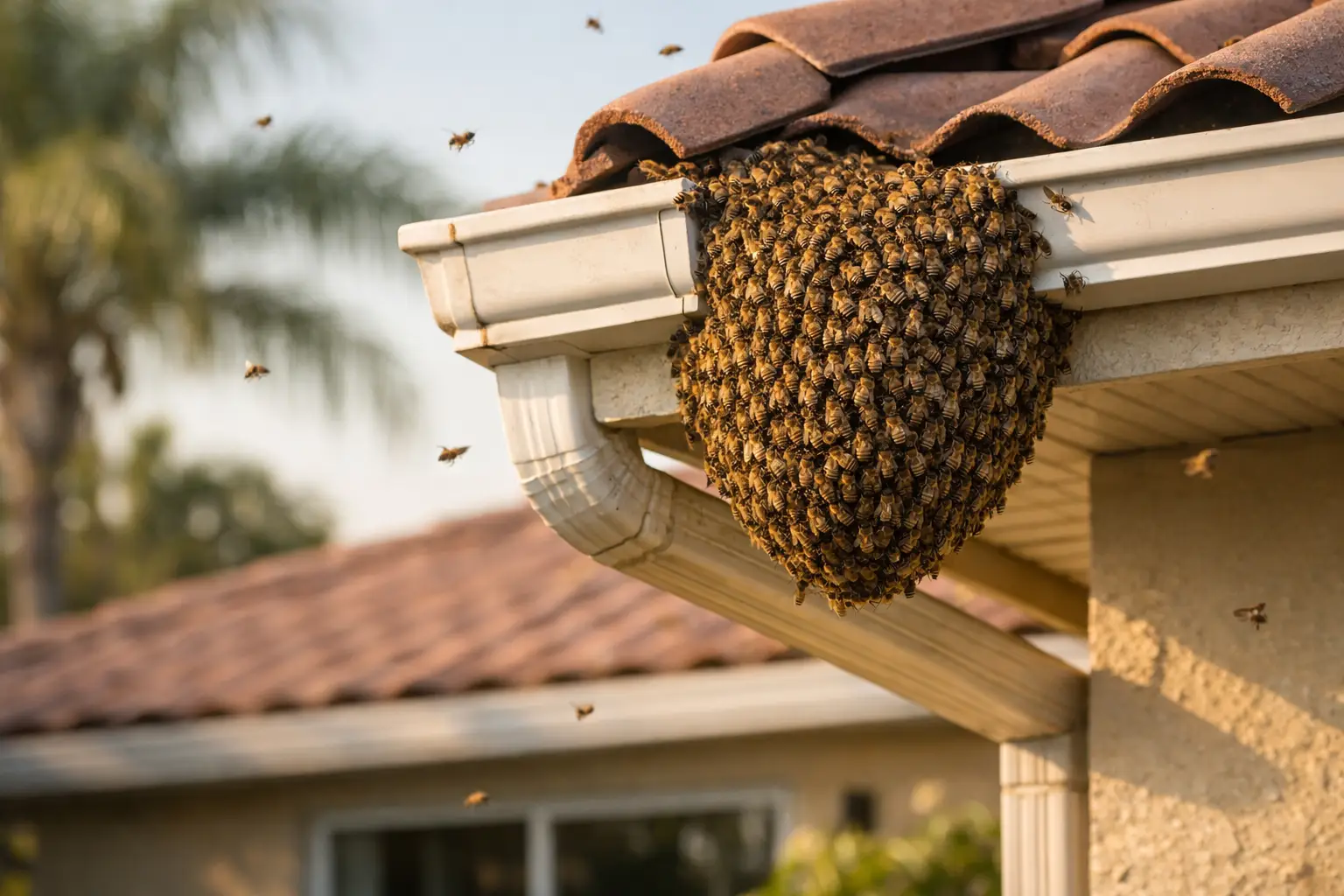

A cluster of bees on a palm tree can look alarming. A colony inside a soffit, block wall, or roofline is a different problem entirely. If you are searching for a Cape Coral bee removal service, you usually need more than someone to make the bees disappear. You need a safe response, a clear explanation of what is happening, and a fix that protects both your property and the colony whenever possible.
In Southwest Florida, bees do not need much encouragement to settle in. Warm weather, water sources, flowering plants, and the many gaps found in homes, utility boxes, sheds, and commercial structures make the area attractive to swarms. What starts as a temporary resting cluster can turn into an established hive surprisingly fast. Once comb is built and brood is present, this is no longer a simple nuisance. It is a structural issue, a safety issue, and in many cases, a livestock rescue.
What a Cape Coral bee removal service actually does
Many people assume bee removal means spraying and leaving. That approach creates bigger problems than it solves. A true live removal service identifies where the bees are entering, where the comb is located, how large the colony is, and whether the structure must be opened to fully remove bees, wax, honey, and brood.
That last part matters. If a colony inside a wall is killed but not removed, the leftover comb and honey remain behind. In Florida heat, that can lead to melting wax, honey leaks, stains on drywall or stucco, odors, ants, roaches, rodents, and eventually another swarm moving into the same cavity. Poison may look cheaper at first, but it often leaves the expensive part of the problem in place.
Live removal is more technical because it addresses the whole nest. The bees are removed, the comb is cut out, the cavity is cleaned, and the opening can be sealed or repaired so the same spot is less likely to attract a new colony. That is why structural bee removal is very different from general pest control.
Not every bee situation is the same
A swarm hanging from a branch is not the same as a long-term colony in a cinder block wall. A docile cluster near a backyard fence is not the same as defensive bees near a school entrance, pool deck, or restaurant patio. Good decision-making starts with understanding the difference.
A swarm is usually a temporary group of bees resting while scout bees search for a permanent home. During that stage, they are often less defensive than an established colony because they are not yet protecting brood or stored honey. Even so, they should not be handled by homeowners. Swarms can move quickly into walls, eaves, attics, and meter boxes if they are left alone.
An established colony is more involved. If bees are entering through the same crack every day, if you hear buzzing in a wall, or if you see dark staining around an opening, there is a good chance comb is already inside. At that point, the job is not just bee collection. It is removal, cleanup, and prevention.
There is also the question of temperament. In Florida, some colonies can be more defensive than others. That does not mean every colony is highly aggressive, but it does mean caution is not optional. Around children, pets, foot traffic, or businesses open to the public, speed and professional handling matter.
Why humane relocation is often the better answer
Bees are not just insects in the abstract. They are pollinators and managed agricultural livestock. When a healthy colony can be removed alive and relocated to a proper apiary, that preserves the bees while still solving the property owner’s problem.
For homeowners, the benefit is practical as much as ethical. A relocation-focused service is motivated to remove the colony intact, not just stop visible activity for a few days. That tends to result in a more complete job. For commercial and HOA clients, it also supports a more responsible public-facing approach. Residents and customers are far more receptive to “the colony was safely relocated” than “we sprayed it and hoped for the best.”
There are trade-offs, of course. Live structural removals take skill, time, and access. Some removals are simple. Others require opening a wall, cutting into soffits, or working around electrical and roofing elements. The right approach depends on where the bees are, how long they have been there, and whether the structure allows safe access.
Signs you should call right away
Some bee situations can wait a few hours for inspection. Others should be treated as urgent. If bees are entering a building through one spot all day, if people or pets have already been stung, or if the colony is near a front door, walkway, play area, or business entrance, do not try to manage it yourself.
You should also act quickly if you notice honey dripping, buzzing behind drywall, or bees suddenly appearing inside the house near light fixtures or vents. Those signs can point to a colony deeper in the structure. The longer it remains, the larger the comb becomes and the more difficult cleanup can be.
For property managers and HOAs, delay increases liability. A colony tucked into common-area architecture may seem quiet until landscaping, pressure washing, roof work, or routine maintenance disturbs it. Then a low-visibility problem becomes an emergency.
What the removal process should look like
A professional Cape Coral bee removal service should begin with identification and assessment. That includes confirming whether they are honey bees, locating entry points, estimating colony size, and deciding whether the situation is a swarm pickup or a structural cut-out.
From there, the method should be explained clearly. If the colony is inside a structure, you should be told what needs to be opened, what will be removed, and what condition the area will be left in afterward. This is where transparency matters. Homeowners are often anxious about both stings and damage, and they deserve a plainspoken explanation of the trade-off. A small access cut now can prevent much larger repairs later from fermenting honey, ruined insulation, and repeat infestations.
After removal, the cavity should be cleaned as thoroughly as practical. Residual wax and scent attract future swarms. Exclusion work is just as important as extraction. If the original gap remains open, the location can be reinfested even after a successful job. That is one reason a same-place removal warranty has real value. It shows the company understands bee behavior, not just bee capture.
What to avoid when you find bees
The worst first move is usually a DIY one. Sprays, expanding foam, water hoses, smoke from improvised sources, and physical disturbance can all escalate the situation. They also make later live removal harder by scattering bees or driving them deeper into voids.
Another common mistake is assuming the bees will leave if ignored. A fresh swarm might move on, but once comb construction starts, waiting tends to increase cost and complexity. People also underestimate how small an entry point can be. Bees can establish themselves in spaces most homeowners would never consider.
If you call for service, keep people and pets away from the area and observe from a distance. Photos of the cluster, entry point, or surrounding structure can be useful, but only if they can be taken safely.
Choosing the right company in Southwest Florida
Bee work is specialized. The right provider should understand honey bee biology, structural nesting behavior, and the difference between temporary swarms and established colonies. They should also be prepared to explain why poisoning a wall colony is not a complete solution.
This is especially relevant in Cape Coral and the wider Southwest Florida area, where fast response can prevent a small issue from becoming a repair project. A company that both removes and relocates bees has a practical advantage. They are set up for the rescue side of the work, not just the elimination side. That matters when the goal is to protect people without destroying a viable colony.
Beeswild.com LLC is built around that model. The work is not treated as simple pest disposal. Colonies are removed, rehomed when possible, and integrated into safe farm environments rather than discarded.
If bees have chosen your home or building, the best outcome is usually the one that solves the structural risk completely while respecting the value of the colony. Fast action helps. So does choosing a service that understands both construction realities and bee behavior. A calm, informed response now can spare you a much messier problem later.

No responses yet