

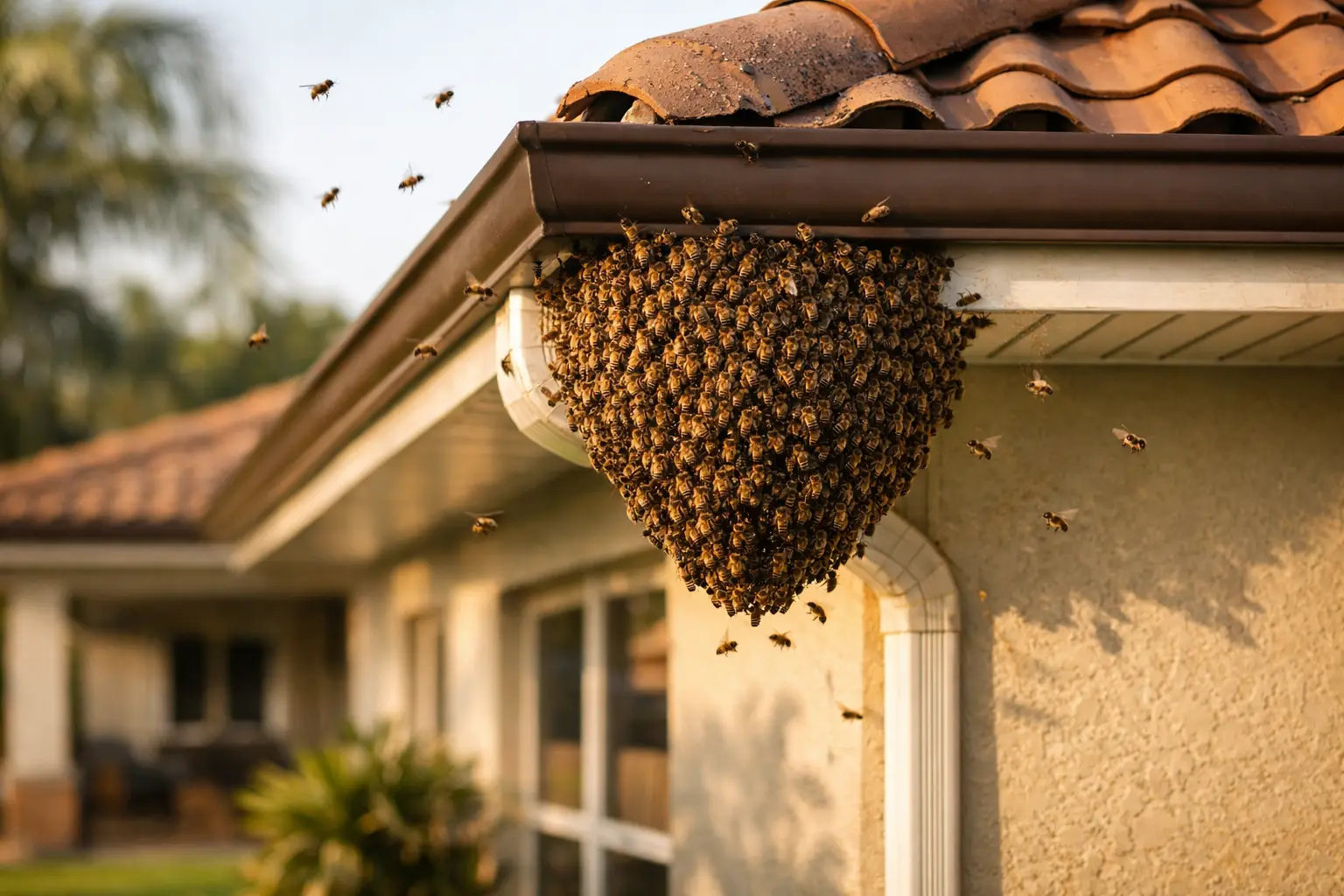

A water meter box can look like an ordinary utility cover until bees begin flying in and out of it. Why do bees love water meter boxes? To a honey bee colony, the space can offer several of the same conditions as a hollow tree: darkness, protection from weather, a small defendable entrance, and sometimes moisture nearby.
For a homeowner, though, a bee-filled meter box is more than an inconvenience. It can make routine utility access risky, place curious children and pets too close to a colony, and signal that bees may be using an opening that leads farther into the landscape or a nearby structure.
Why Bees Choose Water Meter Boxes
Honey bees are cavity-nesting insects. In nature, they commonly establish colonies in hollows within trees. On developed property, they look for substitutes: wall voids, soffits, irrigation boxes, electrical enclosures, and utility meter boxes can all resemble a protected cavity.
A meter box is low to the ground, shaded, and usually disturbed less often than areas around doors, patios, or windows. Its cover also creates a narrow entrance that worker bees can guard. In Southwest Florida’s heat and rain, a dry, enclosed space can be especially appealing to a swarm searching for a permanent home.
Water can be part of the attraction, but it is not usually the only reason. Bees collect water to cool the hive, dilute stored honey for food, and support brood rearing. A leaking meter, damp soil, condensation, or nearby irrigation can make the location more useful. Still, honey bees do not need a meter box simply because it contains water. They choose it primarily because it feels secure.
The box may also be only the visible access point. Bees sometimes travel through gaps around plumbing or conduit and establish comb in an adjacent void. That is why an active flight path should be evaluated carefully before anyone removes a lid or fills a crack.
A Swarm Is Not Always an Established Colony
A cluster of bees near a water meter box may be a temporary swarm. Swarming is a natural reproductive process: part of a colony leaves with a queen and pauses while scout bees search for a new nesting site. A swarm may move on within hours or days if it has not entered the box.
Steady bee traffic going into and out of one opening, especially with pollen visible on returning workers, suggests an established colony. Colonies build wax comb, store honey, and raise young. Once that happens, waiting rarely solves the problem. The population can grow, and comb or honey left behind after an improper treatment can attract ants, roaches, rodents, and other pests.
Do not assume the insects are honey bees based only on appearance. Yellow jackets, wasps, and other stinging insects may use ground-level utility spaces too, but their behavior and removal needs differ. A trained professional can identify the insect and determine whether it is a temporary swarm, a honey bee colony, or another species.
Why Spraying or Sealing the Box Can Make Things Worse
It is understandable to want the bees gone immediately, especially when the meter is near a walkway or driveway. But spraying insecticide into a utility box can create a defensive stinging event and may not reach the queen or the entire colony. If honey bees are killed but their comb remains, the resulting honey and wax can cause lingering pest and odor problems.
Sealing the entrance without removing the colony has similar risks. Trapped bees may find another route, potentially moving toward a wall, irrigation line, or other opening. If the colony is living in a connected void, sealing one visible entrance does not remove the nest.
There is also a practical utility issue. Water providers or service technicians may need access to the meter. A damaged cover, blocked box, or agitated colony can complicate maintenance and create an avoidable safety concern.
What to Do When Bees Are Using a Meter Box
Keep people and pets away from the immediate area. Avoid lifting the cover, tapping it, mowing directly beside it, or directing a hose into the box. These actions can disturb bees that are otherwise focused on their work.
Watch from a safe distance and note where bees enter, whether activity continues throughout the day, and whether the colony appears to be expanding. That information helps a live bee removal professional assess the situation. If anyone is stung repeatedly, shows signs of an allergic reaction, or bees are actively threatening people, treat it as an urgent safety matter.
Humane live removal focuses on recovering the bees and, when present, the queen and comb rather than simply poisoning the colony. After removal, the space should be cleaned and repaired as appropriate, with gaps addressed only after it is confirmed that no bees remain. Beeswild serves Southwest Florida property owners with this approach, relocating recoverable honey bee colonies to managed farm areas.
A water meter box may be small, but it can offer a colony exactly what it needs to get started. Acting early protects utility access and your household while giving valuable pollinators a chance to continue their work somewhere safer.
Call Beeswild: (239) 810-7941

No responses yet