

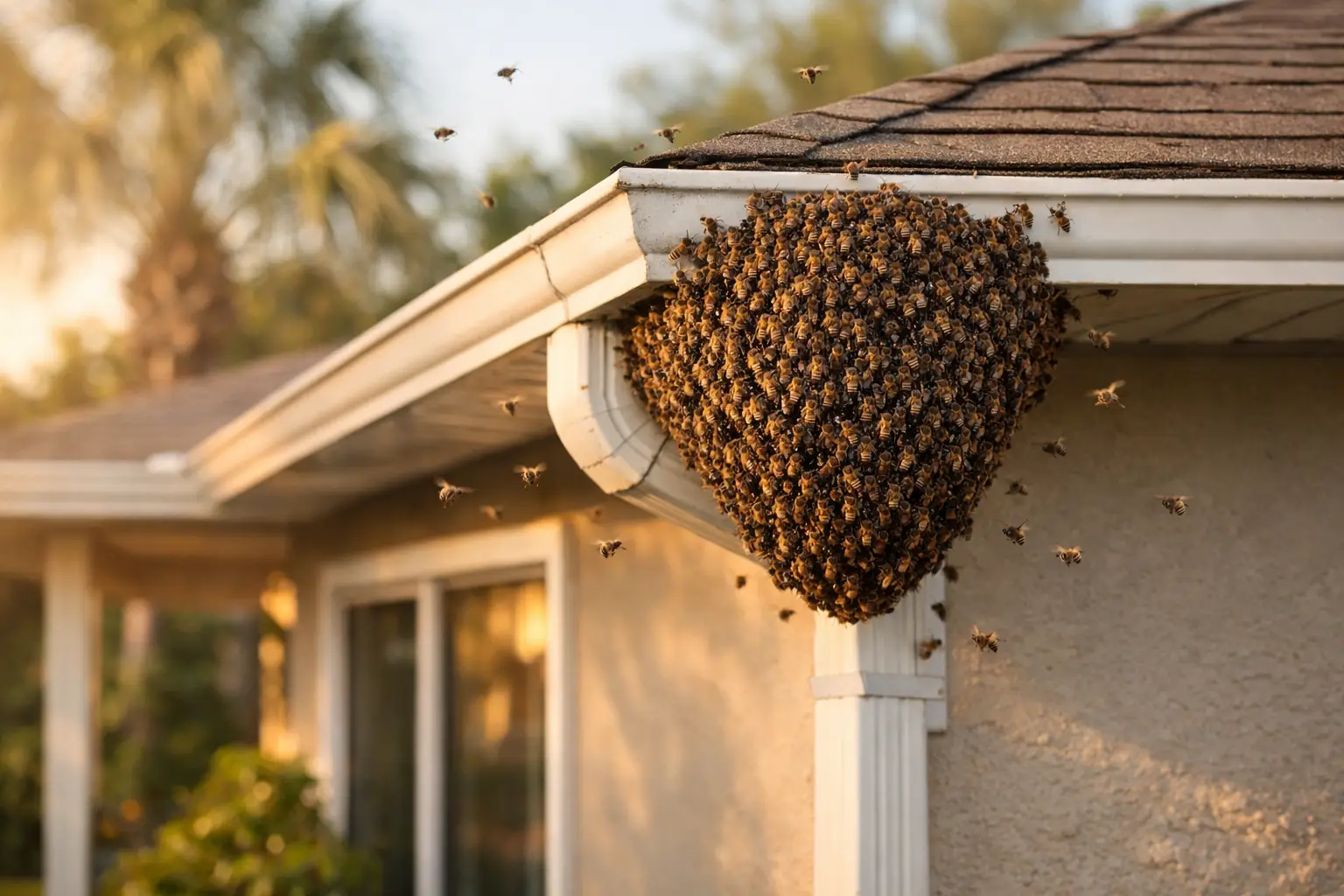

A cluster of bees on a tree branch can be startling. A steady stream of bees disappearing behind a soffit, wall vent, or roofline is more urgent. This homeowner guide to bee infestations explains how to tell the difference, protect people and property, and respond in a way that removes the colony without treating valuable pollinators as disposable pests.
For Southwest Florida homeowners, quick action matters because heat, rain, and active construction can turn a small structural colony into a larger repair problem. The goal is not to panic or spray first. It is to identify what is happening, create a safe buffer, and arrange removal that addresses both the bees and the hive materials left behind.
A Swarm Is Not the Same as a Bee Colony
A swarm is a temporary, visible cluster of honey bees, often hanging from a branch, fence, mailbox, or exterior wall. It occurs when part of an established colony leaves with a queen to find a new home. The bees may look dramatic, but a swarm usually has no honeycomb or brood in that location yet. It may move on within hours or days.
A colony has already chosen a protected cavity and started building comb. You may see bees entering and exiting one small gap repeatedly, especially during daylight. Common entry points include roof eaves, soffits, block walls, utility boxes, chimneys, sheds, and cavities around plumbing or air-conditioning penetrations.
This distinction affects the solution. A swarm can often be carefully collected and relocated. A colony inside a wall or roof requires a structural removal process that accesses the comb, removes the bees, and prevents another colony from using the same opening.
Watch for these signs of an established colony
Consistent bee traffic is the clearest sign. Stand well back and watch from a safe distance. Bees using the same hole in a predictable flight path are likely living inside rather than simply foraging nearby.
Other warning signs include a low humming through a wall, dark staining near an entry point, sticky residue, or an unusual sweet odor inside the home. In more advanced cases, honey can seep through ceilings or walls. Ants, wax moths, and other insects may follow, especially after a colony dies or is poisoned and the comb remains behind.
Do not assume every flying insect is a honey bee. Wasps, hornets, yellowjackets, and some native bees need different handling. A qualified bee removal professional can identify the insect before recommending a course of action.
What to Do When You Find Bees at Home
The safest first step is simple: give the bees space. Keep children, pets, visitors, and lawn crews away from the area. Close nearby windows and avoid running loud equipment, trimming vegetation around the nest, knocking on walls, or directing water at the bees.
If bees are entering an attached wall, garage, or roofline, do not seal the opening immediately. Trapping a live colony inside can force bees into the living space through vents, light fixtures, or small gaps. It also leaves honeycomb, honey, and brood in the structure, which can create odor, staining, and secondary pest issues.
Take a few clear photos or a short video from a safe distance. Document the location of the entry point, the direction the bees are flying, and any visible comb. This information helps a removal specialist determine whether the situation is likely a swarm pickup, an exterior hive, or a more involved structural extraction.
If anyone has been stung repeatedly, shows trouble breathing, swelling of the face or throat, dizziness, or widespread hives, seek emergency medical help immediately. Do not attempt close inspection if the bees are behaving defensively or gathering in large numbers near a doorway, walkway, or occupied area.
Why Spraying a Hive Often Makes the Home Problem Worse
Many homeowners reach for a store-bought insecticide because it seems like the fastest answer. For a honey bee colony inside a structure, poison may kill some or all of the bees without removing the reason they were there: the comb-filled cavity.
Honey and wax can melt in Florida heat, stain drywall, and attract ants, roaches, beetles, rodents, and wax moths. If the queen or part of the colony survives, the bees may move deeper into the structure or find a new exit. Even after the hive is dead, another swarm can be drawn to the remaining scent and comb.
There is also a safety trade-off. Disturbing a colony with sprays, smoke bombs, foam, or improvised tools can provoke defensive behavior. This is particularly concerning around children, pets, pools, sidewalks, or neighboring homes. A removal method should reduce risk at the source, not merely make the bees disappear from view.
How Live Bee Removal Works
A responsible live removal begins with an assessment of the colony’s location, size, access points, and the building materials involved. The best approach depends on whether the bees are in a tree, an exterior structure, a wall cavity, a roof, or another concealed space.
For structural colonies, the removal team typically locates the comb as precisely as possible before opening a limited area of siding, soffit, drywall, or roofing material. The objective is to remove the bees, queen, brood, honeycomb, and wax rather than leaving biological material behind. The bees can then be transferred to a hive box and relocated to an apiary or safe farm area.
After extraction, the cavity should be cleaned of accessible residue and the original entry point repaired or sealed. This final step is not cosmetic. Honey bees are drawn to familiar hive scents and protected cavities. If the opening remains available, a new colony may move in later.
No removal method can promise that bees will never visit a property again. Gardens and flowering trees naturally attract foraging bees, and that is a healthy sign. But a proper structural removal greatly reduces the chance of bees returning to the exact same nesting space. Ask any provider what is included in the work, who handles repair, and whether they provide a same-location removal warranty.
Preventing a Future Bee Infestation
Prevention is largely about closing protected cavities before scout bees find them. Inspect exterior gaps around eaves, fascia, vents, utility lines, roof transitions, and decorative features. Small openings can lead to surprisingly large voids behind a wall.
Repairs work best when they are deliberate. Use appropriate screening for vents, maintain damaged soffits and trim, and make sure sealants are suitable for the material and weather exposure. Never block an opening while you still see regular bee traffic. Confirm that no active colony remains first.
A healthy landscape does not need to be bee-free. Flowering plants, vegetable gardens, and fruit trees support pollinators. The practical boundary is location: bees foraging in the yard are usually beneficial, while bees nesting in a wall, roof, or heavily used outdoor area need professional attention.
When removal should not wait
Arrange prompt professional help when bees are entering a home structure, gathering near an entrance, occupying a school or commercial property, or behaving unusually defensive. The same is true if you notice honey leaking, a ceiling stain near an active hive, or bees appearing indoors.
In Cape Coral and throughout Southwest Florida, warm conditions allow colonies to remain active for much of the year. Waiting for a structural colony to leave on its own can mean waiting while it grows. Early removal is usually less disruptive than addressing extensive comb, honey damage, or a larger population later.
Choosing the Right Bee Removal Professional
Ask whether the company performs live bee removal and relocation, not just extermination. A knowledgeable provider should explain where the colony is likely located, whether comb removal is necessary, how the opening will be handled afterward, and what limitations the construction may create.
It is also reasonable to ask about insurance, repair responsibility, and warranty terms. The lowest quote is not always the lowest overall cost if it leaves comb inside the wall or requires a second visit after bees return. Beeswild, for example, combines live removal with colony relocation to managed farm areas and offers a three-month same-place-removal warranty.
A bee problem can feel urgent without requiring a reckless response. Keep your distance, avoid sealing or spraying an active hive, and choose removal that protects your household while giving the colony a chance to continue its work somewhere it belongs.

No responses yet