
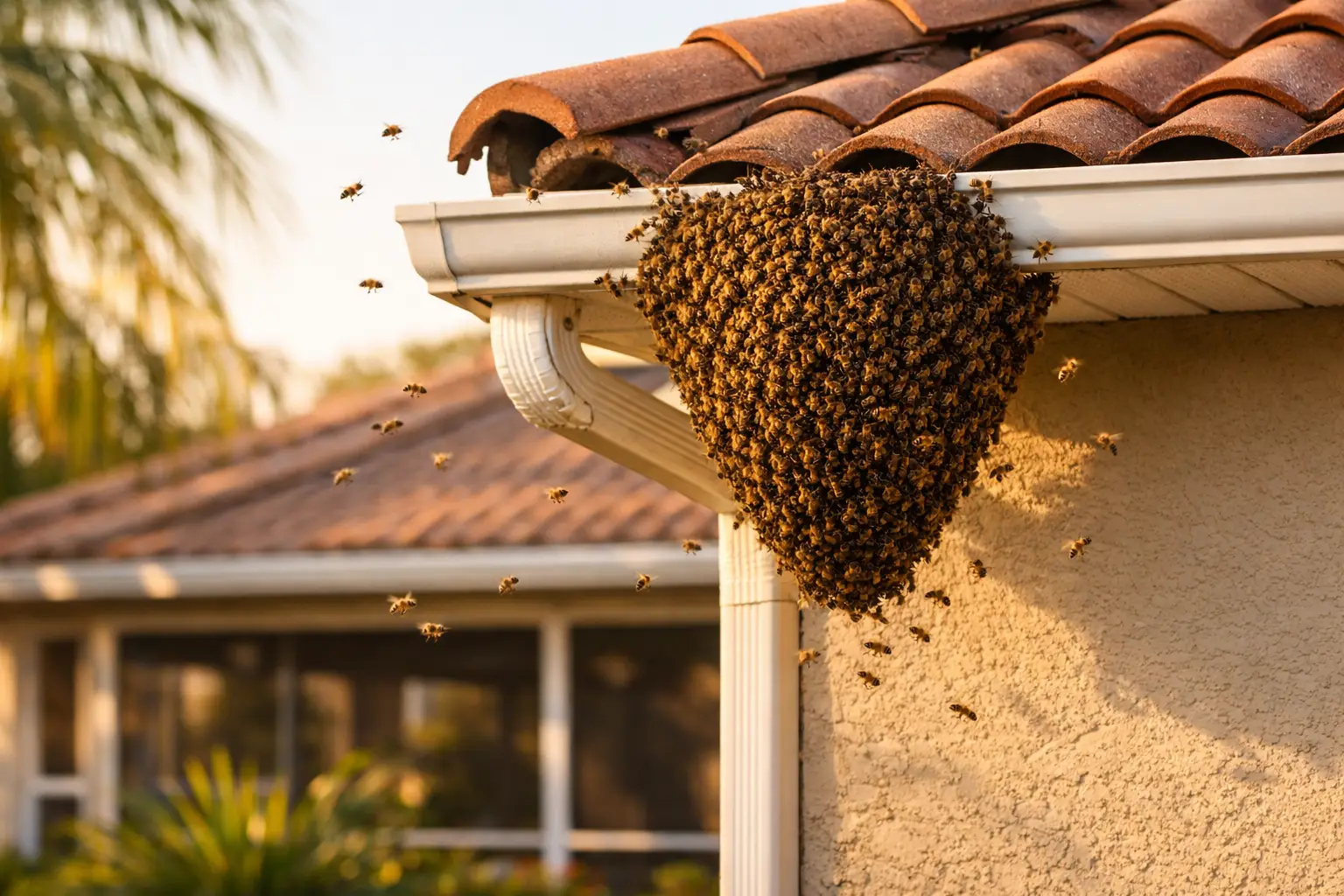

A basketball-sized cluster of bees on a palm frond, fence post, or soffit can make a Cape Coral homeowner stop in their tracks. During Cape Coral bee swarm season, that startling sight is often a colony looking for its next home, not an attack in progress. The right response protects your family, your structure, and the bees that pollinate Southwest Florida’s landscapes and food crops.
A swarm deserves prompt attention, but it does not always call for panic. The key is knowing whether you are seeing a temporary resting swarm or bees that have already moved into a wall, roofline, tree cavity, or other protected space. Those situations look similar at first, yet they require very different decisions.
When Is Cape Coral Bee Swarm Season?
In colder parts of the country, swarming is tightly tied to spring. Southwest Florida is different. Our long warm season, early blooms, and mild winters can support bee activity for much of the year. Swarms are commonly noticed from late winter through spring, often increasing as nectar and pollen become available and colonies expand quickly. Activity can continue into summer or reappear when weather and forage conditions support it.
That means there is no single date when Cape Coral bee swarm season begins or ends. A warm spell after cooler weather can stimulate a colony. Abundant flowering plants, rain patterns, and the health of an established hive all affect timing. Homeowners should stay alert whenever bees are actively working, especially around eaves, sheds, water meters, pool enclosures, palm trees, and ornamental landscaping.
Swarming is a natural reproductive process for honey bee colonies. When a hive becomes crowded, the original queen may leave with a large portion of the workers. Scout bees search for a suitable new cavity while the group gathers temporarily nearby. This is why a swarm may appear suddenly on an exposed branch or wall and then disappear within hours or a few days.
A Swarm Is Not the Same as a Colony in Your House
The most useful distinction is simple: a swarm is usually outside and clustered, while an established colony has a protected entrance and ongoing traffic.
A resting swarm often resembles a dense, hanging mass of bees. It may be quiet, with relatively few bees flying around it. Because these bees have not yet established comb, brood, honey stores, or a defended nest site, they are often less defensive than bees protecting a colony. Less defensive does not mean harmless. They should still be given space, especially around children, pets, and anyone with a known allergy.
An established colony looks different. You may see a steady flight path of bees entering and leaving one crack in a soffit, roof edge, wall, utility box, chimney area, or hollow tree. Traffic may be most visible in the warmth of late morning and afternoon. You might also hear a low buzzing behind drywall or notice sticky staining, a honey-like odor, wax, or pest activity later on.
The trade-off is time. A visible swarm may leave on its own, but waiting can be risky when it is close to doors, walkways, play areas, or the exterior of a building. More importantly, a swarm that finds an opening can become a structural colony surprisingly fast. Once bees begin building comb inside a wall or roof, the job becomes more involved because the bees, comb, honey, and access point all need to be addressed.
Why DIY Sprays Create Bigger Problems
It is understandable to want an immediate fix when hundreds or thousands of bees are near your home. However, spraying a swarm or an established colony is often the wrong fix, particularly when bees are inside a structure.
Poison may kill some bees without removing the comb and honey left behind. That material can melt or leak in Florida heat, stain finishes, attract ants, beetles, roaches, rodents, or wax moths, and create lingering odors. If the queen or part of the colony survives, remaining bees may move farther into the structure or find another exit.
Blocking an active bee entrance is another common mistake. Sealing a hole while bees are still inside can force them into wall cavities, living spaces, or neighboring gaps. A sealed opening also does nothing to remove the comb already present. Proper removal starts with locating the colony, safely collecting the bees, removing hive material where appropriate, and closing access points only after the work is complete.
Trying to knock down a cluster with a hose, broom, or object can provoke a defensive response. Do not climb ladders near a swarm, shake the branch it is on, or send children or pets to investigate. In Southwest Florida, where defensive behavior can vary and Africanized honey bee genetics are a regional concern, visual identification is not a reliable safety test. Treat all unknown bee activity with caution and let trained professionals assess it.
What to Do When You Find a Swarm
Start by creating distance. Keep people and pets away, close nearby doors and windows, and avoid loud equipment such as lawn mowers, trimmers, leaf blowers, or pressure washers near the bees. If the swarm is on a public path, near a school pickup area, or at a business entrance, limit access to that area until it can be evaluated.
Next, observe from a safe location. Note whether the bees are simply clustered or repeatedly entering a hole. A photo taken from a distance can help a bee removal professional understand the situation, but do not approach just to get a better picture. If anyone has been stung repeatedly, shows signs of an allergic reaction, or bees are acting aggressively, move indoors or into a vehicle and seek emergency help as needed.
For a swarm on an accessible exterior branch or low structure, live removal and relocation can often preserve the colony. For bees in walls, roofs, or soffits, ask specifically about structural removal. The goal should be more than making the visible bees disappear. The job should account for the bees, comb, honey, and the conditions that allowed the colony to move in.
Protecting Your Property Before Bees Move In
Prevention is not about making a property hostile to every pollinator. Flowering plants are valuable, and seeing individual bees foraging in a yard is normal. Prevention is about reducing protected cavities that can shelter a large honey bee colony.
Inspect exterior areas after storms, roof work, siding repairs, or pest damage. Small gaps around soffits, fascia boards, vents, rooflines, pipe penetrations, and utility openings can be attractive to scout bees. Repairing loose screens, damaged trim, and openings in outbuildings gives scouts fewer options. This is especially worthwhile before periods of high bee activity.
Be careful with sealing work. If bees are actively using an opening, do not caulk it shut until the colony has been professionally removed. If there is no current bee activity, closing gaps with appropriate building materials can reduce future nesting opportunities. Property managers and HOA boards should include bee-entry inspections in routine maintenance, particularly on shared buildings where a hidden colony can create safety and liability concerns.
When a Quick Response Matters Most
Some bee situations can be monitored briefly from a safe distance. Others should be handled promptly. A swarm near an entryway, pool deck, playground, outdoor dining area, or high-traffic commercial space should not be left for residents, guests, or employees to navigate. The same is true for bees entering a wall, roof, or soffit, where each additional day may mean more comb and honey inside the structure.
Early action can also make humane relocation more practical. Beeswild serves Cape Coral and Southwest Florida with live bee removal and relocation, moving rescued colonies to managed farm areas rather than treating them as disposable pests. For structural work, a three-month same-place-removal warranty provides added reassurance that the original access area has been properly addressed.
A bee swarm is one of nature’s most visible reminders that a colony is searching for a future. Give it room, avoid shortcuts that leave honey and comb behind, and act before a temporary cluster becomes a permanent problem inside your property.

No responses yet