
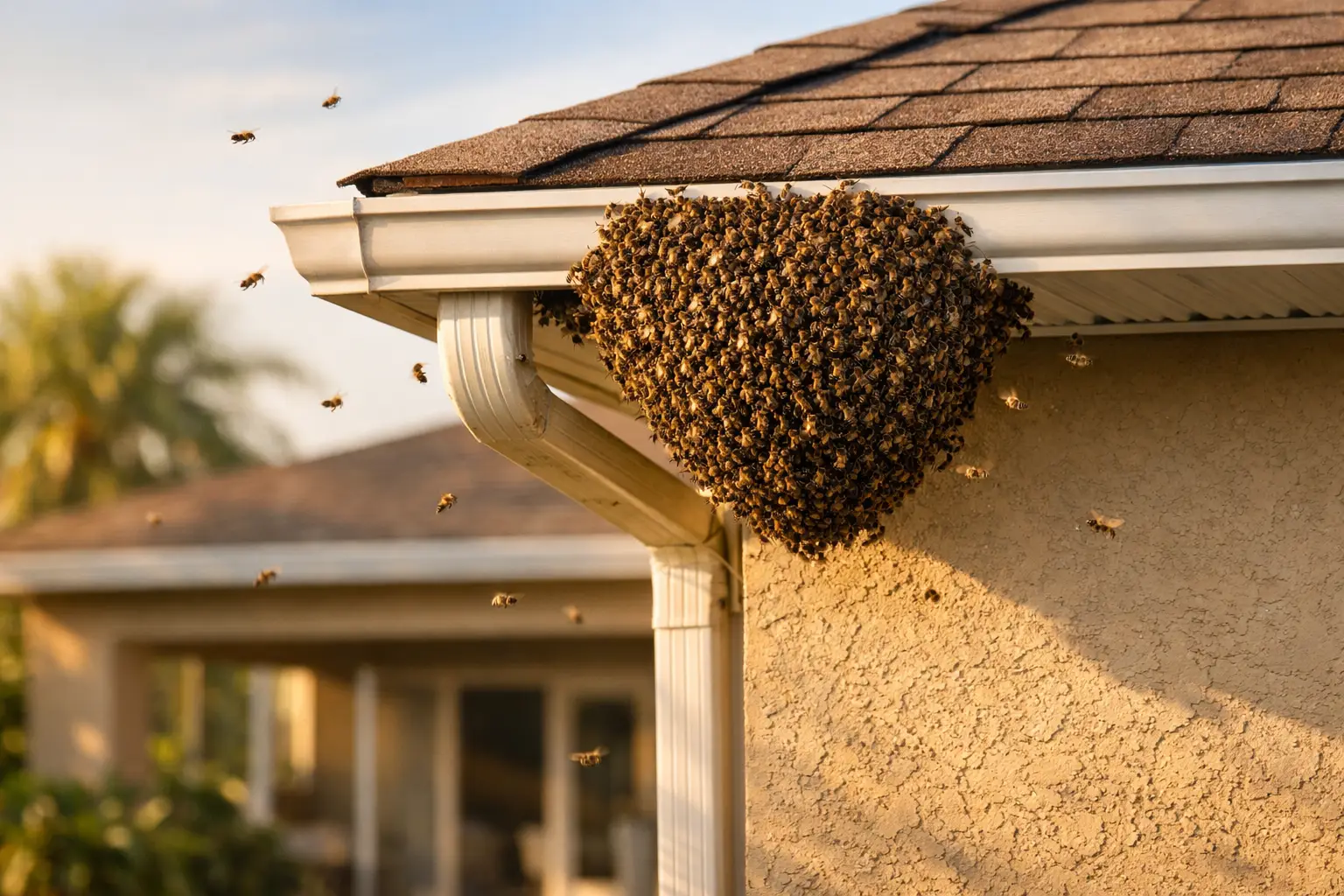

A bee colony in a soffit, wall, attic, or utility box is not a problem to postpone until the weekend. Honey bees can build substantial comb quickly, and the honey, wax, and brood left behind after a partial treatment can create a much larger property issue. Knowing how to choose bee remover services means looking beyond the fastest quote and asking whether the provider can safely remove the colony, address the structure, and give the bees a viable new home.
For Southwest Florida homeowners and property managers, the right choice balances immediate safety with a permanent solution. A professional live removal is not simply about getting bees out of sight. It is about removing the comb that attracts other pests and preventing surviving bees from returning to the same cavity.
First, confirm that you have bees
Not every flying insect near a building is a honey bee. Wasps, hornets, and yellow jackets have different nesting habits and require different control methods. Honey bees are generally fuzzy, brown-and-gold insects that travel steadily between flowers, water sources, and a specific entrance point. You may see a concentrated stream of bees entering a crack in a wall, roofline, or tree cavity.
A swarm is different from an established colony. A swarm is a temporary cluster of bees, often gathered on a branch, fence, or exterior wall while they search for a permanent location. It may be possible to collect a swarm with little or no structural work. A colony that has been active inside a wall or soffit for weeks or months is more involved. It has likely built comb and stored honey, so proper removal usually requires opening and restoring a limited part of the structure.
If bees are behaving defensively, are located near doors or play areas, or someone in the area has a known sting allergy, keep people and pets away. Do not block the entrance, spray the opening, or attempt to vacuum the bees yourself. Those actions can force bees deeper into the structure and make a safe removal harder.
How to choose a bee remover: look for live colony removal
The most useful question is straightforward: “Will you remove the bees and the comb, or only treat the bees?” The answer tells you whether you are considering a lasting solution.
A live bee remover works to collect the colony, including the queen when possible, then relocates it to an apiary or other suitable managed location. The technician removes accessible comb, honey, and brood from the nesting cavity before closing and sealing the entry points. This approach protects a valuable pollinator while reducing the chance of honey leaks, wax moths, ants, roaches, rodents, or a second bee colony moving into the abandoned space.
Chemical extermination can appear less expensive at first, particularly when a colony is hidden in a difficult location. But it often leaves the comb behind. In Florida heat, stored honey can soften and seep through drywall or ceilings. Dead bees and remaining honey also create odors and attract scavenging pests. Treatment may be necessary in limited safety situations, but a provider should explain why it is needed and what will happen to the hive materials afterward.
Ask what the inspection includes
A reliable bee removal company does not price a structural colony based only on a photo of bees at an entrance hole. The visible flight path does not show the colony’s size, how long it has been present, or where the comb is attached.
During an inspection, the provider should identify the likely entrance and nesting area, assess access, and look for conditions that affect the work. A colony behind one section of soffit may be relatively direct to remove. A colony inside a two-story wall, under tile roofing, or around electrical and plumbing systems requires a different plan.
Ask how the company determines where the comb is located and how much material may need to be opened. You should also ask who is responsible for any finish repairs after removal. Some providers can close the access area as part of the service, while others remove the colony and recommend a roofer, handyman, or contractor for final cosmetic repairs. Neither arrangement is automatically wrong, but the scope should be clear before work begins.
Evaluate safety, experience, and insurance
Bee removal involves working around stinging insects, ladders, roofs, power lines, and occupied buildings. Experience matters, especially with colonies inside structures. Choose a provider that can explain its safety process in plain language: how the crew protects occupants, controls the work area, accesses elevated spaces, and handles unexpected colony size or defensive behavior.
For commercial properties, HOAs, and public-facing facilities, request current insurance information and confirm that the provider is equipped for the specific building conditions. A shopping center canopy, clubhouse roof, and residential lanai do not carry the same access or liability considerations.
It is also reasonable to ask how the company handles potentially aggressive bees. In Southwest Florida, colonies can vary greatly in defensiveness. No responsible remover should promise that every colony will behave gently. They should have an organized plan for keeping bystanders clear, using appropriate protective equipment, and adjusting the work method when conditions demand it.
Compare the scope, not just the price
Two estimates can look very different because they include different work. One may cover collecting visible bees only. Another may include opening the structure, removing comb and honey, cleaning the cavity, sealing entry points, and a return visit if activity continues. The second estimate may cost more, but it may also prevent the expense of repairing honey damage or dealing with another infestation weeks later.
Before approving service, get clear answers on these points:
- Whether live relocation is the planned method and where colonies are taken
- Whether all reachable comb, brood, and honey will be removed
- How the entry point and access area will be closed after removal
- What repairs are included, excluded, or referred to another professional
- Whether the quoted price can change based on hidden colony size or access conditions
- What warranty applies if bees return to the same location
A written estimate is especially helpful when the colony is inside a shared building or when a property manager must document maintenance decisions. It creates a record of the agreed scope instead of relying on assumptions made during an urgent phone call.
Understand why sealing matters after removal
Removing bees without closing their former entrance is an open invitation for another swarm. Honey bee scouts are drawn to established cavities because they offer shelter, familiar odors, and a suitable entrance. Even after comb removal, an unsealed gap can become a new nesting site.
Proper exclusion is more than pushing foam into a hole where bees were flying. The cavity should be cleared first, then the entry route should be closed with materials appropriate for the structure. A qualified remover can explain which gaps need attention and whether nearby vents, fascia joints, roof transitions, or utility penetrations should also be inspected.
Do not seal an active colony inside a wall. Trapped bees may find another way into the building, and comb remains inside the cavity. The correct order is removal, cleanup, then exclusion.
Watch for red flags
Urgency is understandable when bees are near your home, but pressure should not replace good information. Be cautious if a provider refuses to discuss whether comb will be removed, cannot describe how the colony will be handled, or insists that spraying a hole is the only option without inspecting the structure.
Another warning sign is a quote that sounds complete but leaves out access repairs, cleanup, or sealing. Ask for the details. A transparent provider will tell you what is known, what may only become visible after opening the area, and how approval will be handled if additional work is needed.
Be equally careful with anyone who recommends a do-it-yourself fire, pesticide, or sealing method. These measures put occupants at risk and can turn an exterior bee issue into an indoor infestation or expensive repair.
Choose a partner that sees the colony beyond the removal
The best bee remover is prepared to protect your property and respect the value of the colony. That combination is particularly meaningful when the provider maintains relocation sites rather than treating bees as disposable pests. A rescued colony can continue pollinating and producing honey in a managed setting, while your home or facility is returned to safe, usable condition.
Beeswild serves Cape Coral and Southwest Florida with live removal and relocation, combining structural removal experience with managed bee farming. The company also provides a three-month same-place removal warranty, which gives property owners a clear layer of protection after the work is complete.
When you call for help, share the exact location of the activity, how long bees have been present, whether anyone has been stung, and whether the colony is near a wall, roof, utility equipment, or high-traffic area. Those details help a qualified remover arrive with the right plan – one that protects the people on your property without wasting a colony that can still thrive elsewhere.

No responses yet